Isidoro and the Grumble That Grew
Convinced farm life is pure misery, Isidoro trades his family's bustling farmhouse for a wealthy stranger's company and learns that a grumble can be a prison.
 Retold by Idalia SantosAges 6+5 min read867 words
Retold and rewritten by Idalia Santos for TaleNest. This version is original prose in English; the illustrations and accompanying text were created for this site.
This is a work of fiction, retold in original language for TaleNest. Names, places and events are part of the story.
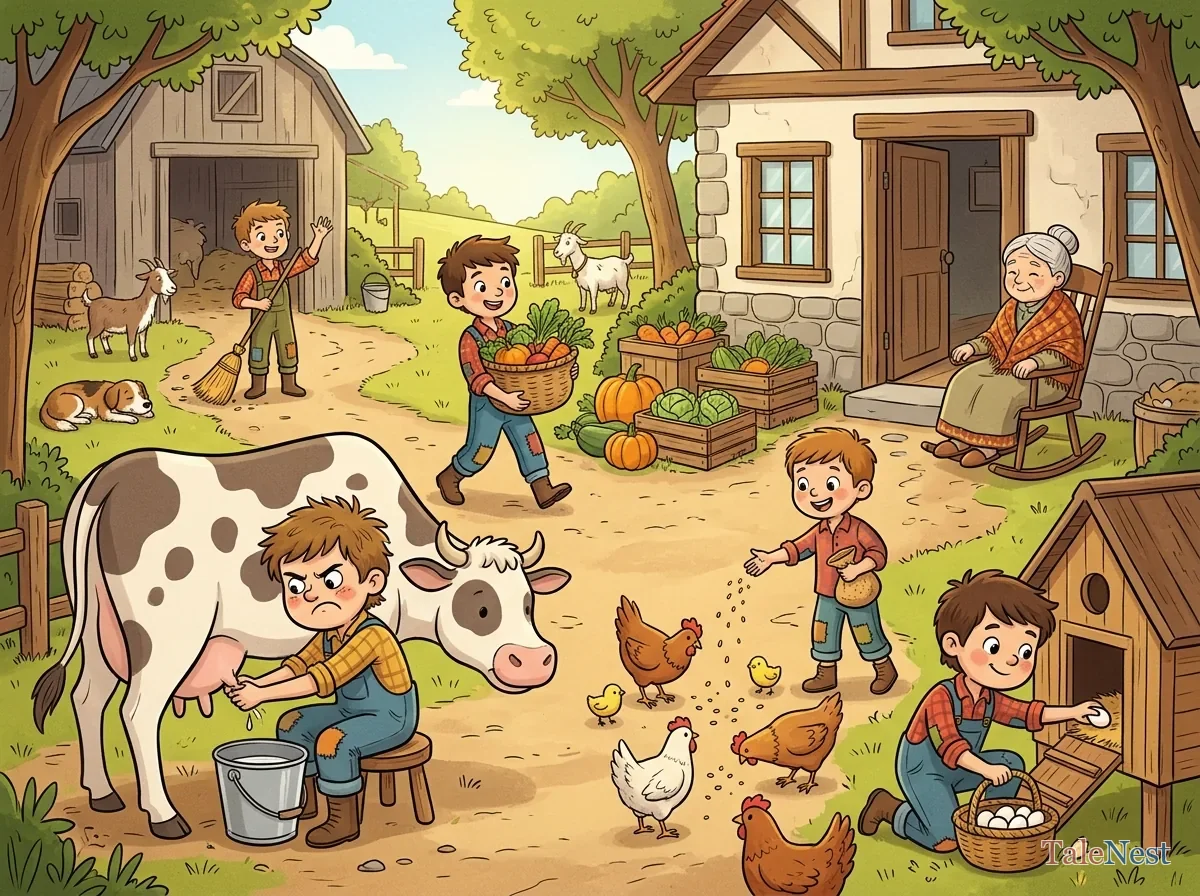
Once upon a time there was a farm where five brothers lived with their grandmother. She was very old and often ill, so the boys carried the whole place on their young shoulders: tend the animals, work the vegetable patch, scrub the house, cook the meals, look after their grandmother, and still walk half an hour each way to school and back. There was always another job waiting, from the first grey light of morning until the lamps were lit.
The five shared the work between them. It was hard, but none of them ever shirked. They studied and they laboured without a word of complaint, each taking his turn at the unpleasant tasks. All, that is, except Isidoro.
Isidoro hated milking the cows. He hated the dusty, scrabbling job of cleaning out the hen house. He could see no sense in hoeing the long rows of vegetables or peeling potatoes at suppertime. Most of all he loathed the early rising, the trudge along the country road to school, and the homework he had to begin the instant he came home, before he could call the day's farm jobs finished. And though he did every one of these things, he never did them quietly.
Grumbling became the thing he did best. He sighed over the buckets, muttered at the hens, and sighed again over his books. It wore on everyone. There is nothing quite like a person who frets about everything from the moment he opens his eyes until he closes them again to sour the mood of a whole household. By supper each evening his brothers were short-tempered and quiet, and the warm, easy laughter that used to fill the farmhouse had disappeared.
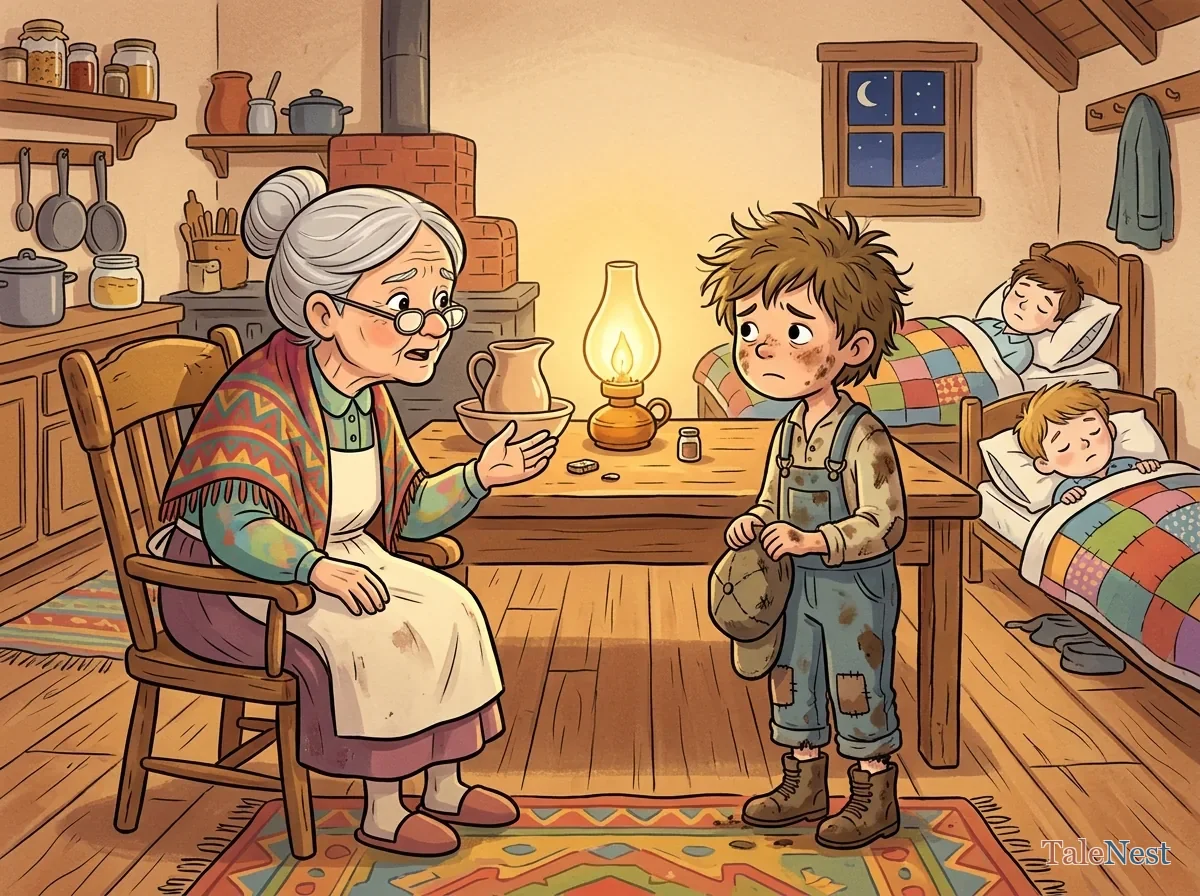
One morning his grandmother, who noticed more than anyone gave her credit for, called him over.
“What is it, Grandma?” he said. “I'm exhausted, and there's still a mountain of work. This life of dragging and toiling is awful. I've had enough of it. There isn't a single minute in the whole day I can call my own. What a dull, wretched existence, just look at the state of me after the barn.”
“We rarely value what we have until we lose it; doing our part with a willing heart turns even the hardest work into something worth smiling about.”The little lesson
“Isidoro, hear me for a moment,” she cut in gently. “Your two eldest brothers, the ones who gave up their schooling so you younger ones could stay in class, have fallen ill from working so hard. And there is less and less I can do myself. If everything truly seems so terrible to you, perhaps you ought to think about leaving. It would lighten your brothers' load, and you'd be spared all the tasks you dislike. There's a gentleman in the village who would take you in. He lives alone and would welcome a little company. You'd have nothing to do, he's very rich, and he has people to manage the house for him. What's more, he lives right beside the school, so no more early starts or long walks in the cold.”
“That sounds fine to me, Grandma,” said Isidoro, already imagining a life of leisure. “I'll come and see you now and then.”
So Isidoro gathered his few things and moved into the gentleman's great house, certain that his troubles were over at last. On the doorstep the man said to him:
“Welcome to your new home, Isidoro. The only thing I ask, in return for a roof over your head, is that you keep me company. That's all. You may go on attending school, of course.”
It sounded perfect, and Isidoro agreed at once. He soon changed his mind. The man spent every day indoors, reading or staring out of the window, and he would not let the boy out of his sight for a moment. He wanted someone to listen to him, someone to sit beside him while the hours crawled by. Only the time at school brought any freedom, and even then the man walked him there and fetched him back again, though the school stood just next door. With his books, his quiet rooms, and his watchful eye, the man felt less like a kind host than a jailer.
“Why ever did I leave my family?” Isidoro moaned, staring at the window and the school bell beyond it.
One day he managed to slip his belongings into his satchel without being seen. He waited until the man believed he had gone through the school gates, and then he ran, past the gate, down the lane, straight back to his grandmother and his brothers.
He took up his chores again, but he never complained. Instead he worked faster than before, rising early and hurrying through the milking so that he could lend a hand to his eldest brothers, who were still weak and unwell. He discovered that a morning goes quickly when your mind is busy with helping rather than fussing.
“I'm so happy, Grandma,” he said one day, coming in from the hen house with a smile.
“But you've taken on more work than ever, Isidoro,” she replied, looking up from her chair.
“I don't mind,” said the boy. “It turns out that working is rather fun. And if it means I get to stay here with all of you, so much the better.”
We rarely value what we have until we lose it; doing our part with a willing heart turns even the hardest work into something worth smiling about.