Teaching Kindness Without Preaching: Stories That Show Instead of Tell
Adults often worry that a child who is not told to be kind will not become kind. So the lesson gets attached to the story: a comment about sharing, a reminder about manners, a small speech at the end.
This article offers general information for families. It is not medical, psychological or developmental advice; ask a qualified professional about your own child.
Adults often worry that a child who is not told to be kind will not become kind. So the lesson gets attached to the story: a comment about sharing, a reminder about manners, a small speech at the end. The child hears the speech and forgets the tale. Stories work differently, and more slowly. They do not argue that kindness is good; they show a person doing something kind and then show what follows. That gives a child something to think with. This piece looks at how that showing works, which tales carry it well, and how to read them without turning the experience into a moral test.
What “showing” means in a story
A character who acts first
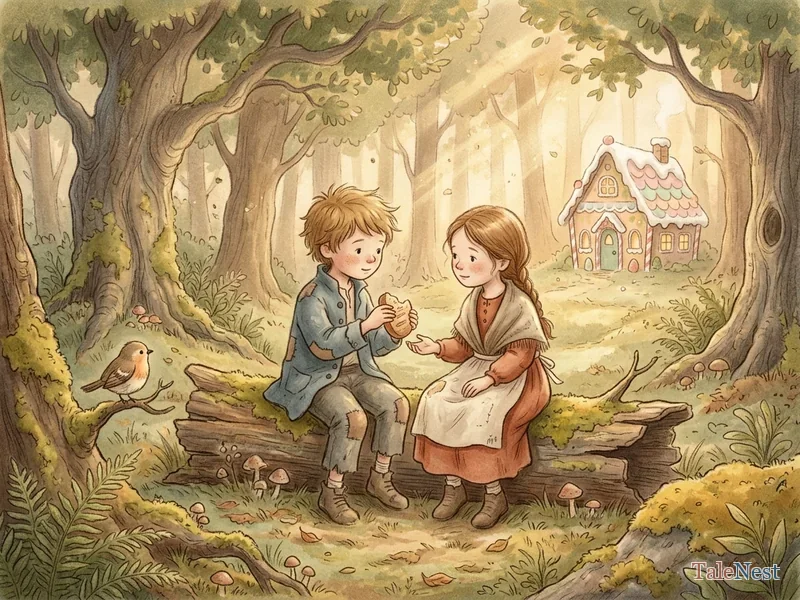
In a story that shows rather than tells, kindness arrives as an action before it is named. A character notices something, gives up a seat, shares a meal, returns a lost thing, waits for someone slower. The reader sees the act and draws the conclusion; nobody announces a virtue. When an adult says a character is generous, the child hears a label. When the character hands over the last piece of bread, the child sees a choice. Let the act be visible, let the picture carry it, and let the child call it what they will. The label can come later, if at all.
Consequences that are visible
An act of kindness in a tale should leave a mark, and the mark should belong to the story rather than to a lecture. The consequence need not be grand. A lonely figure has someone to sit with. A village that laughed at someone now makes room for them. What matters is that the change can be seen in the illustration and in the next few sentences, so the reader understands the action went somewhere. Prefer endings where the world around the character shifts slightly, and where the kind person is changed too. That is a more honest picture of what kindness does.
Choosing the right tale
Kindness to strangers
Stories about kindness to strangers let a child practise a feeling at a safe distance. A stranger in a tale is not a real person at the door; there is no risk in caring about them. Look for a story where the stranger is clearly in need and the kind act is small and specific, a direction given, a place to rest, a shared umbrella. Avoid tales that turn kindness into naive trust or that punish the kind character for helping. The best of these make the helper look ordinary, not saintly. A child should be able to imagine being that person.
Kindness to siblings and peers
Harder, and more useful, are stories about kindness between people who already know each other. Siblings and friends are where children meet jealousy, fairness and the temptation to be unkind, and a tale that shows a character choosing patience with someone annoying gives them a model they can use. Choose one where the difficult relationship is not resolved by a sudden miracle. The child who was bored, rude or competitive stays that way for a while, and the kind character has to keep acting anyway. Mention a resemblance to your own household lightly if the child does; do not use the tale as evidence in an argument about who started it.
Reading it together
Pausing at the generous act
The natural place to pause is the moment of giving, and the pause should be brief. Read the sentence, look at the picture, and let the child take it in without a running commentary. A question such as “what did she just do?” is usually unnecessary; the reader saw it. If you want to say something, describe what is visible: “he gave away the only one he had.” That is more useful than a judgement. Do not turn the pause into a check that the child understood the moral. The strongest response is often nothing at all, a slight slowing of the voice, a second look at the page.
Asking what it cost the character
Kindness in a story is more interesting when it costs something. Ask what the character gave up, and you turn the tale from a display of good behaviour into a real choice. Perhaps they lost time, or food, or the chance to be first. Perhaps they had to be kind to someone who had been unkind to them. A child who sees the cost understands that the act was a decision, not a reflex. Keep the question in the story: what did it cost him, and would he do it again? If the child says the character did not mind, accept that answer. Some people find giving easy, and that is worth seeing too.
Carrying it into the day
One small act before bed
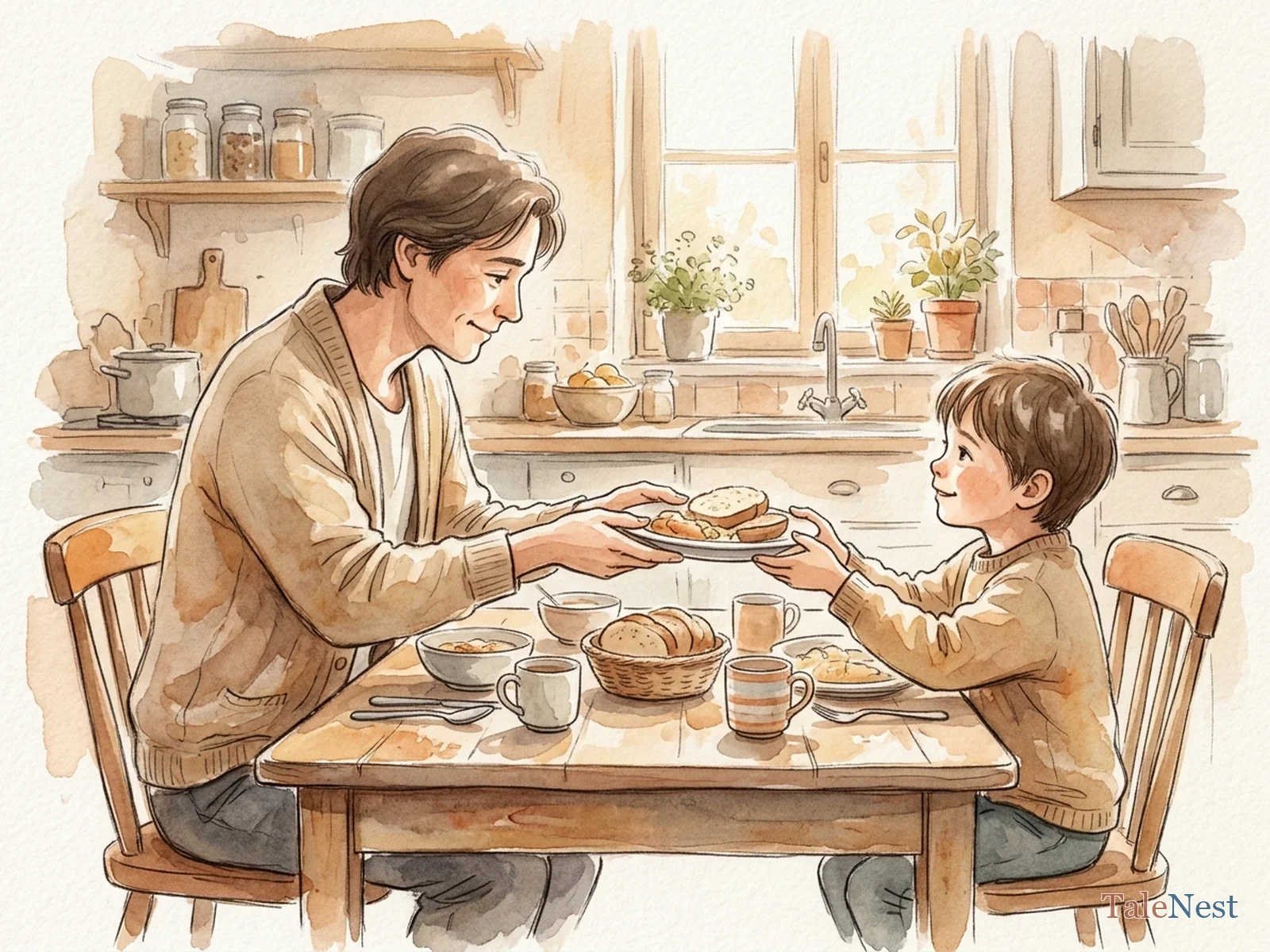
If you want the story to travel, give it somewhere to land. One small, practical act is enough: putting a toy back for someone else, fetching a cup, saying goodnight to a relative who is visibly tired. Keep it ordinary and do not attach it to the reading as a reward or task. Some nights there will be no appetite for it, and that is all right. An act offered once, freely, teaches more than a week of reminders. Notice it with a short phrase and let the moment pass.
Noticing without praising too much
Adults tend to celebrate a kind act as though it were an achievement, and children quickly learn to do the act for the celebration. Name what happened instead of judging the child: “you gave him the blue one” rather than “what a kind girl you are.” This keeps the focus on the action and lets the child decide what it means. One short remark is plenty. A quiet acknowledgement, delivered without an audience, will do more for the habit than a procession of compliments that turn kindness into a performance for adults.
Common questions
Does kindness need a reward in the story?
Not as payment, no. A tale where the kind character is handed a prize suggests that kindness is a way of getting something. What stories can show is the natural result of the act: company where there was loneliness, help returned later, a household that runs a little better. Those are consequences, not rewards.
What if the child resists?
Sometimes a child rejects a story about kindness, especially one they suspect is aimed at them. Do not insist. Put the book back and try another without comment, or return to it months later. Resistance is often a sign that the child felt being taught, not that they disliked the tale. If a child mocks the kind character, ask what they thought he should have done instead.