Gratitude at the Dinner Table: A Seven-Minute Reading Ritual
Gratitude is difficult to teach directly. Tell a child to be thankful and you may get a dutiful phrase with little feeling behind it.
This article offers general information for families. It is not medical, psychological or developmental advice; ask a qualified professional about your own child.
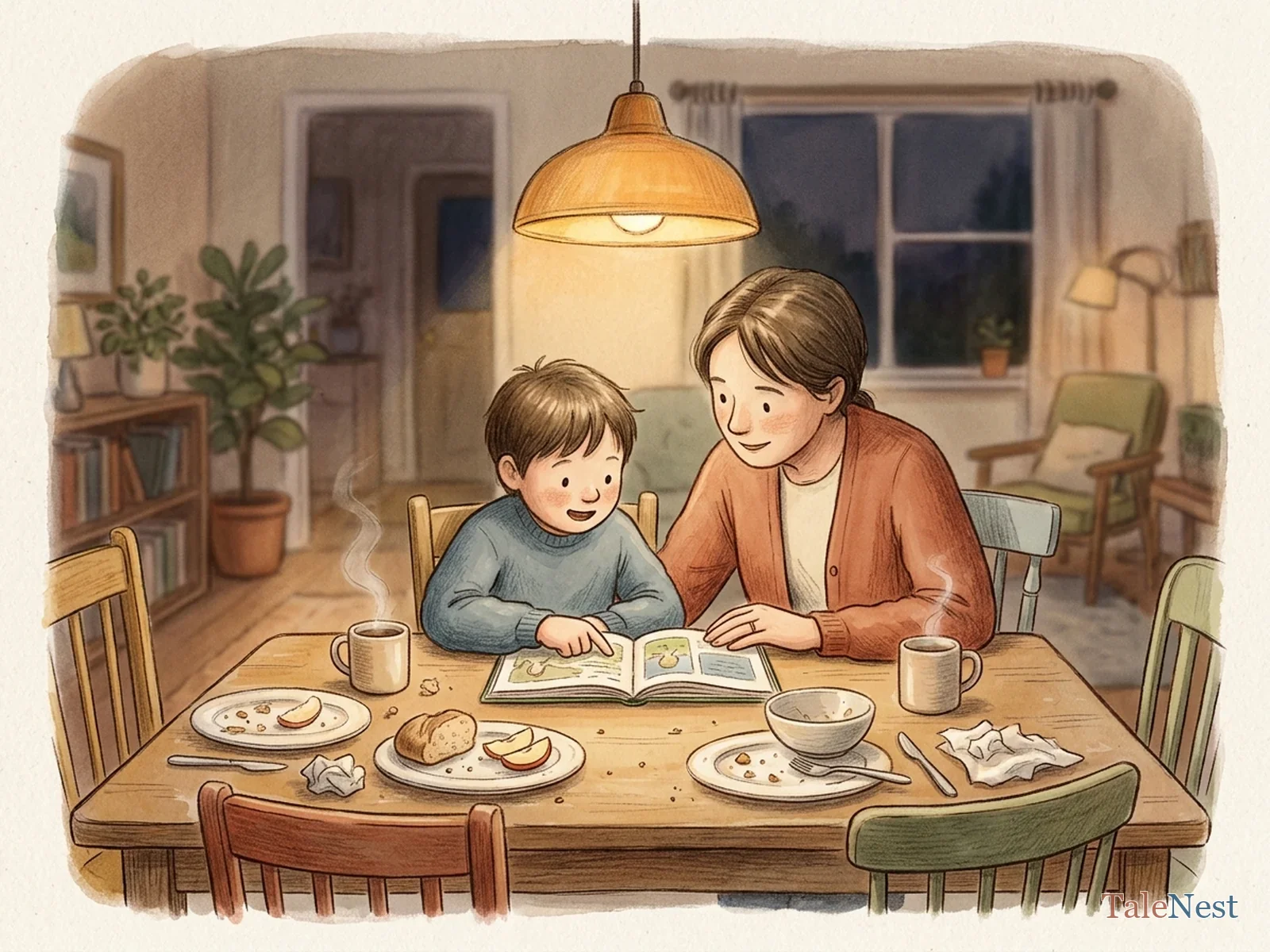
Gratitude is difficult to teach directly. Tell a child to be thankful and you may get a dutiful phrase with little feeling behind it. Stories do the work more quietly. A short read at the same point each evening can make thankfulness feel like a natural part of the day rather than a lesson. The dinner table is a good anchor because the family is already gathered and the mood is usually settled. Seven minutes is enough: long enough to enter a story, short enough that no one dreads it. What follows is not a programme with targets, just a shape many families can keep.
Why a fixed time helps
Linking reading to an existing moment
A new habit is easier to keep when it attaches to something that already happens. Dinner is already on the calendar, so the reading does not need its own negotiation each night. When the plates are cleared, the book comes out. That simple sequence removes the question of when and leaves only the question of what. Over time the association becomes automatic: the end of the meal signals a few quiet minutes together. Children are creatures of rhythm, and a predictable slot lowers resistance. They stop asking whether tonight is a reading night, because every night is. The reliability matters more than the length of the reading.
Keeping it short on purpose
Seven minutes is the design rather than a reduced version of a longer reading session. A short, dependable reading session is easier to repeat than a long one that occasionally runs late. Children who know the end is near can settle into the story without guarding against a long haul. Adults, too, are more willing to begin when the cost is clearly bounded. The limit also changes how you read. With only a few minutes, you choose a small story and stay with it, which suits the evening mood. Gratitude itself benefits from the brevity. A single clear moment of noticing is more likely to land than a long discussion that drifts into other things.
The seven-minute shape
One minute to choose
The first minute is for picking the book. Keep a small basket near the table so the choice is between a few known favourites rather than an open shelf. A limited set speeds things up and gives children a sense of control without a long debate. If two people want different books, alternate nights rather than arguing. The choosing minute also does something subtle: it signals that reading is about to begin and gives everyone a moment to shift gears. Rushing this step tends to make the reading itself feel hurried, so let the choice be part of the ritual rather than an obstacle before it.
Five to read, one to talk
Spend the middle five minutes on the story itself, reading at a pace that lets the words land. When you finish, leave roughly a minute for one short exchange. This is not a quiz. A single question is enough, and it should be one you are genuinely curious about. What made that character smile? Who had something good happen to them? If the child offers nothing, that is acceptable; the question has still been asked. The point of the final minute is to let the story touch the day without turning it into an exercise. Short and unforced is the whole idea.
Choosing a gratitude story
Stories about noticing
Some of the best gratitude tales are simply about paying attention. A character who stops to see the light in a window, the taste of a meal, or a kind gesture that would normally pass unnoticed gives children a model of awareness. These stories work because they do not demand a feeling; they describe an act of looking. A child can follow the character's attention without being told what to feel about it. When you finish such a book, the question almost asks itself: what did you notice today? That question, borrowed from the page, is gentler than a direct request to count blessings.
Stories about saying thank you
A second kind of tale shows gratitude being spoken. Look for stories where a thank-you is specific and connected to something real, not a polite phrase handed out on every page. A character who names what someone did, the help, the company, the extra portion, teaches children what an actual thank-you sounds like. These stories also make room for the awkwardness of saying it; a child who mumbles or forgets is not treated as ungrateful. That honesty helps. Gratitude expressed badly still counts as a start, and a story that shows this takes the pressure off the child who finds the words hard to find. A mumbled thanks still counts.
When the family resists
Letting a child pick
If one child groans at the ritual, hand them the choice for a week. Let them select the book, even if it is one you would not have chosen, within a reasonable range. Ownership changes the dynamic from something done to them to something they run. A child who picks a silly or familiar story is still participating, and repetition is not a problem at this stage. Resistance often fades once the child realises the choice is real. If it does not, keep the slot open without forcing the book; the door should stay unlocked even on nights nobody walks through it. Pressure turns a small ritual into a standoff, and that is a trade no one needs.
Skipping without guilt
There will be evenings when the table is rushed, tempers are short, or everyone has eaten at different times. Skip the reading. A ritual that survives occasional misses is healthier than one enforced past the point of goodwill. When you do return the next night, do not make up for the gap or comment on it. Simply resume. Children take their cue from your ease; if a missed night is treated as a small thing, they learn that the habit is sturdy rather than fragile. The goal is a pattern over months, not a perfect record this week. A relaxed return is more likely to become a lasting habit than a strict one that quietly exhausts everyone.
Common questions
Does this work with teenagers?
It can, though the shape changes. A teenager may not want a picture book at the table, and that is fine. The fixed slot and the short, unforced conversation still help. Try a few pages of something they chose themselves, or a short essay or poem. The gratitude question should be lighter still, almost invisible, or it will feel like an inspection. If the ritual becomes a source of friction, let it go and keep the mealtime conversation itself as the goal.
What if we only have three minutes?
Three minutes is enough for a short story or a single page of a longer one. The value lies in the regularity and the calm, not in finishing a book. Choose a story with one clear moment and stop there. You can continue the next evening or leave it where it is. A three-minute habit kept five nights a week is worth more than a twenty-minute session that happens only when conditions are perfect.