The Boar That Carried the Boy
On a freezing Florentine night, a hungry orphan climbs onto a bronze boar and discovers that gratitude can wake even a statue to life.
 Retold by Idalia SantosAges 6+6 min read1037 words
This is a work of fiction, retold in original language for TaleNest. Names, places and events are part of the story.
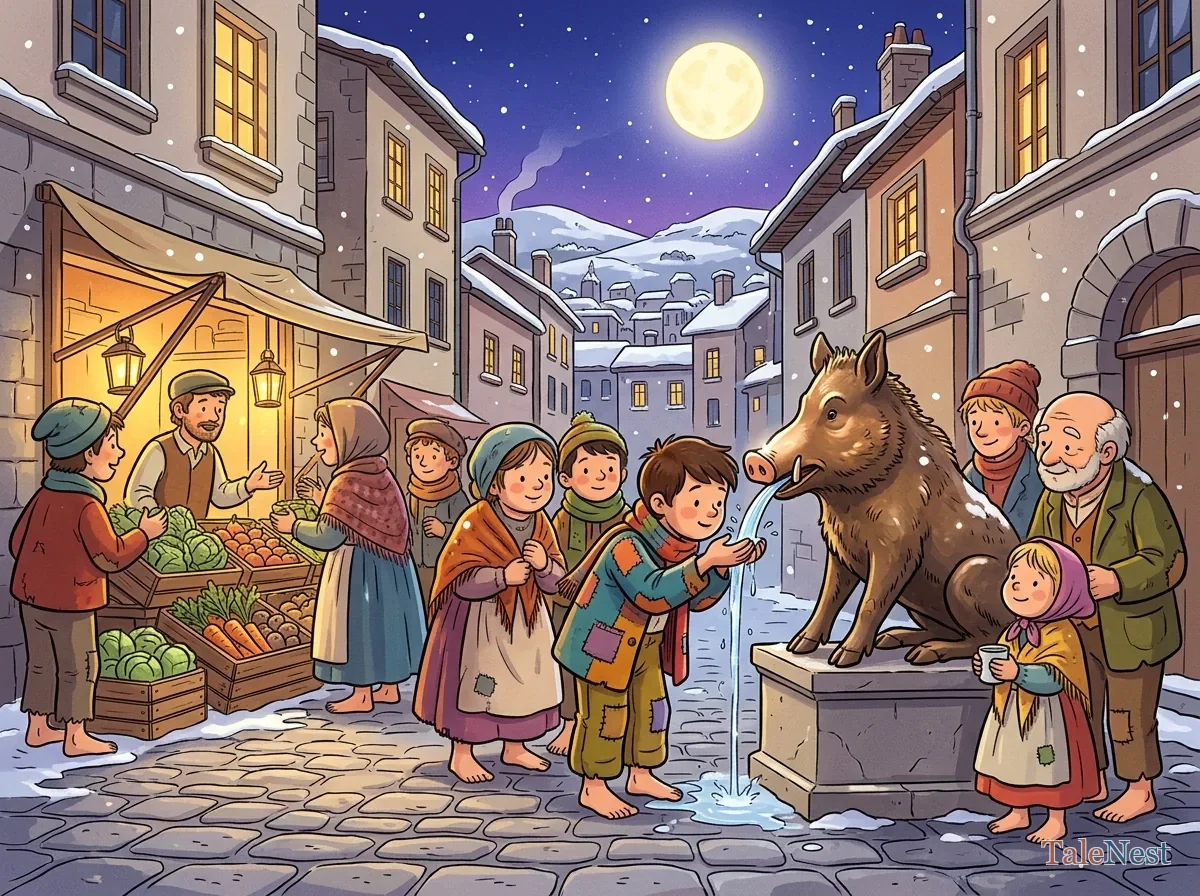
In Florence, a short walk from the Piazza del Granduca, a narrow lane called Porta Rossa runs past a vegetable market. Facing the stalls stands the strangest sculpture in the city: a wild boar of bronze, so finely cast that it looks poised to charge. Cold, clear water flows without pause from its mouth. Time has stained the metal a dark, mossy green, and every part has lost its shine except the snout. That alone still gleams, burnished smooth by the countless hands that have gripped it. Barefoot children and hungry grown-ups come here to hook their fingers around the bronze neck, tilt up their faces, and drink. It is a lovely sight: the fierce little animal caught mid-stride, and some ragged boy with his arms about it, mouth pressed to the spout, drinking as if the whole world's kindness were stored in that stream.
It was an evening in deep winter. Snow lay thick across the hills, yet the full moon hung bright and unshaken in the sky.
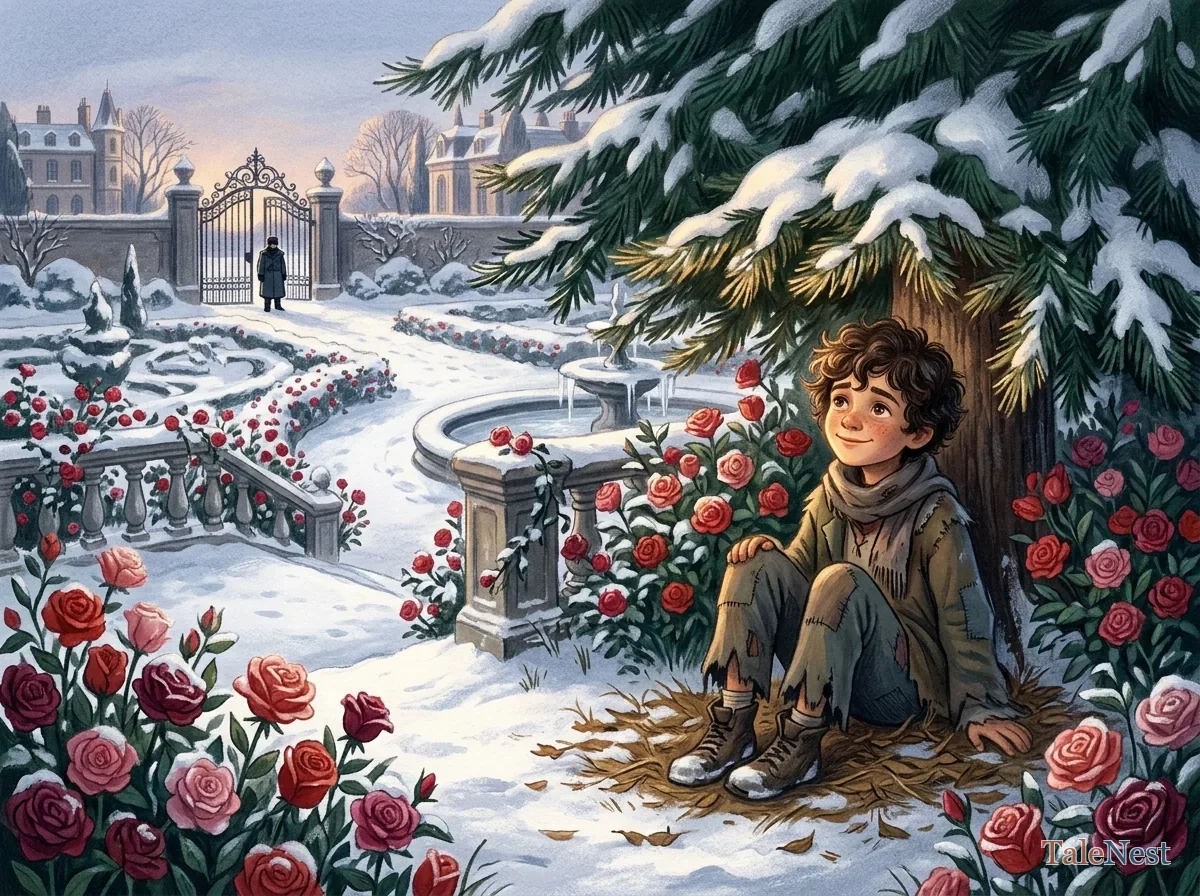
All day long a ragged boy had sat in the Grand Duke's garden, beneath a roof of pine boughs where roses bloom by the thousand even in the coldest months. He might have been the very picture of Italy, so handsome was he, so quick to smile, and yet so frail that one could almost see the illness in him. Hunger gnawed at him, and thirst as well, and not a single coin had come his way. When dusk fell and the garden closed, the gatekeeper turned him out. For a long while he lingered on the bridge that crosses the Arno, watching the stars tremble in the dark water between himself and the splendid marble span they call della Trinita, lost in the little dreams that fill an empty stomach.
At last he wandered toward the bronze boar. He dropped to his knees, threw both arms around the creature's neck, and set his mouth to the polished snout. The water was cool, and he drank in long, greedy swallows. Beside him on the stones lay a few lettuce leaves and two or three chestnuts, his entire supper. The street was empty; not a soul passed. He climbed onto the boar's back, folded himself forward until his curly head rested on the animal's, and without meaning to, slipped into a deep sleep.
At the stroke of midnight the bronze boar shuddered. The boy heard a voice, rough and low, say: “Hold fast, little one. I mean to run.”
And run it did, with the boy clinging to its back. What a ride that was! First they reached the Piazza del Granduca, where the bronze horse of the prince's statue greeted them with a neigh. The painted coat of arms on the old town hall glowed as though light shone through it, and Michelangelo's David swung his sling in the moonlight. Everywhere, strange life stirred. The bronze figures of Perseus and the Sabine women thrashed and twisted, and from the women's mouths rose such a cry of terror that it echoed across the silent square.
“Gratitude opens the door to wonder; when we appreciate what we have, even the coldest, most ordinary things can come alive with warmth and meaning.”The little lesson
The boar halted before the Uffizi palace, beneath the arched colonnade where nobles gather in carnival time. “Hold fast,” it repeated. “We are going up this staircase.” The boy said nothing. He was trembling, and happy.
They passed into a long gallery he knew well. Glorious paintings covered the walls, and statues and busts stood in every alcove, all bathed in a brightness like full daylight. But the finest moment came when the doors at the end swung open into the next room. He remembered how splendid it was, this place, yet he had never seen it half so radiant as on this night.
He stood quite dazzled. The walls seemed to burn with colour, and everything breathed and moved. There were two Venuses, the earthly one warm and rounded, just as Titian had pressed her to his heart.
On they went, room after room of wonder, the boar pacing patiently while the boy drank in every sight. One marvel hid the next, and yet a single picture fastened itself in his mind, perhaps because of the laughing children in it, children he had already seen there in the daylight.
Most people hurry past that canvas without a glance, and yet it holds a whole treasure of poetry. It shows Christ descending into the underworld, but there are no lost souls around him, only pagans, waiting. A Florentine, Angiolo Bronzino, painted it. The most beautiful part is the look of certainty on the children's faces: they know they are going to heaven. Two of them already have their arms around each other; a tiny one reaches a hand down to a companion still in the dark pit, and points to himself, as much as to say, I am going! The rest hover, unsure, waiting or bowing humbly before the Lord.
The boy lingered before that painting longer than before all the others together. The boar stood motionless. A small sigh drifted through the room, whether from the canvas or from the animal's chest, no one could tell. The boy stretched out his hand toward the smiling children, and then the boar moved on, out through the open hall.
“Thank you, and God bless you, good beast!” cried the boy, stroking his mount as it bounded down the steps.
“Thank you, and may God bless you too,” answered the boar. “I have done you a kindness, and you have done me one. Only when an innocent child rides on my back do I find the strength to run. See?” The creature stepped into the circle of light cast by the lamp before a painting of the Virgin. “I can go anywhere with you, everywhere except inside a church. But if you are with me, I may look in through the open door. Only stay on my back. If you dismount, I shall fall dead, just as you see me in the street by day.”
“I will stay with you, good beast,” said the boy. And away they flew through the streets of Florence, the boar galloping on until it reached the square where the church of Santa Croce stands, and there at last it stopped.
Gratitude opens the door to wonder; when we appreciate what we have, even the coldest, most ordinary things can come alive with warmth and meaning.