Why Cinderella Still Matters: Reading the Story Beyond the Glass Slipper
Ask a child what happens in Cinderella and you will probably get the same answer: a girl loses a slipper, a prince finds it, and everything ends well. Ask what the story is for and the room goes quiet.
This article offers general information for families. It is not medical, psychological or developmental advice; ask a qualified professional about your own child.
Ask a child what happens in Cinderella and you will probably get the same answer: a girl loses a slipper, a prince finds it, and everything ends well. Ask what the story is for and the room goes quiet. That second question is the reason to read it again. Cinderella is not a lesson about waiting to be rescued. It is a story about how a person is treated, how she keeps her bearings when the people around her have decided she does not count, and what a household chooses to notice once the evidence is placed in front of it. Read with an adult who pauses in the right places, it becomes one of the most useful short stories in a child's library.
The story in a few lines
What happens, stripped of the film version
Start with the bare shape. A girl loses her mother. Her father remarries, and the new wife brings daughters who treat her as staff. She sweeps, she cooks, she is mocked, and she is kept from the ball. Help arrives, from a fairy figure in some tellings, from a tree and a pair of birds in others, and she goes to the palace, once in one version and three times in another. She leaves something behind. The prince searches. The family tries to make the evidence fit someone else. The truth is revealed, and the girl is no longer at the bottom of the household. That is the whole plot; everything else is decoration.
Why the ending changes between versions
The version most adults learned as children comes from Charles Perrault's French tale of 1697: a fairy godmother, a carriage made from a pumpkin, a glass slipper, and an ending that stresses forgiveness. The Grimm brothers' German version is harder. The girl returns to the ball on three separate nights; the stepmother and the sisters cut at their own heels to force the slipper into place; birds expose the deception. Older variants, including the Chinese tale of Ye Xian, are different again. None of these is the single correct text. Each tells its readers what that tradition wanted to reward, patience, cleverness, or the public uncovering of a lie, and each ends where that reward becomes visible.
The questions children actually ask
“Why is she treated so badly?”
Children notice unfairness before they have words for it. They will ask why the sisters get new dresses while she cleans, and why the father says nothing. Do not rush to explain it away as jealousy or as the way things were long ago. Say what the story actually shows: the household has decided that her work is worth nothing, and the people with power repeat that decision every morning. That is enough. A child who names the pattern here will recognise it later, in a playground or a staff room, without a lecture.
“Was it luck or character?”
The magic is real in the story, but it does not arrive because she sits still and waits. In the Grimms' version she goes back to the ball after being warned and threatened, and she returns to the tree each time. In Perrault she is careful about the slipper and modest about what she has seen at the palace. Luck opens a door; her behaviour decides what happens once she is through it. That distinction matters more than the pumpkin or the glass. It is also the part a child can copy, which is why it is worth saying out loud.
Reading it together today
Where to pause in the text
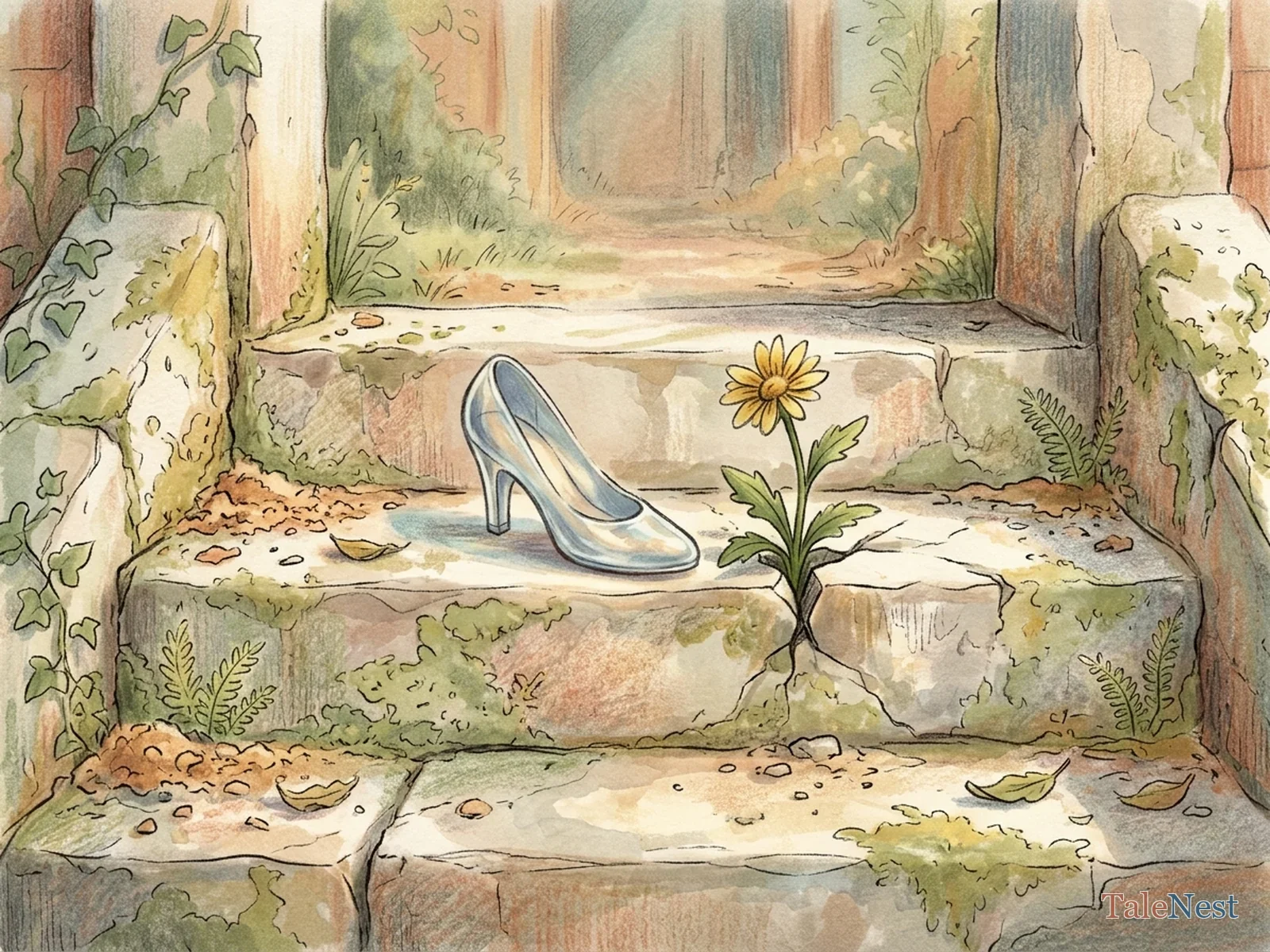
You do not need to stop at every sad line. Three pauses are enough. The first is when her mother dies and her father leaves on a journey: acknowledge it briefly, then move on. The second is the moment the family comes back from the ball and she is left outside; let the child say what she might be feeling before you offer your own words. The third is the fitting of the slipper, when the sisters try to make a false fit and the birds say what they see. Those three pauses carry the whole conversation. Everything between them can be read straight through.
Asking who helps whom
Most retellings are full of invisible work. Someone sweeps, someone carries water, someone mends a hem. Ask the child to count the helpers in the story, including the tree, the birds and the small creatures in the kitchen. Then ask which helper is never thanked. The question turns the tale into a way of seeing and keeps the adult from presenting it as pure individual triumph. Nobody in this tale gets through alone. Even the prince needs someone to tell him which foot to look at, and the household needs a witness before it can admit the truth.
What it teaches without a lecture
Kindness as a habit
The girl is kind before anything good happens to her. That order is the point. Kindness is not a transaction in this tale; it is what she does when no one is watching and no reward has been promised. Children understand that more easily than adults expect, provided we do not translate it into a rule. If the grown-up adds a sermon at the end, the story loses its shape and the child hears the lesson instead of the person. Let the repeated actions speak for themselves.
Visible justice
The ending works because it is public. The wrong fit is displayed, the true fit is shown, and the household has to look at what it did. That is a different promise from “good things happen to good people”. The tale promises something smaller and more believable: what was hidden will be seen. For a child, that is a useful idea to carry into a world that is often unfair. We cannot offer a perfect ending. We can offer a story in which the truth arrives in front of everyone, with nobody's word required.
Common questions
Is it too much for a three-year-old?
The early pages can be hard: a death, a long journey, a sudden change of household. For a very young listener, choose a short retelling that keeps the cruelty brief and the language plain. If they ask for it again the next night, keep going. If they change the subject, let them. A forced story becomes a task; this one works best when it is freely returned to.
Which version should we read first?
Start with the one you can read aloud in a single sitting and whose source is named on the page. Perrault is gentler and more forgiving; the Grimms are stranger and more exact about the cost of telling a lie. Read one version first and only then compare them. A child who knows one version well will notice the differences alone, and will usually have an opinion about which ending is fairer. That opinion is worth more than an explanation given in advance.
Word count target: ~1,060.