Little Red Riding Hood and the Art of Asking Better Questions
This is one of the first stories many children meet, and one of the easiest to dismiss. The wolf is obvious, the girl is naïve, and the ending seems to reward caution.
This article offers general information for families. It is not medical, psychological or developmental advice; ask a qualified professional about your own child.
This is one of the first stories many children meet, and one of the easiest to dismiss. The wolf is obvious, the girl is naïve, and the ending seems to reward caution. Read more closely, and the tale is less about obedience than about attention. It asks a small listener to notice when something is wrong and to say so. That is a skill worth talking about, because it is useful long after the book is closed. You do not need to turn the reading into a safety lesson. You only need to slow down at the right moments and let the child arrive at the observation themselves.
The version we usually tell
The wolf, the basket and the bed
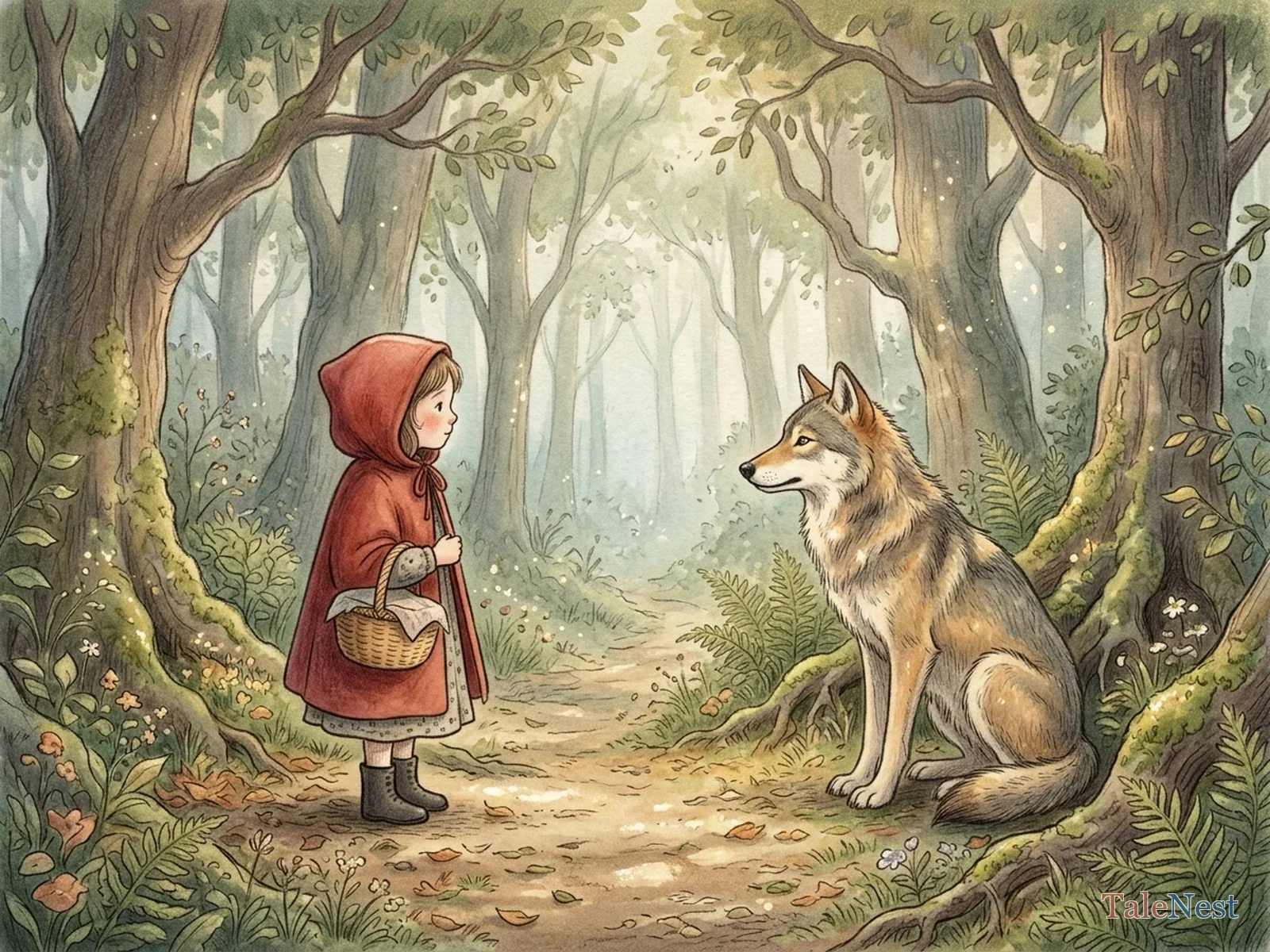
In the familiar shape of the story, a girl sets off through the woods to visit her grandmother with a basket of food. A wolf wants the basket, and learns where the grandmother lives by asking her. He arrives first, swallows her, and waits in bed. The child notices that the room looks strange and that the person under the covers looks stranger. “What big ears you have,” she says, and the wolf answers, “The better to hear you with.” A hunter or woodcutter comes by, and the two are rescued from the wolf's belly. The details vary, but the sequence holds: a journey, a deception, a narrow escape.
What changed in modern retellings
Retellings have softened the tale in predictable ways. The wolf is sometimes caught before anyone is eaten; the grandmother is merely shut in a cupboard. The girl is often given a name and a bit more nerve, and the ending may let her save herself. Some versions drop the hunter altogether. Perrault's early telling ended with a warning aimed at young girls, while the Grimm version gave the rescuers a larger part. These changes are not wrong; they show how a story bends toward the concerns of the people retelling it. When you choose a book, you choose which emphasis your child will meet first.
The real skill underneath the story
Noticing what is out of place
The whole tale turns on a single ability: seeing that something does not fit. The door is open, the grandmother looks odd, the voice is wrong. Little Red Riding Hood does eventually notice, but only after she is already at the bed. A child listening can be invited to notice earlier. The story is full of small mismatches placed there for exactly this purpose. When you read the line about the big ears, pause and ask what the child sees that the girl has missed. You are training attention, not fear. The point is not that wolves are everywhere but that the world offers clues, and clues are worth using.
Asking a trusted adult
The girl in the tale talks to the wolf when she should perhaps talk to someone else. She also, in many versions, leaves the path to pick flowers. That decision is less a moral failure than an ordinary child's mistake, and it is the moment the story turns. The useful lesson is not “never leave the path” but “tell a grown-up what you saw.” The story gives you a natural opening to name the adults a child trusts and to practise the words they might use. A question like “Who would you tell if the door were open and no one answered?” asks for a plan, not a promise.
Questions to ask while reading
“What do you see that she doesn't?”
This question does more work than any explanation. It asks the child to hold two points of view at once: what the character knows and what the reader can see. You might ask it when the wolf first appears, or when he is in the bed, or when the grandmother's voice sounds wrong. Some children will answer at once; others need the question asked again on a second reading. Accept short answers. “His teeth” is a complete response. If a child points at the picture instead of speaking, follow the pointing and name what is there. You are helping them build the habit of checking a situation against what they can observe.
“Who would you call?”
The grandmother in the story is ill and alone, and the girl is travelling without an adult. That setup invites a practical question. Ask who the child would call if they arrived and found something wrong. Let them work through the answer in their own terms: a parent, a neighbour, the number taped to the fridge. It is a chance to rehearse a response while everyone is calm and the wolf is only on a page. Children remember actions they have said aloud better than rules they have only heard. Keep the tone matter-of-fact. You are simply adding a name and a number to a story they already know.
From the page to real life
Strangers and familiar faces
The wolf is a stranger, but the story is also about a familiar voice that sounds different. Children meet far more familiar adults than strangers, and most adults they know are safe. The useful message is narrow: if someone you know asks you to keep a secret from your parents, or asks you to go somewhere without telling them, that is worth reporting. Keep the story's wolf where he belongs, on the page, and do not turn every neighbour into a threat. A child who can tell a strange face from a strange request has learned something useful.
The family rule you already have
Most families already have a rule about going somewhere with someone else. It may be informal: tell me before you leave the garden, or answer only the door when I am with you. The tale gives you a way to say that rule out loud without introducing a new one. After reading, you can say, “That is the same as our rule about the front door,” and leave it there. Some children resist any link between books and real life; do not push. What they keep from tonight may simply be the rhythm of the question and the sound of your voice asking it.
Common questions
Is it too old-fashioned?
The basket, the woods and the grandmother's bed belong to an older world, but the core situation is not dated. A child still travels between safe places, still meets people who are not their family, and still has to judge whether something feels right. You can keep the old setting and skip the old moral about a girl's obedience. The tale survives because its question survives, not because of the clothes anyone wears in it.
Which illustration works best?
Look for pictures that make the mismatch visible without making the wolf monstrous. A calm, polite wolf in a bed is more useful than a snarling one, because the danger in the story is concealment. If the illustrations show the grandmother's cap or a basket on the floor, all the better; those details give a child something to spot before the text names it. The right book lets you ask “What do you see?” and get an answer. If the art only offers a shock, the conversation stops before it starts.