The Ugly Duckling at School: Talking About Difference and Belonging
Children take to this story early, often before they can say what it is about. A bird is shaped differently from the others, is pushed aside, and eventually grows into something the flock cannot ignore.
This article offers general information for families. It is not medical, psychological or developmental advice; ask a qualified professional about your own child.
Children take to this story early, often before they can say what it is about. A bird is shaped differently from the others, is pushed aside, and eventually grows into something the flock cannot ignore. The appeal is not the lesson; it is the recognition. Most children have had the experience of being the one who does not quite fit, even if only for an afternoon. Reading the tale together gives you plain words for that feeling without turning it into a problem to be solved. What follows is a way to keep the conversation honest, particularly when school is part of the picture.
What the story says
The duckling's long year
The duckling hatches last and looks wrong to everyone around him. The mother duck means no harm, but she cannot see him as one of her own. The other birds peck and tease him. He leaves and spends a cold, lonely stretch moving from one place to another. Andersen wrote this as a story about a bird, not a child, and that distance is useful. The duckling is not naughty or clumsy; he is simply different in a group that has no room for difference. Children follow that idea more easily when it belongs to a swan rather than to someone sitting beside them in class.
The ending that surprises readers
The ending arrives quietly. The duckling sees a group of white birds on a lake and is drawn to them, expecting another rejection. Instead they welcome him, and he discovers that he was never a duckling at all. He had been growing into a swan the whole time. What surprises readers is that no one changes. The birds that teased him are not punished, and the flock that accepts him does not apologise for the earlier years. The change is in what he can now see about himself. Belonging here is not about becoming popular with everyone; it is about finding the group where you are recognised.
Why children recognise themselves here
Being measured against the group
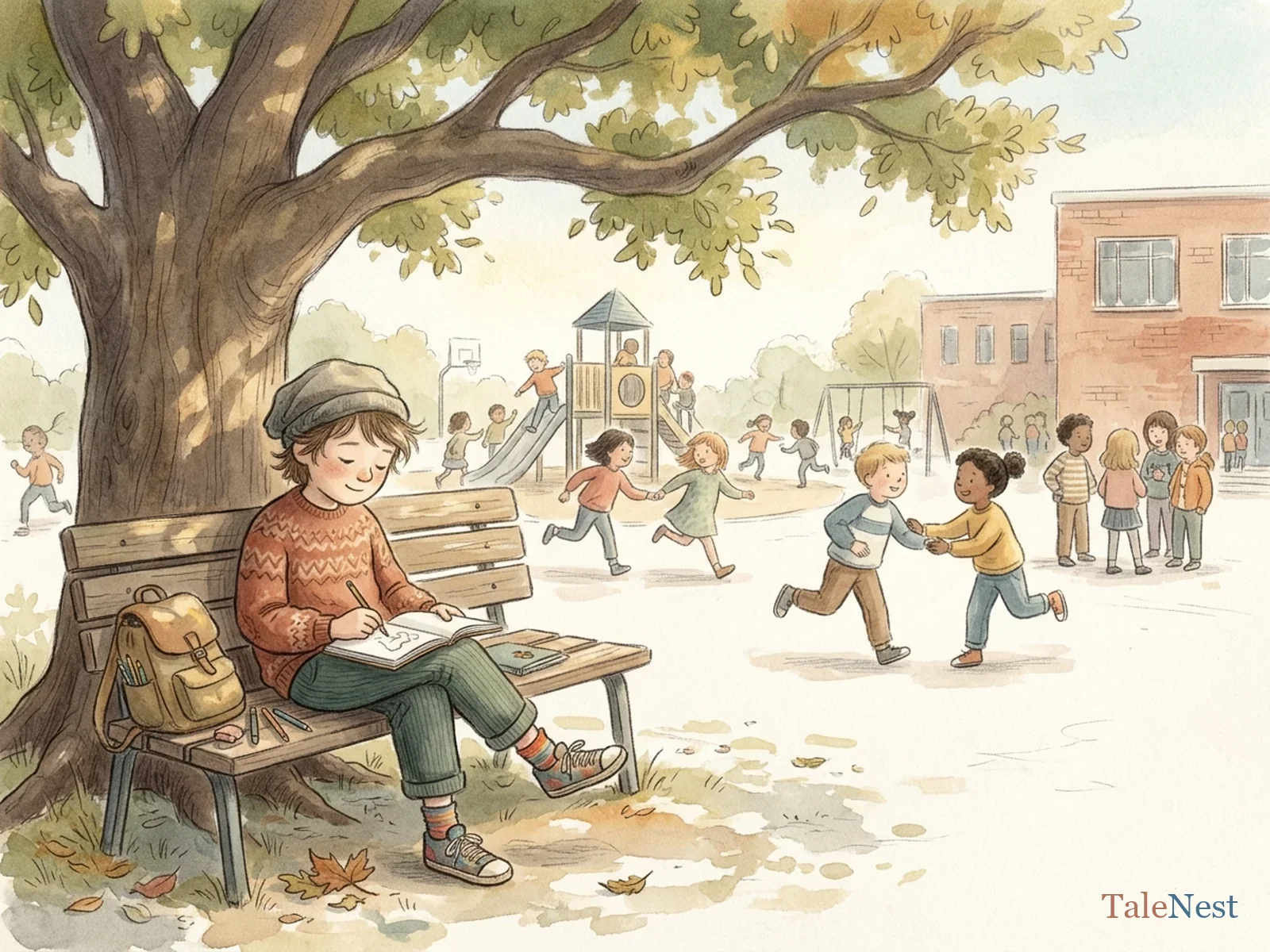
School is a place of constant, quiet comparison. Children notice who runs fastest, who reads aloud best, whose lunch looks different, who is asked to stay behind. The duckling's year gives shape to a feeling many children have but rarely name: the sense of being measured against a standard they did not choose. It is enough to notice that the story is about being looked at and found lacking. Some children will tell you about a specific moment; others will only nod. The tale works because it puts an outside image on an inside ache, and an outside image can be talked about.
Growing into a different shape
The other reason the story lands is that children are changing fast. A child who felt certain in September may feel out of place by March. The duckling's slow growth into a swan gives a hopeful but not sentimental version of that process. He does not become different through effort or good behaviour; he becomes what he already was. There is a gentle truth here for young listeners: you do not have to earn the right to be yourself. At the same time, the story does not promise that every awkward phase ends in a reveal. You can hold the comfort without overselling it.
Talking about difference at home
Words to use, words to avoid
The words you choose around this book set the tone for the conversation. “Different” and “doesn't fit in” are useful because they describe a situation rather than a person. “Ugly”, even as the story's title, can sting when a child applies it to themselves or to a classmate, so pause over it rather than glossing it. Ask what happened and who was there. Avoid explaining that the teasing child “didn't mean it”; that move closes the topic. Simple, accurate phrases do more work than careful ones. “He was left out” is enough. A child who hears a calm word for exclusion can begin to sort out their own part in it.
Comparison as a daily habit
Children hear comparisons all day, and most of them are unremarkable: who finished first, whose drawing is neat, why a sibling gets to stay up later. You do not have to eliminate comparison from family life, which would be impossible, but you can notice it. Try describing what a child did rather than ranking it against someone else. “You kept trying even after the tower fell” carries more information than “You're better at building than your brother.” After reading this tale, you might notice where your own language runs toward ranking. A home where difference is named without being judged gives a child somewhere to put the things they notice at school.
The school connection
What a teacher can do on Monday
A teacher has a limited window and a crowded room, so the useful moves are small ones. Reading this story aloud can open a brief conversation about what the flock did and how the duckling felt, without asking any child to identify himself. A teacher can also watch the ordinary moments where exclusion happens: who is left without a partner, whose work is spoken about in front of the class, which jokes have become routine. Naming those moments calmly, without staging a lesson, changes the climate more than a poster about kindness. Keep it optional. Forced sharing turns a private feeling into a performance.
When to ask for help
Some signs suggest a child needs more than a story and a conversation. If your child dreads school repeatedly, loses sleep over what happened at break, changes their routine to avoid a particular person, or stops talking about a friend they once mentioned often, take those signals seriously. Start with the class teacher, who sees the setting you cannot see. Describe what you have observed at home in plain terms, and ask what the school is seeing. It is a way of joining two partial pictures. The earlier the conversation happens, the more ordinary it feels to the child.
Common questions
Is the moral too obvious?
The ending makes the point plainly, and some adults worry that children will feel managed by it. In practice, young readers often miss the moral entirely on the first reading and remember the birds, the ice and the moment on the lake. Let the story land on its own terms. If a child draws their own conclusion, leave it alone. A moral that is noticed by the child rather than announced by the adult is the one that stays.
How do we avoid teasing after reading?
A story about exclusion can sometimes give children new language for teasing, especially if a line is funny. Choose one phrase from the book that you would be comfortable hearing repeated, and be ready to redirect if a child uses a cruel word at a sibling afterward. “That's a word from the story; it doesn't fit here” is a short, non-shaming response. Watch for the difference between a child testing a phrase and a child acting on a grudge. The first needs a gentle boundary; the second needs a real conversation.