
The Lamp That Brightened Scutari
In a freezing November of 1854, one nurse walked into a crowded military hospital and proved that cleanliness, courage, and a small lamp could change everything.
 Retold by Idalia SantosAges 10+5 min read825 words
Retold and rewritten by Idalia Santos for TaleNest. This version is original prose in English; the illustrations and accompanying text were created for this site.
This is a work of fiction, retold in original language for TaleNest. Names, places and events are part of the story.
On a bitter November night in 1854, Florence Nightingale arrived at the military hospital at Scutari. The war raged far away, but its pain had followed the wounded here, filling every corner of the old building with suffering and sorrow. Injured soldiers lay packed into narrow beds, shoulder to shoulder, between walls dark with damp and streaked with age. The air hung heavy with a sour, unfamiliar smell, and the floors looked as if clean water had not touched them in months. Here and there a candle guttered, casting long shadows that made the place feel even more forsaken.
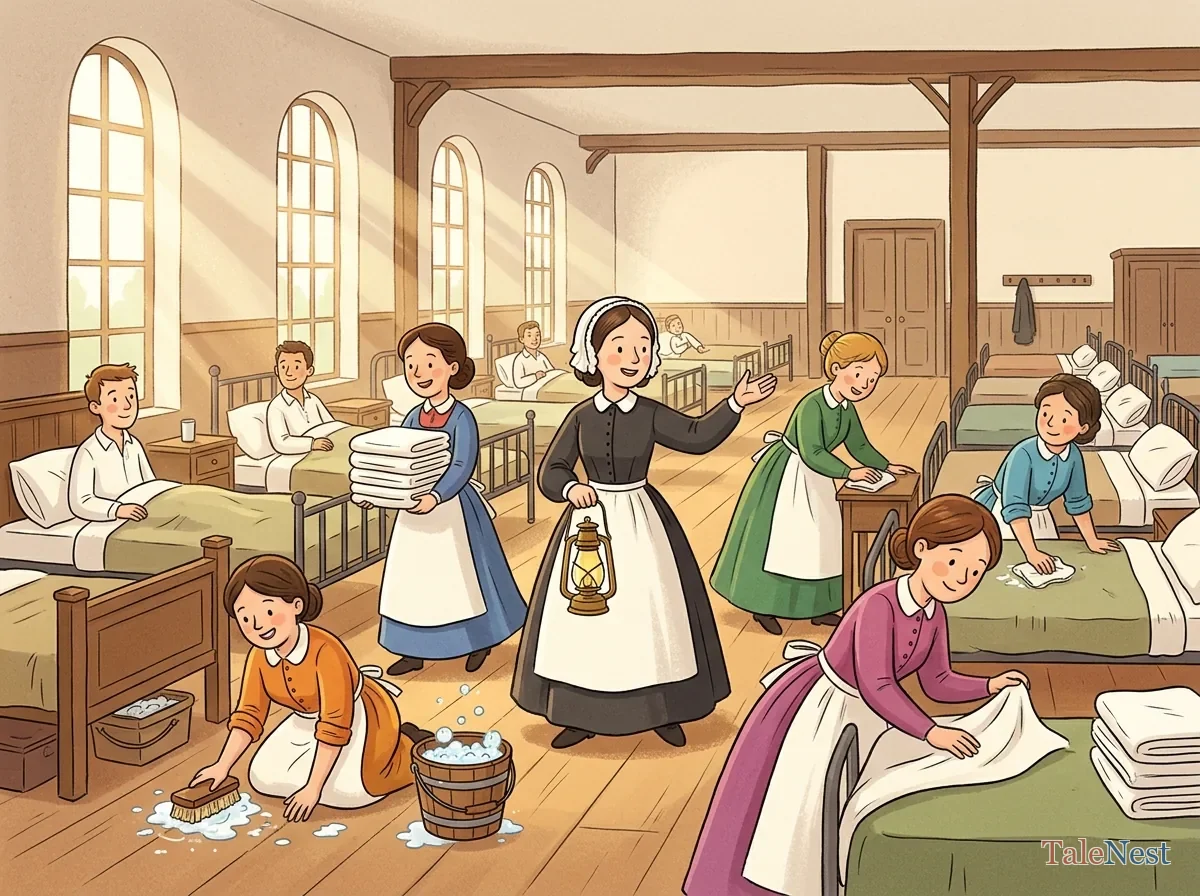
Florence, in her plain dress, with a voice gentle yet unyielding, took in the place with eyes full of quiet resolve. She could not stand by while these men suffered so needlessly. She decided that she and her small team would change it—one corner, one bed, one act of care at a time. Where others saw a hopeless mess, she saw work that could be done.
“First, we clean every inch of this place,” she told her fellow nurses, gathering them close. “These soldiers have been brave enough. They deserve a bed and a room that are clean.”
And so they scrubbed. The nurses worked until their arms ached and their hands were raw, scouring floors and stripping beds, shaking out blankets and scrubbing the walls. All the while Florence explained why cleanliness mattered—an idea that few in those days believed in, and that some outright mocked. A few of the women muttered under their breath, doubting whether their hands could make a difference in such chaos. But Florence would not be discouraged. She led by example, working long after the others had gone to rest, refusing to let fatigue have the last word.
At night she walked the corridors with a lamp in her hand, its small flame steadying the darkness. The soldiers, worn down by battle and pain, watched her pass as though she were something not quite earthly—a figure of comfort in a place that had almost forgotten comfort.
“Are you real?” a young soldier named John asked one evening as she bent to tuck the blanket more closely around him. His eyes were bright with fever and wonder. “I've never seen anyone like you.”
“True courage is often quiet: the patient work of cleaning one corner, comforting one person, and refusing to leave things as they are.”The little lesson
Florence smiled and patted his shoulder, her touch light and sure. “Of course I'm real, John. I'm here to help you. And you can help make this place better too—by resting, by eating, by believing you'll be well again.”
John, who had nearly given up, felt those words hand him a reason to go on. Something in him stirred. He wanted to get well, to heal, and one day to stand before Florence and thank her properly—to thank her and her lamp.
Day after day, Florence saw her efforts bear fruit. The soldiers grew stronger; the air no longer smelled of despair. Wounds that had festered began to close, and a cautious hope crept into the wards. Then one morning a new challenge arrived: Doctor Cooper came to her with a drawn face and news that made her heart sink.
“Florence, I think we have an outbreak of cholera. It's spreading. If we don't act quickly, everyone here will be in danger.”
Florence did not hesitate. She knew the risks, but she also knew that care and precaution could hold the threat back. The water must be purified, she decided; everything they touched must be clean; not a single corner could be neglected. Fear, she told her team, was less dangerous than carelessness.
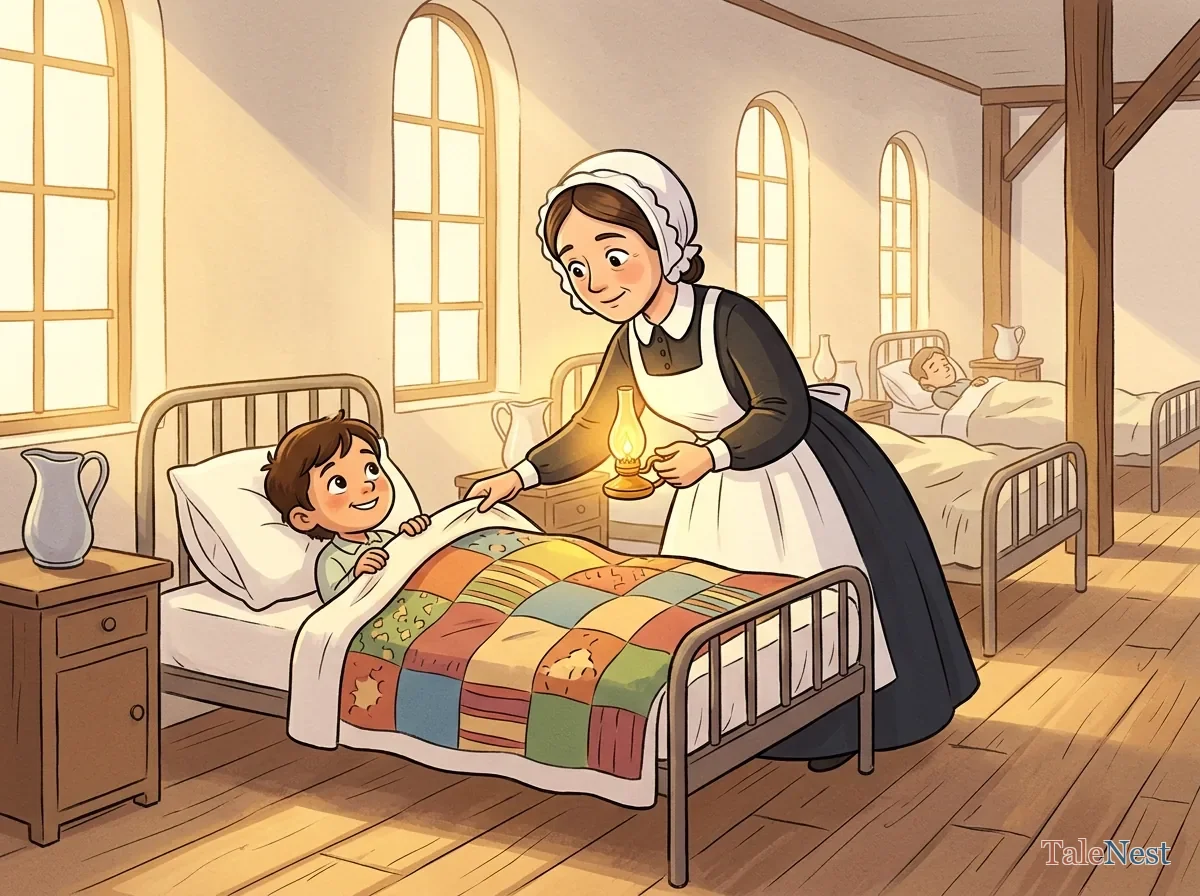
She organized a chain of care. Her nurses filtered the water through makeshift filters and covered every wound with sterilized bandages. They washed their hands between patients and burned what could not be saved. John, already feeling better, began to help as well—carrying clean cloths, handing out blankets, and coaxing the weaker men to drink. Each task seemed tiny, almost insignificant, but together they made an enormous change.
Weeks passed, and little by little cholera loosened its grip on the hospital. No new cases appeared. The soldiers healed, and many said it was Florence's lamp—small, steady, always there—that had given them the strength to fight the sickness and the darkness around it.
One night, as she made her usual round of the wards, John called to her from his bed. “Miss Florence,” he said, “thank you for being our light in these dark times. We thought the world had forgotten us, and you showed us it hadn't.”
Florence only smiled, the lamp still in her hand, her heart full. She knew her work was done—that her small light had managed to brighten, if only for a moment, the lives of men who had suffered so greatly. Long after she left Scutari, the soldiers would remember the lady who walked the night with a lamp, and the lesson she had quietly taught: that even in the darkest place, one person's care can be enough to begin.
True courage is often quiet: the patient work of cleaning one corner, comforting one person, and refusing to leave things as they are.


