
The Luck of Silly John
Two learned brothers ride to win a princess with bookish speeches, but their muddy, singing fool of a brother wins her heart and the crown.
 Retold by Idalia SantosAges 8+6 min read784 words
This is a work of fiction, retold in original language for TaleNest. Names, places and events are part of the story.
In an old manor house in the countryside lived an elderly squire with two very clever sons. They had set their hearts on marrying the king's daughter, for she had sent criers through the land declaring she would wed whoever could amuse her most gracefully and wittily.
The elder knew the whole Latin encyclopedia by heart, and three years of the local newspaper forwards and backwards. The younger had mastered every guild rule paragraph by paragraph and all a guild president needs to know, so that he could discourse on affairs of state; he could also embroider braces, being deft with his fingers. “We shall win the princess,” they declared.
Their father gave each a fine horse, jet black for the encyclopedia man, milk white for the guild expert. As the servants watched, a third brother appeared, for there were three; but he did not count, being no scholar, and everyone called him the fool.
“Where are you off to in your Sunday best?” he asked. “To the palace, to win the princess with our speeches. Did you not hear the crier?” they said, and told him everything.
“Then I shan't miss my chance!” cried the fool. His brothers laughed and galloped away.
“Give me a horse, father! I should like to marry. If the princess accepts me, good; if not, I'll find a way.” “Nonsense! You can hardly speak. Your brothers may present themselves.” “Then I'll ride the billy-goat. He's mine and can carry me.”
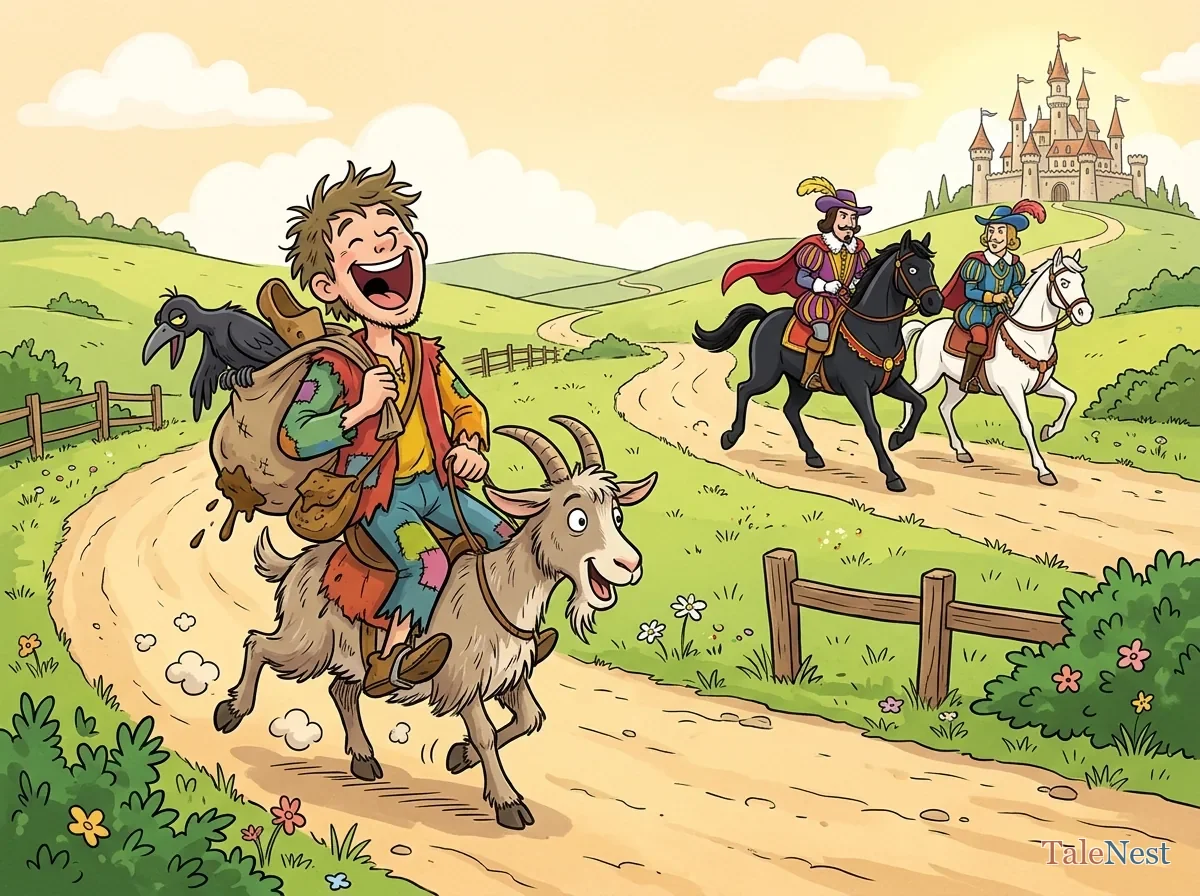
He swung onto the goat, dug in his heels and set off at a trot. “Make way, here I come!” he shouted, singing so loudly his voice rang far. His brothers rode on in silence, saving their breath for the grand ideas they meant to unfold.
“Wit, warmth and being yourself can accomplish what book-learning cannot; joy and simplicity often carry the day.”The little lesson
“Hey! Look what I found!” He showed them a dead crow. “Idiot! What do you want with that?” “I'll give it to the princess.” “Do as you like!” they laughed, and rode on.
“Hey! Look what I found, not something you see every day!” It was an old clog without its mate. “Blockhead! Will you give that to the princess too?” “Of course!” The brothers roared and left him behind.
“Hey! I'm getting better and better! Gee up!” “What now?” “Too good to tell, how she'll rejoice!” “Ugh, mud from a ditch!” “Just so, and the finest kind, that slips through your fingers.” And he filled his pockets.
The brothers galloped on and reached the city gate an hour ahead. Suitors were numbered by arrival and packed six abreast so tightly they could not move their arms, lucky too, or they would have torn one another's clothes. The whole country crowded round the palace, climbing into windows to watch. No sooner did a man enter than his throat seemed to knot; not a word would come.
“No good! Away with him!” said the princess.
The encyclopedia brother had forgotten everything during the long wait. The floor creaked, the ceiling was a mirror showing him upside down, and at every window three clerks and a magistrate noted every word for the paper sold on every corner. The stove glowed red. “How hot it is in here!” he began. “My father is roasting chickens,” said the princess. “Ah!” He was stuck; not another clever thing came. “No good! Away with him!”
The second entered. “What a dreadful heat!” “Yes, we're roasting chickens!” “How di-di, how di...?” he stammered; the clerks wrote it down. “No good! Away with him!”
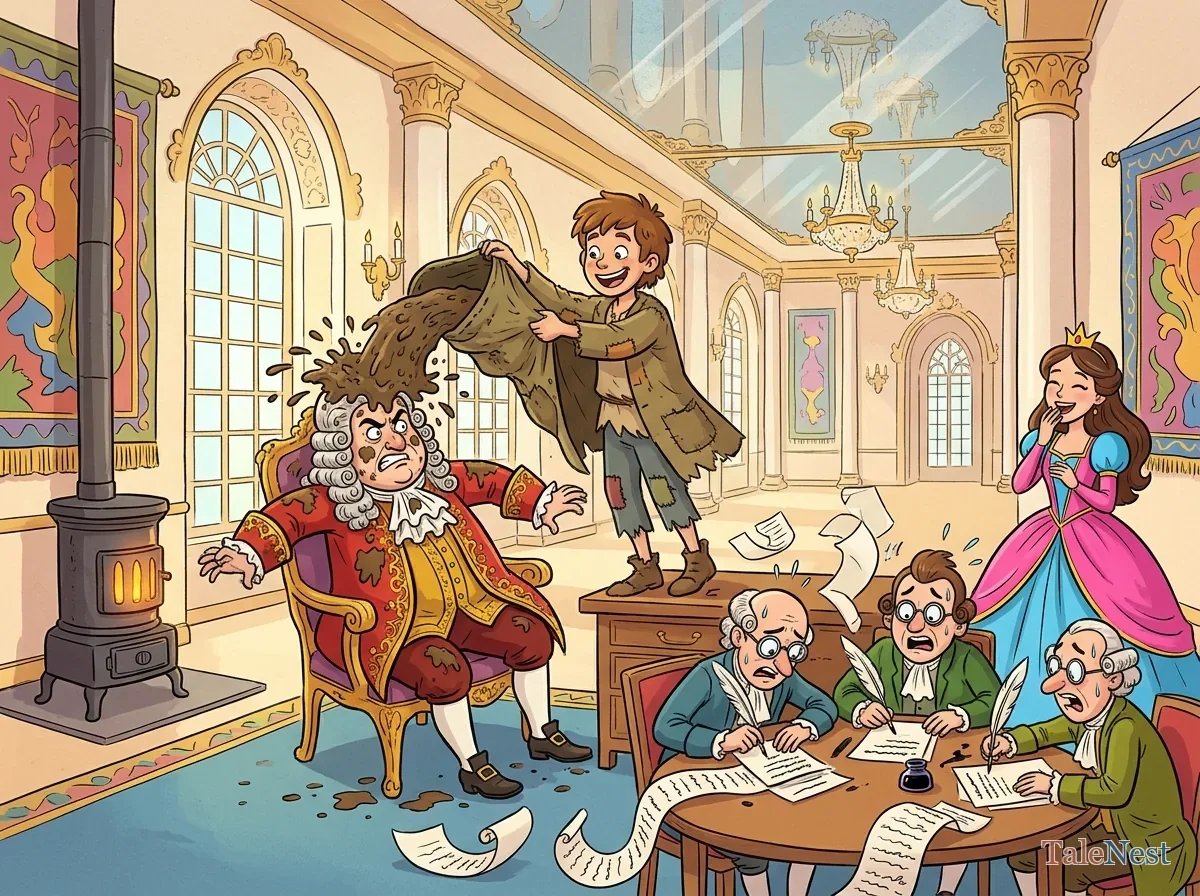
Now the fool entered on his goat. “Phew, what heat!” “I'm roasting chickens.” “Splendid! Then you won't mind roasting a crow?” “With all my heart, but what will you roast it in? I have neither pot nor spit.” “I have both!” He pulled out the old clog and popped the crow in. “What a feast! But where's the sauce?” “In my pocket.” And he pulled out a handful of mud.
“This I like! At least you can answer and speak. You shall be my husband! But every word we say will be printed tomorrow. Look at that window, three clerks and a magistrate; the magistrate is worst, for he understands nothing.” That was only to frighten him, and the clerks laughed so hard they made an ink blot on the floor.
“Those worthies? Here, this is for the magistrate!” He emptied his pockets of mud onto the great man's face. “Magnificent! I could not have done it. But I shall learn,” cried the princess.
And so John the Fool became king, with a wife, a crown and a throne. All this we take from the magistrate's journal, which is not to say we must believe every word of it.
Wit, warmth and being yourself can accomplish what book-learning cannot; joy and simplicity often carry the day.


