
The Old House at the End of the Lane
A lonely old man, a gift of a tin soldier, and a boy who sees beauty in a crumbling house weave a tender tale about being remembered.
 Retold by Idalia SantosAges 6+6 min read988 words
This is a work of fiction, retold in original language for TaleNest. Names, places and events are part of the story.
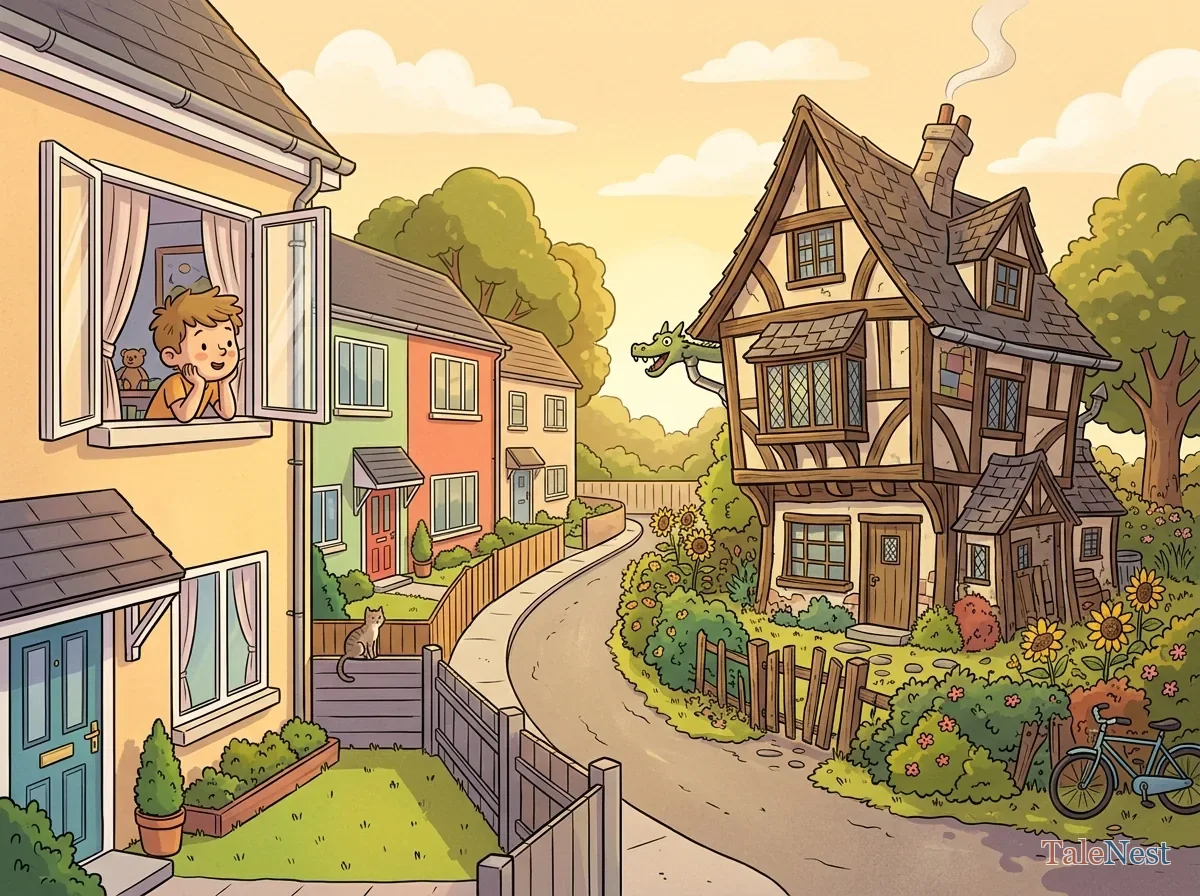
At the end of a lane stood a house nearly three hundred years old. Each floor jutted out further than the last, and a dragon-headed gutter spat rain from its jaws and cracked belly.
The smart new houses wanted nothing to do with the old ruin: an eyesore with a blocking balcony, a palace-wide stair, a railing like a tomb gate, and brass knobs.
But a boy opposite loved the old house. He would stare at its crumbling walls for hours, picturing the rooms inside and the lane as it used to be.
On the top floor lived an old man in breeches, brass-buttoned coat and wig, with an old servant. He appeared at the window; the boy nodded, he nodded back. They became friends without a word.
“Well off,” his parents said of the old man, “but terribly alone.”
The next Sunday he wrapped the soldier. “Give this to the gentleman upstairs,” he told the servant. “I have two; I am sending him one, because he is lonely.” The servant delivered it and returned with an invitation.
The brass stair knobs shone as if polished for the visit, and the tulip trumpeters on the door seemed to puff up and play: “Ta-ra-ra! Here comes the boy!”
Paintings lined the hall; stairs led to an overgrown terrace like a garden. Pots with painted faces and donkey-ear handles held wild flowers. A fat pink sent shoots everywhere, saying it had felt the sun's kiss and been promised a Sunday flower.
In the leather room, stamped with golden flowers, high-backed chairs creaked, “Sit! Take a seat! Oh, how I creak! I must have the gout, like the old cupboard.”
In the bay-window room the old man thanked him for the soldier and the visit. The crowded furniture echoed, “Thanks, thanks! Crack, crack!”
A silent portrait of a cheerful young woman looked down gently. “Where did you get her?” “From the dealer opposite; nobody knows these pictures, all dead and buried. But I knew this one - she died fifty years ago.”
“A small act of kindness can brighten a lonely life, and the warmth we give others is what keeps our own memories alive long afterward.”The little lesson
Under it, faded flowers. The clock ticked, its hands turned, and everything grew older - but nobody noticed.
“They say you live very alone,” said the boy. “Not so alone as you think,” smiled the old man. “Old thoughts come to visit, bringing all they carry. And now you have come too.”
He showed prints of processions and old carriages, guild flags with the tailors' scissors and the shoemakers' two-headed eagle - for shoemakers like all things double. Then sweets and nuts.
The tin soldier cried, “I cannot bear it! This house is lonely, long days, longer nights. Not like your home, with parents chatting and children making a racket. Think of never a kiss or a Christmas tree! A grave is all that waits.”
“Do not take it so hard,” said the boy. “Old thoughts come visiting, with their memories.” “Yes, but I cannot see or know them,” insisted the soldier. “Then you must,” said the boy.
The old man returned; the boy forgot the soldier, went home happy. Weeks passed; he came again. Everything repeated - trumpeters, rattling armor, groaning chairs - for every day and hour was the same.
“I cannot bear it!” cried the soldier. “I have wept tears of lead. I would rather go to war, lose a limb, for the change. Old thoughts came to me too; they give no pleasure. I saw your Sunday morning - the children singing, parents solemn, and little Mary, not yet two, dancing off-beat, first one leg then the other; I laughed and fell off the table. Do they still sing on Sundays? Tell me of Mary. And my comrade, the other soldier - is he happy? I cannot bear it!”
“I am sorry,” said the boy, “but you are no longer mine. I gave you away; here you must stay.”
He brought a box of wonders: plaster house, balm, gilt cards. He opened the piano and sang softly; it sounded hoarse. “She knew how to sing that!” he said, nodding at the portrait, eyes bright.
“I want to go to war!” shouted the soldier, and threw himself to the floor. They searched in vain; the floor was full of cracks, and he had slipped into an open drain.
Week followed week; snow filled the scrollwork and lay on the steps as if no one lived there. No one did: the old man had died.
At the auction the boy watched everything carried off. The portrait went back to the dealer, where it hung forever; nobody knew the woman or cared.
In spring the house was torn down; the leather room lay stripped, plants withered among rotten beams. “High time!” cried the neighbors. A new house rose there.
Years passed. The boy became a man, married, and moved into that house. One day his young wife, planting a wildflower, pressed the earth with tiny fingers.
“Oh! What is this?” She had pricked herself and pulled up a sharp object. It was he - the tin soldier, buried among timber and rubble all those years.
“Let me see,” said the young man, laughing. “Surely not the same one - but it reminds me of my boyhood.” He told her of the old house, the old man, and the soldier sent to ease his loneliness; told so simply that she wept.
“It may well be the same soldier,” she said. “I will keep it. But take me to his grave.” “I do not know where it is,” he said, “nor does anyone. His friends were dead; nobody cared; I was a boy.” “How lonely he must have felt!”
“Terribly lonely!” cried the soldier. “But how beautiful a thing it is not to be forgotten!” “Hear, hear!” cried something near. Nobody else saw a scrap of leather wall hanging, gold gone, lost in damp earth, yet speak: “Gilding fades, but leather lasts.”
The tin soldier, however, did not think so.
A small act of kindness can brighten a lonely life, and the warmth we give others is what keeps our own memories alive long afterward.


