
The Princess in the Crow's Feathers
A careless wish turns a willful princess into a crow, and one stubborn traveler must keep his word to win her back.
 Retold by Idalia SantosAges 8+5 min read961 words
This is a work of fiction, retold in original language for TaleNest. Names, places and events are part of the story.
A queen had a willful little daughter. One day the child misbehaved so that her mother could not calm her. Losing patience, the queen saw crows fly past the window, flung it open, and cried: “I wish you were a crow and flown away! At least I should have peace!”
No sooner said than done: the girl became a crow and flew out. She reached a dark forest and stayed there a long while, and nobody knew where she was.
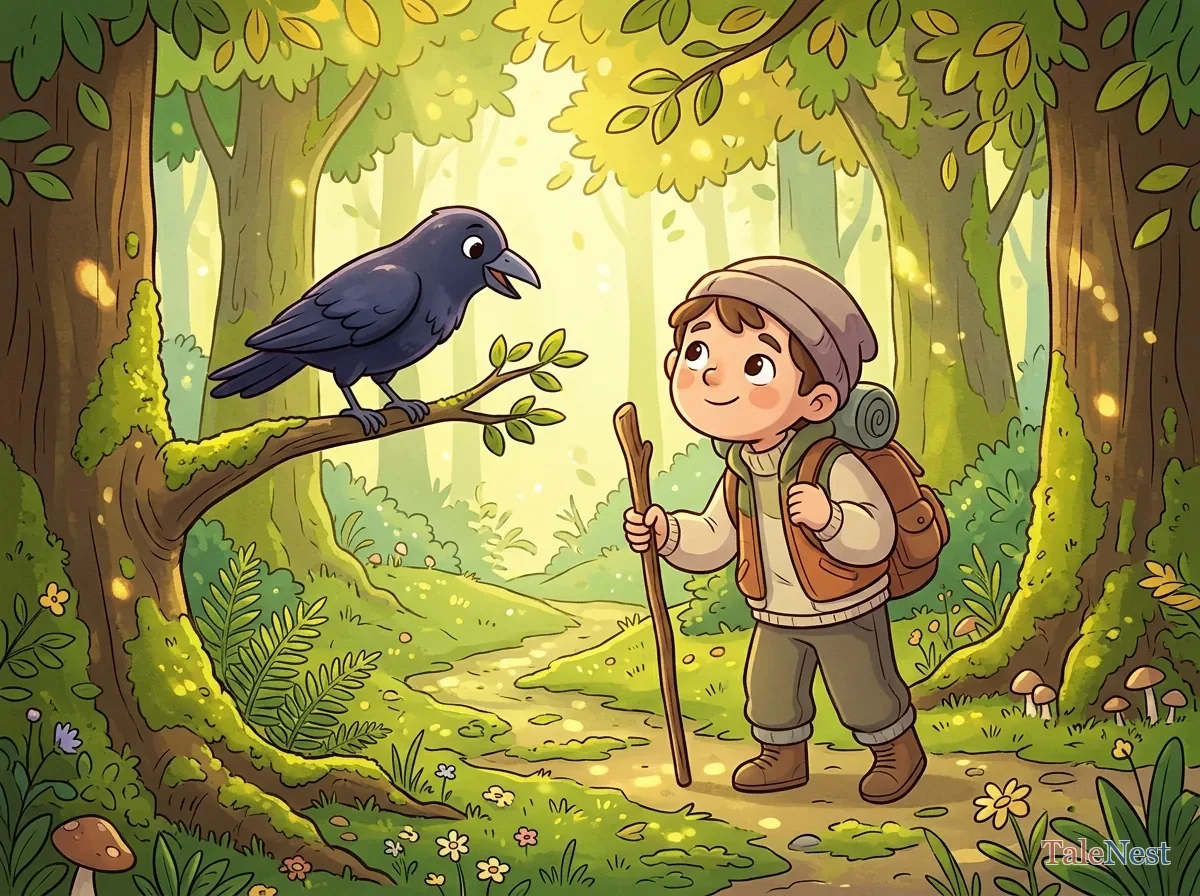
One day a traveler in the wood heard a crow speak: “I am a princess by birth, held under a spell, but you can free me.” “What must I do?” he asked.
“Go deeper in until you find a house where an old woman lives. Take nothing she offers. Wait in the garden behind it, by a great heap of bark. Three days running I shall come at two o'clock, first with four white horses, then four red, then four black. If you are asleep, I can never be freed.”
He promised all this. But the crow sighed: “I know you will fail, for you will take something from the old woman.” He swore he would not, and went.
At the house the woman offered him food; he refused. She offered a drink, and he weakened and drank a little.
Before two he went to the garden, but though he tried to stay awake, he slept. At two the crow came with four white horses, yet sadly: “I am sure he sleeps.” And so he did; she could not wake him.
“Freedom is won by constancy: a promise kept, a temptation refused, and a long road patiently traveled to the end.”The little lesson
Next day the old woman pressed food and drink on him; he refused, but at her insistence drank another sip. Before two he went to the garden and slept again. The crow passed with four red horses, saying, “He sleeps, I know it.” And so he did.
On the third day she asked, “Why do you neither eat nor drink? Will you starve?” “I may not and will not,” he said. She left food and wine beside him and drank the wine herself. At the hour he slept a third time. At two the crow came with four black horses, the coach black too, and she in mourning. “I know he sleeps and cannot free me,” she said. She shook and called, but could not wake him.
Then she left him a loaf, meat, and wine that would never run out, a gold ring engraved with her name, and a letter: “I see you cannot free me here. If you wish, come to the Golden Palace of Stromberg. I know you can do it.” Then she drove away.
When he woke he was heavy-hearted. “She has passed me by,” he said, “and I have not freed her.” But he read the letter and set off at once, though he had no idea where Stromberg lay. He wandered far until he entered a dark forest and lost his way for two weeks. One evening he lay down, exhausted, and slept.
Next day, hearing weeping, he followed a light to a tiny house, for a huge giant stood before it. “If he sees me I am dead,” he thought, but approached. “You have come at a good hour,” said the giant. “I have not eaten in hours; you shall be my supper.” “I am not easily swallowed,” said the man. “But if you want food, I have enough to fill you.” “Then I will spare you,” said the giant. “I only wanted a meal.”
They sat and ate from his endless store. “This suits me,” said the giant. The man asked the way to Stromberg. The giant searched his map but could not find it.
As the man left, the giant begged him to wait for his brother. When the brother came, he said, “After I have eaten, I will look.” They pored over maps, fetched new ones, and at last found the castle, thousands of miles away. “How can I get there?” “I have two hours,” said the giant. “I will carry you near, then must return.” He took him within a hundred hours' journey. “The rest is yours,” he said.
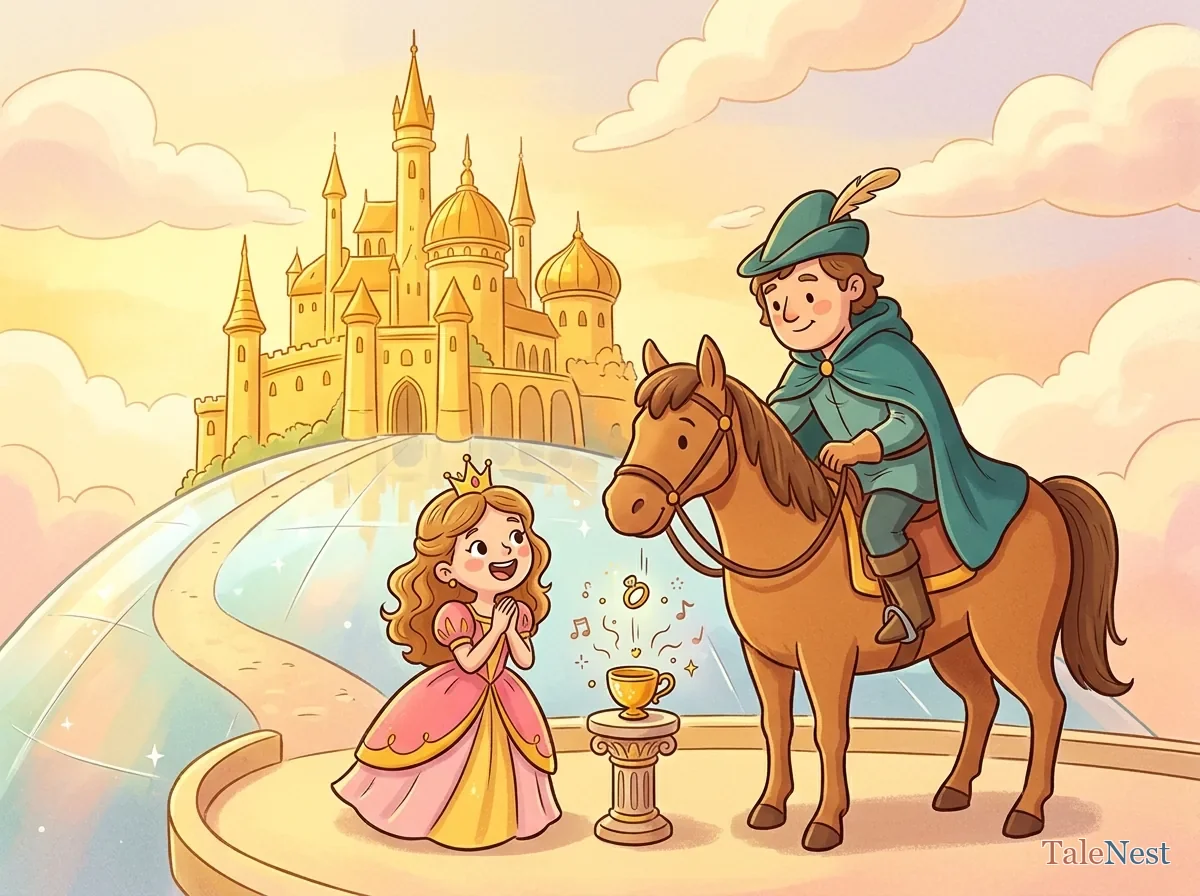
On he went until he reached the Golden Palace of Stromberg, built on a glass mountain. The enchanted princess drove around the castle and went in. Overjoyed, he tried to climb, but the glass was so smooth he slid back each time.
Seeing he could not climb, he said, “I will wait here for her.” He built a hut and lived there a whole year.
One day he saw three robbers fighting and called, “God be with you!” They stopped, saw no one, and fought harder. Again he called, with the same result. A third time he called, then went down and asked their quarrel.
One had a stick that opens any door at a blow; one, a cloak that makes its wearer invisible; one, a horse that can climb glass. They argued whether to share the three things or divide them.
“I will take them,” said the man. “I have no money, but things worth more. First let me test them.” They let him mount, threw on the cloak, and gave him the stick, and he vanished. Then he laid about him, crying: “Lazy rogues, there is what you deserve!”
He rode up the glass mountain and struck the castle door; it flew open. In the hall the princess sat with a golden cup before her. She could not see him beneath the cloak. He slipped the ring from his finger into the cup; it rang clear. “That is my ring!” she cried. “He who is to free me is here.” They searched the castle, but he had ridden out again and removed the cloak.
Freedom is won by constancy: a promise kept, a temptation refused, and a long road patiently traveled to the end.


