
The Snowman Who Fell in Love with a Stove
A snowman born on a frosty winter night mistakes the moon for the sun and the garden stove for a friend, until his innocent longing melts him away.
 Retold by Idalia SantosAges 8+6 min read978 words
This is a work of fiction, retold in original language for TaleNest. Names, places and events are part of the story.
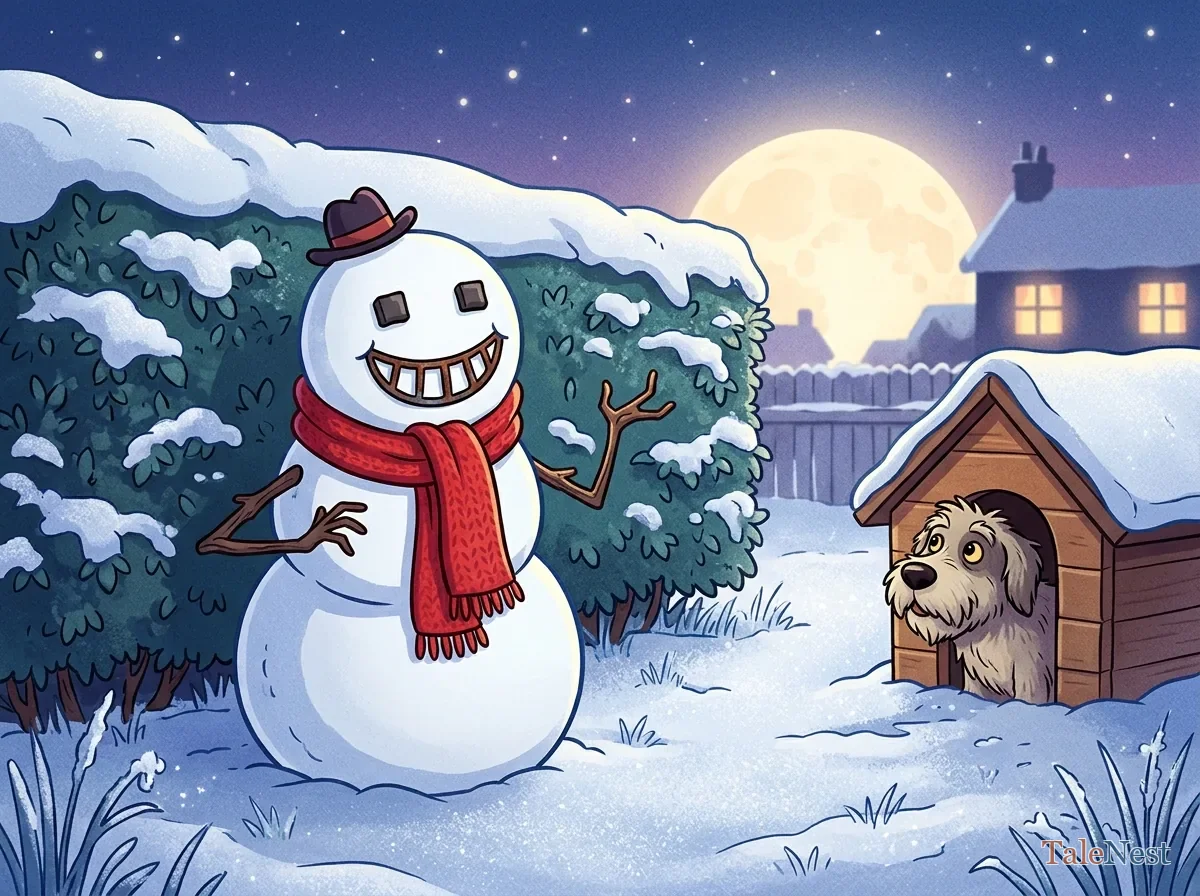
“How it crackles inside me! What a glorious cold!” cried the snowman. “A keen wind can put life into a fellow. And where is that burning one who stares with his great eye?” He meant the sun, sinking below the roofs. “He will not make me blink; my coal still holds.” Two tiles served for eyes, his mouth a broken rake that gave him teeth.
The sun vanished and the moon rose, round and silvery in the blue air. “There he is again, on the other side,” said the snowman, thinking it the sun returned. “I stared him down. Let him hang there and light me enough to see myself. If only I could move, to skate on the ice like the children!”
“Out, out!” barked the old mastiff. “The sun will teach you to run, as he did your predecessor.” “I don’t follow you,” said the snowman. “Is it the one up there?” meaning the moon. “He ran while I watched, and now returns from another quarter.” “You know nothing,” growled the dog. “That is the moon; what set was the sun. Tomorrow he will return and teach you to scurry to the moat.”
The snowman said nothing, but an uneasy feeling crept over him: the vanished one was no friend. “Out, out!” barked the mastiff, and retreated to his kennel.
Morning brought damp fog and a freezing wind, but when the sun broke through, the sight was magnificent. Every tree and hedge was coated in hoarfrost, its branches sheathed in glittering white flowers. The birch swayed as though alive, its sparkle whiter than snow.
“How beautiful!” cried a girl entering the garden with a young man. They stopped beside the snowman to admire the shining trees. “Not even in summer is it so lovely,” she said. “And in summer there is no one like this,” he replied, nodding at the snowman. She laughed and danced with him on snow that crackled like starch.
“Chasing what we can never have blinds us to the beauty already around us; every season, like every desire, must eventually give way.”The little lesson
“Who are those two?” asked the snowman. “You are older; do you know them?” “Indeed,” said the dog. “She has often stroked me and given me bones; I never bite her.” “What are they doing here?” “They are sweethearts,” growled the mastiff. “Are they as important as us?” “They are the master’s family. The newly made know little; I am old and know everyone.”
“The cold is wonderful,” said the snowman. “Tell me more, but do not rattle your chain; it makes me crack.” “Out, out!” barked the dog. “I was a handsome puppy once. I lived indoors, on a velvet chair or the mistress’s lap; they kissed my nose and dried my paws with silk, calling me a darling. But I grew too large, and they gave me to the housekeeper in the basement, that room you can see. Smaller, but far cosier: no children dragging me about, better food, my own cushion, and above all a stove. In winter it was finest. I crept right under it and vanished, and still dream of it. Out, out!”
“Is a stove so lovely? Is it like me?” asked the snowman. “Your very opposite,” said the dog. “Black as coal, with a long brass neck. It swallows wood and breathes fire; to be near it or under it is pure delight. You can see it through the window.” The snowman looked and saw a glossy black shape with a brass bell, firelight spilling across the floor. A strange feeling stirred.
“Why did you leave it? How could you give up such company?” he asked. “They made me,” said the dog. “I bit the little master’s leg for snatching my bone. Paw for paw, my motto; but they took it ill, and I have been chained here since, my fine voice gone. Hear how hoarse I am: out, out!”
The snowman hardly heard. He was gazing at the basement where the stove stood on four iron legs, as strong-willed as himself. “How my body crackles! Surely they will let me in. It is an innocent wish, and such wishes should be granted. It is my only longing. I will go in and lean against it, though I break the window.” “Never,” said the mastiff. “You would regret it.” “I am in one already,” said the snowman. “I believe I am crumbling.”
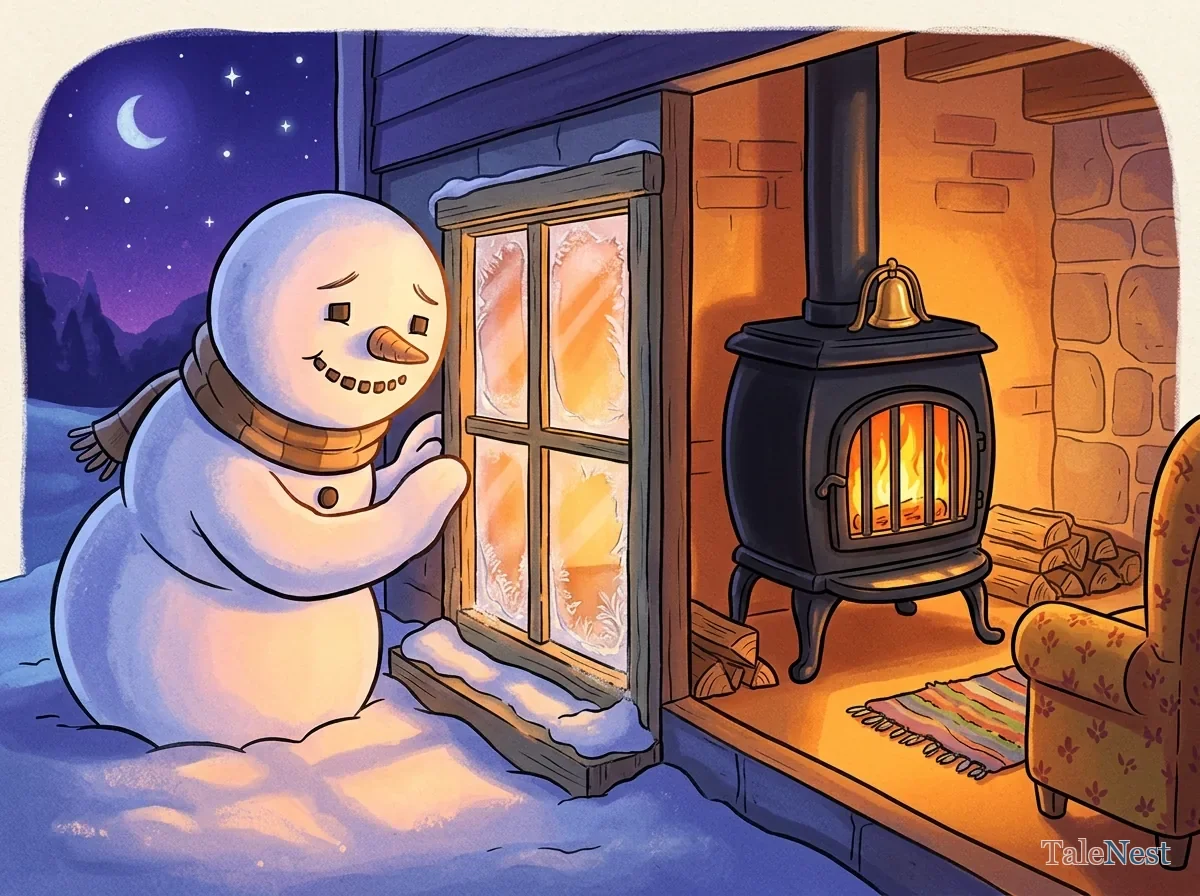
He stared all day. By evening the room was cosier still: the stove glowed softly, lovelier than moon or sun, and each time its door opened it shot out a flame. The snowman’s white face was flushed fiery red, his breast glowing too. “I cannot bear it!” he said. “How prettily it puts its tongue out!”
The night passed in sweet dreams that froze and crackled. By morning the basement panes were furred with frost-flowers, and they hid the stove. They would not thaw; he could not see his beloved. It was perfect snowman weather, yet he pined for the stove.
“A bad sickness for a snowman,” said the dog. “I had it once but was cured. Out, out! We shall have a change in the weather.” And so it did. The thaw set in, and the snowman shrank. He said nothing, the surest sign that the end was near. One morning he collapsed. Where he had stood lay a slender broom-handle, the stick the children had used to build him.
“Now I see what ailed him,” said the mastiff. “There was a poker in his body; that was the unrest. Now it is over. Out, out!” And soon winter was over too. “Out, out!” barked the dog; but in the yard the girls were singing: “Bud, sweet woodruff, messenger flower; hang out your woolly mittens, willow; cuckoo and lark, send us your songs; February, spring is here. I will sing, and all shall join the chorus. Come down from heaven, O golden sun! Who thinks of the snowman today?”
Chasing what we can never have blinds us to the beauty already around us; every season, like every desire, must eventually give way.


