
The Song in the Old Willow
A wind-haunted willow, a tailor's son who loses heart, and an old woman whose patience outlives them all: a quiet tale of the faith that keeps a lamp burning.
 Retold by Idalia SantosAges 10+5 min read994 words
This is a work of fiction, retold in original language for TaleNest. Names, places and events are part of the story.
The wind whistles through the willow, and if you listen you might hear a song. If you cannot make out the words, ask Johanna at the almshouse; she knows what the tree is singing.
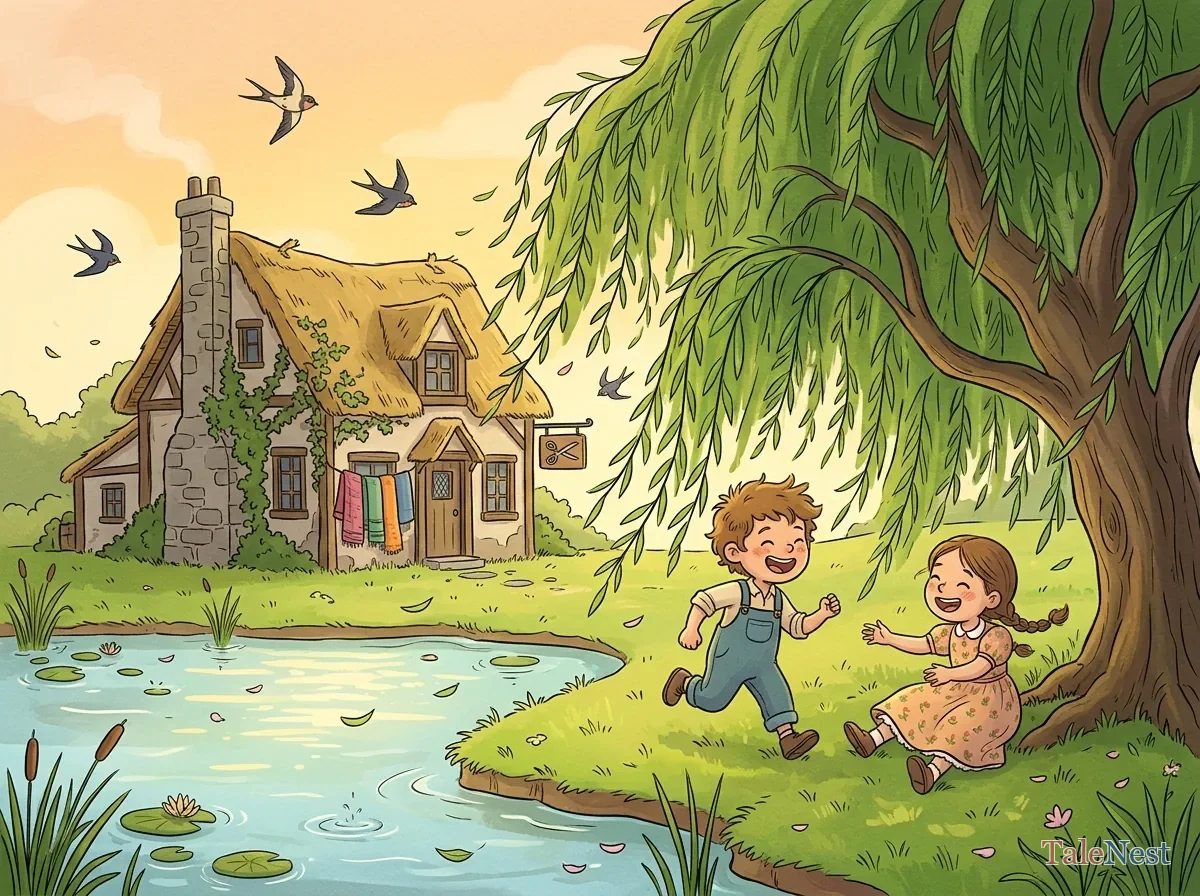
The willow has always stood before the tailor's house by the pond. The house is old and silent now, and in it lives poor Rasmus, as listless as the house, though born there.
Each spring the swallows wheel around the tree and roof, building their nests, while Rasmus neglects his own. He stays indoors while they depart again.
When the house was new, an honest tailor and his wife moved in with their eleven children. Johanna was a girl then, and often they fed her bread and butter.
Each Christmas the squire sent provisions. The tailor brightened, then said, “What does it matter?” His wife never echoed his “What is the use?” The children grew and scattered; Rasmus was the youngest.
Then the tailor's hands failed. “We must not lose heart,” she said. “Since father's hands cannot help, I shall work faster, and Rasmus can help too.” The boy sat at the sewing table, a merry child, but she said he must run and play as well.
Johanna was his best playmate, though her family was poorer. Rasmus had grand plans: a tailor in the city, with Johanna visiting, cooking their meals and keeping her own room. Johanna doubted it; Rasmus never doubted a word. The hours passed beneath the tree as the wind whispered.
In autumn leaves fell and rain dripped from bare branches. “They will be green again,” said the woman. “What does it matter?” said the man. “The pantry is full and I am strong; complaining would be a sin,” she said.
The squire died; on a cold night his hearse carried him to the churchyard. All winter the village talked of the funeral. “You could see his importance,” they said. “What does it matter?” said the tailor. “Now he has neither life nor goods.” “Do not speak so,” scolded his wife. “Now he has eternal life.” “How do you know?” “Do not say such impious things,” she cried.
“A single loving heart can outlast a lifetime of disappointment, and the song of kindness is never sung in vain.”The little lesson
A year later the widow left off mourning and married again. “What does it matter?” said the tailor.
Clothes grew scarce, cut from the hearse cloth. None should have known, yet word spread that the garments would bring plague on the house. Soon the tailor died.
The next year Rasmus went to the city as an apprentice. Johanna wept; his mother stayed with the business. The swallows came and went, and on the fourth spring Rasmus returned, a master tailor and a handsome young man. He had meant to see the world, but his mother wished him to stay, and he stayed.
At the great farms he was welcomed, above all at Klaus Hansen's, the parish's second richest farmer. Hansen's daughter Elsa fell in love with him and he with her, but they hid it and he grew melancholy, alive only when she appeared. Yet he never spoke.
“What does it matter?” he thought. “Her parents want a good match and I have nothing. Best leave.” But he could not leave the farm. Johanna was a servant there; she heard they were all but engaged. “Rasmus will be rich,” she said, her eyes moist.
On a market day he rode beside Elsa into the city, distracted with love and showing nothing. “It is time he spoke,” thought the girl. “I shall let it be known another man courts me.” Soon the richest farmer was said to have declared himself; true, but none knew Elsa's answer, and Rasmus's head spun.
One evening Elsa put a gold ring on his finger. “What does this mean?” “An engagement,” he said. “With whom?” “The rich farmer?” “You guessed it!” she cried, and walked away.
He went home distracted, tied his knapsack, and set off into the world despite his mother's tears; she thought he would return within the year.
Elsa waited a month, then went to a crone who read coffee dregs and promised to bring him back. Time passed; Elsa married the rich farmer. Before the feasting ended, Rasmus came home sick and took to his bed. Only Johanna visited.
He recovered, but his mother caught the illness and died, leaving the house lonely and wretched. Nothing went right with Rasmus. “What does it matter?” he said.
One autumn evening Johanna walked with him. “Make an effort, Rasmus!” “What does it matter?” She left him at his door, but he turned to the willow, where wind whistled. “How cold. Time to lie down. Sleep, sleep.” He went to the pond and fainted. Rain poured, the wind was icy, he felt nothing. At sunrise he woke half dead; Johanna had him carried to the hospital.
“We knew each other as children,” she said. “Your mother often fed me; I can never thank her enough. You will get well and be a man again.” God willed he live, but his health and wits were gone forever.
The swallows came and went. Rasmus aged early, alone in the ruinous house, poorer than Johanna. “You have no faith,” she said. “Bah! What does it matter?” “You were once good and pious. Shall I sing our childhood song?” “What does it matter?” “It comforts me.” “Johanna, you are a saint,” he said with tired, fading eyes.
So she sang from memory, having no book. “Beautiful words,” he said. “But I could not follow them.”
Rasmus was old, and Elsa a grandmother. Her granddaughter pointed at him and cried, “Poor Rasmus!” and all the other girls echoed it.
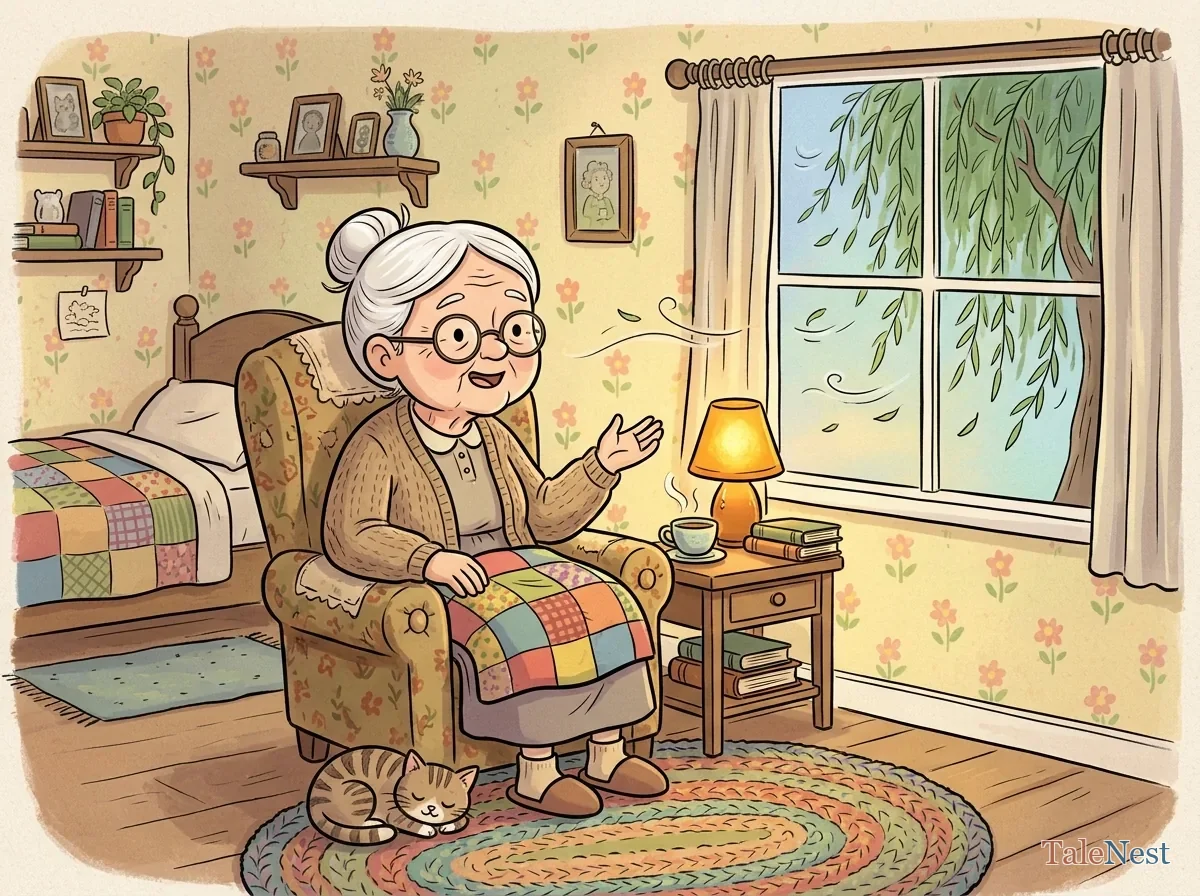
On a Whitsun morning Rasmus died. Years passed; the house still stands but is empty. The wind still whistles in the willow and you might hear a song; if you cannot understand it, ask Johanna at the almshouse. There she lives, singing the same pious song, thinking of him and praying for him, with memories murmuring in the tree.


