
The Wolf Who Heard a Heart
In a town where everyone fears a hungry wolf, a barefoot stranger shows that even the wildest heart can be reached with kindness.
 Retold by Idalia SantosAges 4+6 min read762 words
Retold and rewritten by Idalia Santos for TaleNest. This version is original prose in English; the illustrations and accompanying text were created for this site.
This is a work of fiction, retold in original language for TaleNest. Names, places and events are part of the story.
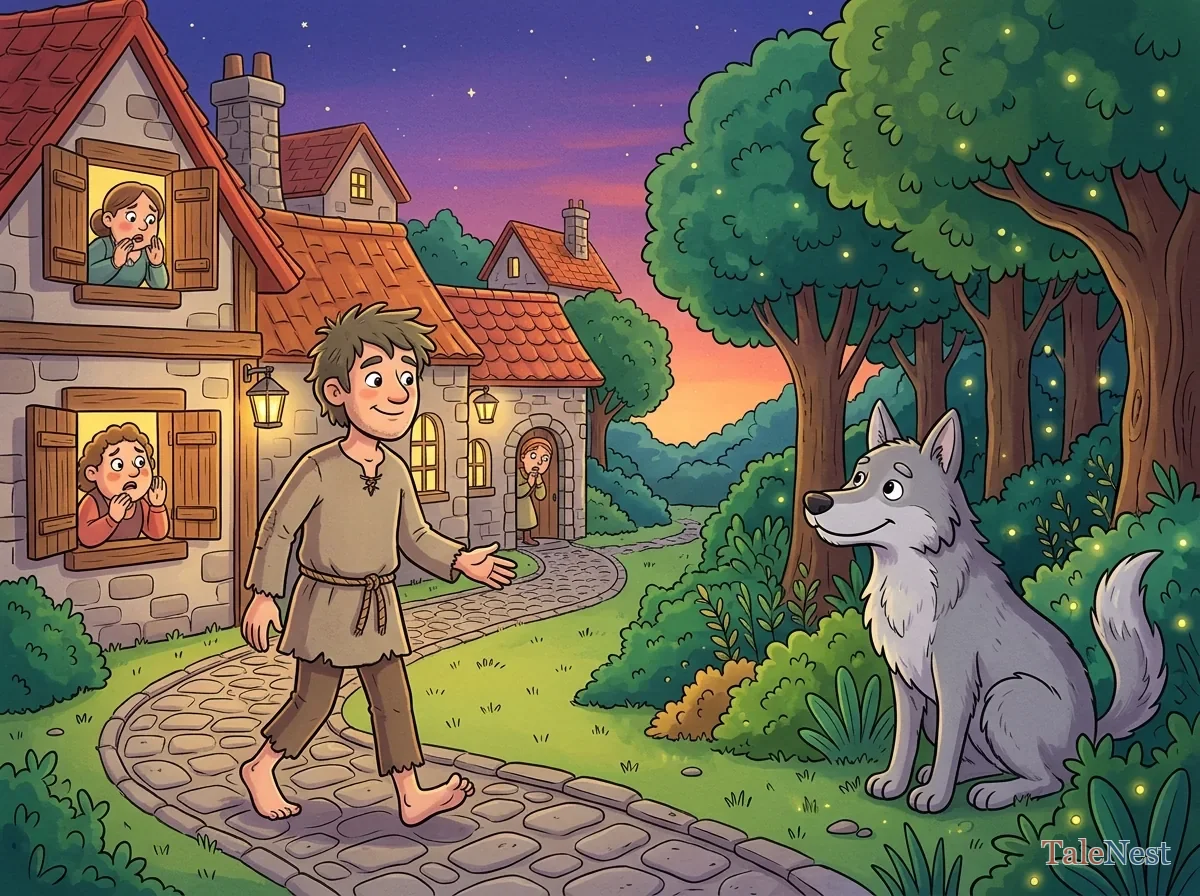
Long ago—so long that the stones in the road had been worn smooth by centuries of feet—there stood a town called Gubbio, with red tiled roofs and narrow streets of pale stone. The air there smelled of warm bread and dry leaves, and on any ordinary morning you would have heard laughter drifting from the doorways. But nobody laughed now. A wolf was loose in the forest above the town: a big gray wolf with eyes as dark as the night sky, who came down in the evenings with hunger in his belly and fear in his bones. For weeks the whole town had been holding its breath.
“Bar the doors!” the elders shouted as dusk fell. “The wolf is coming!” the children whispered, hiding behind the curtains and peering out through gaps. Doors were bolted before the sun went down, and the streets emptied the moment the first shadow stretched across the square.
Then one day a man arrived in Gubbio. He wore a simple rough tunic and walked barefoot, with dust on his heels and a smile that seemed to carry its own sunlight. His name was Francis, and his voice was as gentle and steady as a quiet river.
“Why do the birds weep in a place so beautiful?” he asked the townspeople. And they told him about the wolf. They said it was cruel, that it bit, that it could never change. There was no point, they said, in trying to reason with a beast. They had tried traps and dogs and angry shouting; nothing had worked.
Francis said nothing to that. He looked toward the forest, hummed a low song to the wind, and then—without a stick, without a stone, without any weapon at all—he walked in among the trees. The townspeople watched in astonishment from their windows, certain he would not come back. Not one of them had the courage to follow him.
“Even a growl can be a plea to be heard, and kindness can turn a feared enemy into a loyal friend.”The little lesson
The wolf saw him at once. It growled, a deep rumble that rolled through the underbrush, and its paws left deep prints in the damp earth as it stepped forward. Its breath steamed in the cool air.
But Francis did not run. He sat down on a flat rock and spoke to the animal as though it were an old neighbor. “Brother wolf,” he said, “I haven't come with clubs or stones. I've brought only my heart, and this piece of bread.”
The wolf wrinkled its muzzle. Its eyes blinked, slowly, as if it were trying to understand something it had never heard before. Then it came closer, one careful step at a time, the way a creature moves when it is listening to music nobody else can hear. The growl faded.
“I know you're hungry,” Francis said softly. “I know you've been cold and alone up there. I also know you're lonely. Would you like to be friends instead?”
The wind stopped. A single leaf came loose and drifted slowly down between the man and the wolf. The animal lowered its head. Francis held out his hand. And, very gently, the wolf touched it with one huge paw. It was the first time anyone in Gubbio had touched a wild creature without trembling.
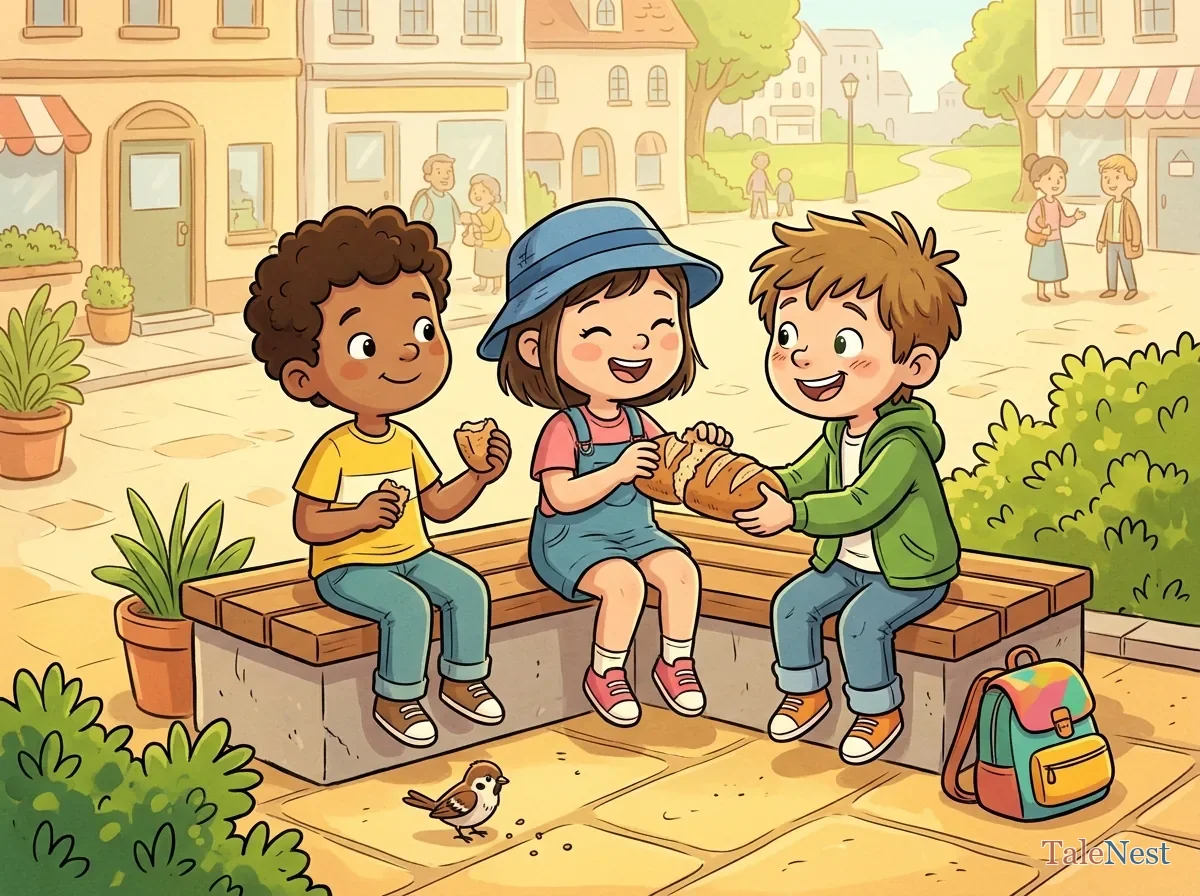
From that day on, the wolf of Gubbio never bit anyone again. At night it slept in the cool shadow of the church wall, and in the morning the children left crusts of bread for it beside the fountain, giggling as they scattered. Slowly the town began to believe that the old fear had been a misunderstanding.
Nico and Lina played with it in the square, tugging its ears and racing it to the well. Lady Tessa, the baker, saved the warm leftovers from her oven for it. And the wolf, in return, patrolled the roads and watched over the sheep, keeping its old sharp instincts for protection instead of fear. Even the shepherds, who had been the most afraid, began to leave their gates open. The little ones even followed it into the woods, sure-footed now, calling its name.
People said that Francis and the wolf spoke together every afternoon—the man with words, the wolf with its eyes—and that each understood the other perfectly. Their friendship became the stuff of fireside stories. It was the strangest, sweetest friendship anyone in Gubbio could remember.
And from that time forward, in Gubbio, nobody feared the wild things again. They had learned a quiet truth: sometimes even a growl is only a voice asking, very loudly, to be heard. A heart, once listened to, can change even the wildest of neighbors.
Even a growl can be a plea to be heard, and kindness can turn a feared enemy into a loyal friend.


