
Three Cheeps and a Scratch
A family of sparrows learns that beauty is more than bright feathers, and that the smallest neighbours often leave the longest memories.
 Retold by Idalia SantosAges 10+5 min read919 words
This is a work of fiction, retold in original language for TaleNest. Names, places and events are part of the story.
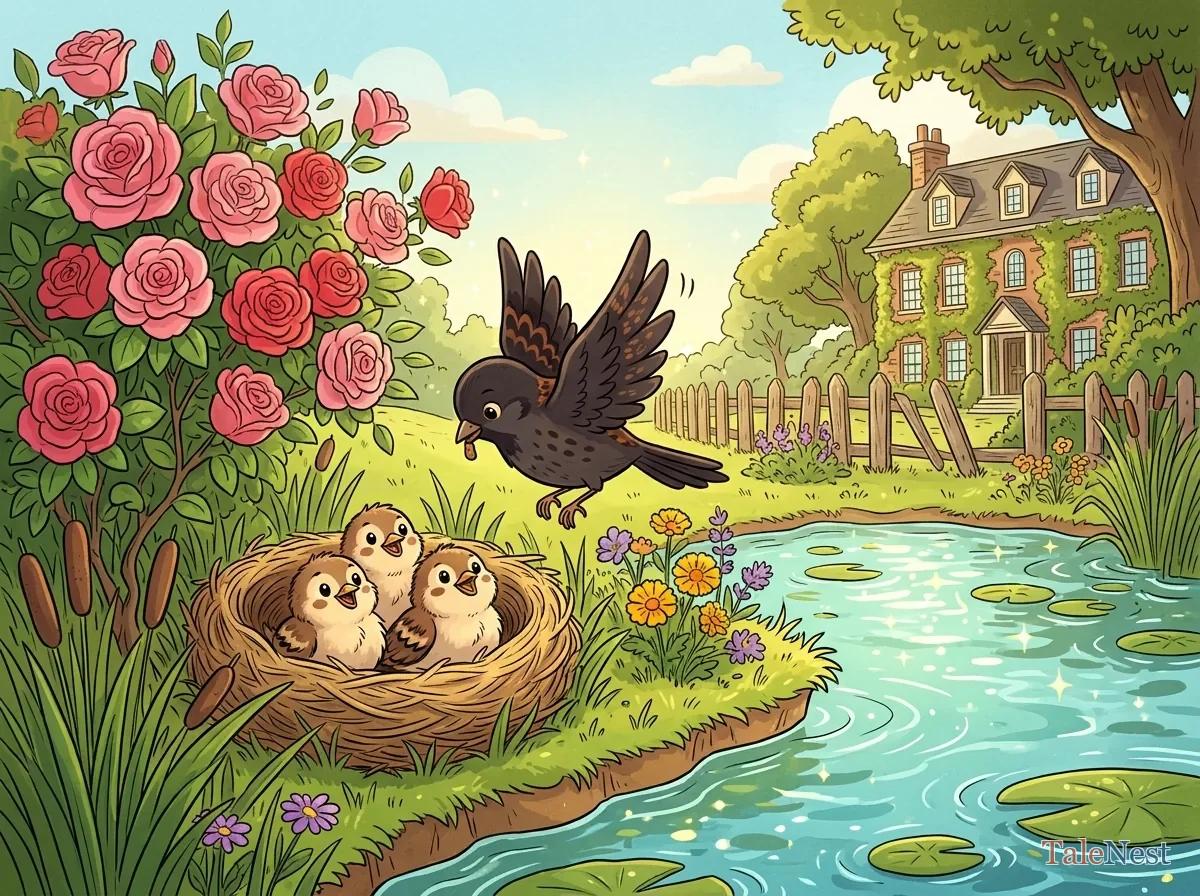
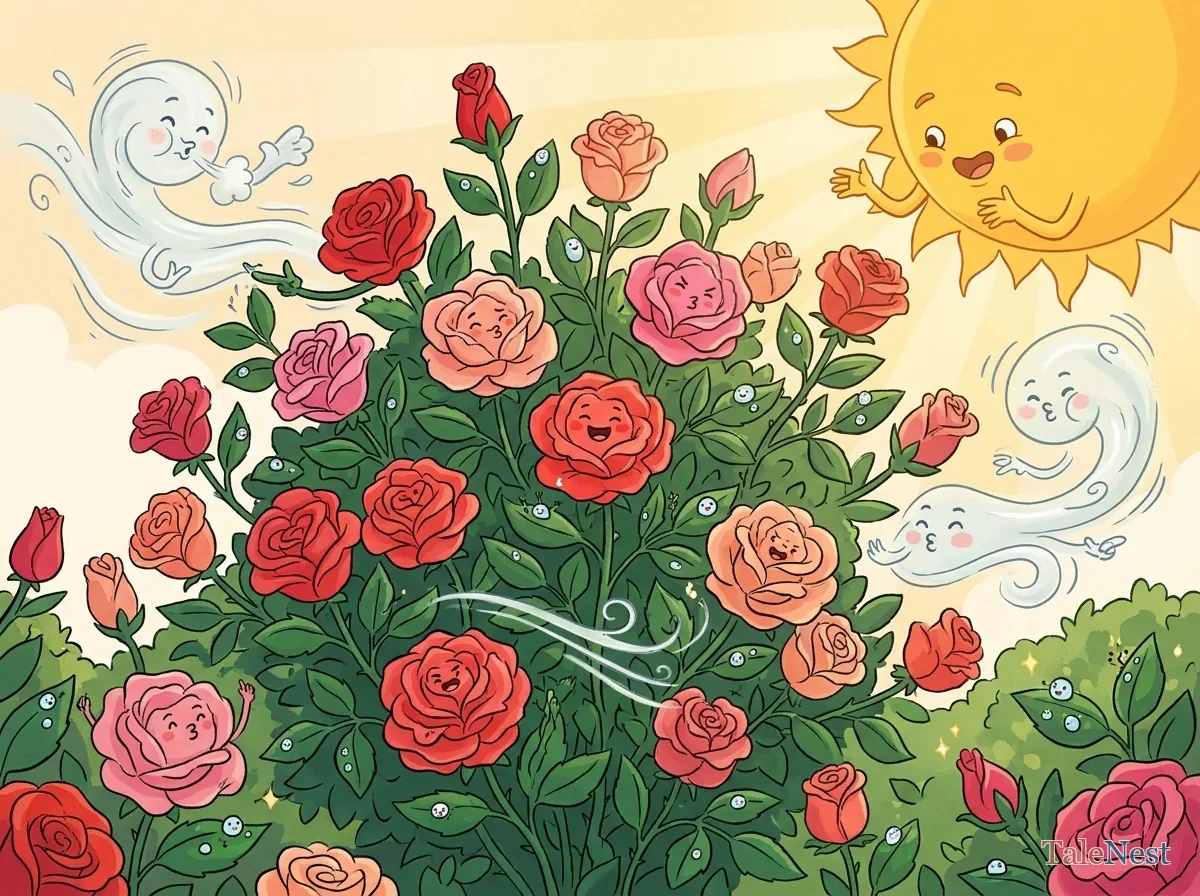
Everyone near the pond by the great house agreed that something important must be happening, though nothing ever was. 'Life is beautiful!' the roses sighed. 'Such good neighbours we have, above and below. How beautiful life is!'
Below lived young sparrows in a nest the swallows had left the year before. 'Are those ducklings swimming?' one asked. 'Don't be silly, they're only feathers,' said their mother. 'The roses should know, but they know nothing. What dull neighbours!' Above, the roses had their own concerns: a boy rode by, snapped off a rose, and was gone. 'Where has she gone?' the others whispered, and nobody knew.
'Sometimes I long to see the world,' said a flower. 'We bring life to this place,' said the mother sparrow; 'a swallow's nest is said to bring luck.' At dusk a nightingale sang that beauty in this world is like sunlight, bright and everlasting. 'We understood him,' said the fledglings. 'Only tell us: what is beautiful?' 'Nothing, just a surface,' said the mother. 'At the big house are birds who spread their tails like wheels, all colours at once, till your eyes ache. They are peacocks, and they are Beauty. Pluck them and they'd look like us.' 'Then I'll peck them!' cried the smallest, still featherless.
In the farmhouse a young couple lived, and every Sunday the wife cut roses for a vase. 'Now I know it's Sunday!' her husband would say, kissing her. 'This bores me,' said the mother sparrow, and flew off. The fledglings longed to follow, but she said, 'Stay!' and off she went, straight into a snare some boys had set.
An old man in the house decided to make her pretty. He smeared her with egg white, rolled her in gold dust till she glittered, and glued a red rag to her head for a crest. 'Watch the golden bird fly!' he cried, releasing her. Every sparrow was frightened, and every sparrow gave chase. They pecked her until she fell bleeding into the rosebush, too terrified even to cheep. 'Poor thing, hide here,' breathed the roses. She spread her wings once, pressed them to her sides, and died among her fragrant neighbours.
“Beauty is far more than a pretty surface, and the life worth living is one of friendship, acceptance, and blooming quietly wherever you are planted.”The little lesson
'Cheep!' called the fledglings. 'Where is Mother? Is she tricking us into finding our own food?' They fell to quarrelling over the nest. 'I'll turn you all out when I marry!' cried the smallest. 'I'll wed first!' said the next. 'I'm the eldest!' shouted a third. They flapped and pecked until one by one they tumbled to the ground, still fighting, winking one angry eye upward. Once they could fly a little, they agreed that if they ever met again they would cheep three times and scratch three times with the left foot.
The smallest kept the nest, briefly. That night the house burned; the couple escaped, but the little sparrow died. Yet the rosebush stood fresh and blooming, reflected in the quiet water. 'How lovely, the roses against the ruined house!' cried a passing painter. He sketched the smoking chimney and charred beams, and in front, the flowering bush, the true heart of his picture.
Two of the sparrows returned. 'Where's the house? Our nest? All gone, and our brave brother burned with it. Good riddance to him for wanting it all!' And they flew away.
Next autumn, on a day that felt like summer, pigeons settled on the manor courtyard, black and white and speckled, and the old mothers clucked, 'Cluster, dears, cluster!' Three sparrows hopped among them. 'What are these little brown things?' asked a pigeon. 'Sparrows, poor souls. We're kind; let them have crumbs.' The sparrows scratched three times with the left foot, cheeped three times, and knew each other: the three from the burned house. 'How well one eats here!' they said, while the pigeons preened and whispered, 'Look at that fat one, ugly, dirty creature!'
Full fed, the sparrows hopped the fence and into an open room. 'I'm going in,' said one. 'So am I!' said the second, and the third flew to the middle of the floor: 'All the way, or not at all! Why, what's this?' It was the old roses reflected in water, and the charred beams: the painter's picture! They flew to pass over it and struck a wall. 'Cheep!' they cried. 'Only a surface! This is Beauty!' And off they went.
Years passed. The pigeons cooed; the sparrows survived freezing winters and glorious summers, married, and raised broods, each certain its own were the finest. By the palace canal stood a bright painted house, the Thorwaldsen museum. 'How it shines!' said a sparrow. 'This is Beauty, greater than the peacock!' She flew down and met three old birds from the first nest with a young one. 'Here we meet!' they said. 'What a distinguished place. This is Beauty!'
Visitors came to gaze at Thorwaldsen's tomb, gathering fallen petals to keep. The painter who had drawn the bush had been permitted to transplant it and gave it to the architect, who planted it on the sculptor's grave, where it flowered as an emblem of beauty. 'Have you found a home?' the sparrows asked. The roses nodded. 'How beautiful to live and bloom, to meet old friends and see kind faces always!' 'Cheep!' said the sparrows. 'Our old neighbours, and their children! What luck!' They pecked about, and the bush grew greener still, breathing perfume over the tomb whose immortal name its beauty now shared.
Beauty is far more than a pretty surface, and the life worth living is one of friendship, acceptance, and blooming quietly wherever you are planted.


