Courage Is Not Fearlessness: What Stories Teach About Being Brave
Courage is one of those words adults use freely and children find confusing. We praise it in heroes, expect it in schoolyards, and worry when we do not see it.
This article offers general information for families. It is not medical, psychological or developmental advice; ask a qualified professional about your own child.
Courage is one of those words adults use freely and children find confusing. We praise it in heroes, expect it in schoolyards, and worry when we do not see it. Yet a child who steps onto the diving board with a tight stomach may have shown more of it than a character who never hesitates. Stories give us a quieter way to talk about bravery, one that makes room for the shaking hands and the second thoughts. The tales worth reading with children are often the ones where fear stayed right there, in the room, and the character acted anyway.
A better definition of courage
The character who is still scared
Consider the familiar figure who steps forward while admitting, in plain words, that they are afraid. This is not a weak version of bravery; it is the recognisable one. A story that shows a character's trembling voice or a considered pause before the door gives children something to hold on to. They learn that fear is not a disqualification. It can sit beside an action rather than cancel it. When a tale leaves the fear in, the brave act becomes a choice instead of a personality trait. The child reading it does not have to imagine being someone else; they only have to imagine doing the next small thing while scared.
Why that version is more useful
Fearless heroes are easy to admire and hard to live up to. If a story suggests that brave people never feel afraid, a child who does feel afraid may decide they are simply not brave at all. That conclusion quietly closes the door on trying. A more honest definition leaves room for practice. It tells a child that courage can be learned, that it grows with repetition, and that it often looks ordinary from the outside. This matters because most of the brave moments children face are unremarkable to everyone but them: speaking up in a meeting at school, trying again after a fall, walking into a dark hallway. A definition that includes fear makes those moments count.
Tales that show it well
Small, ordinary brave acts
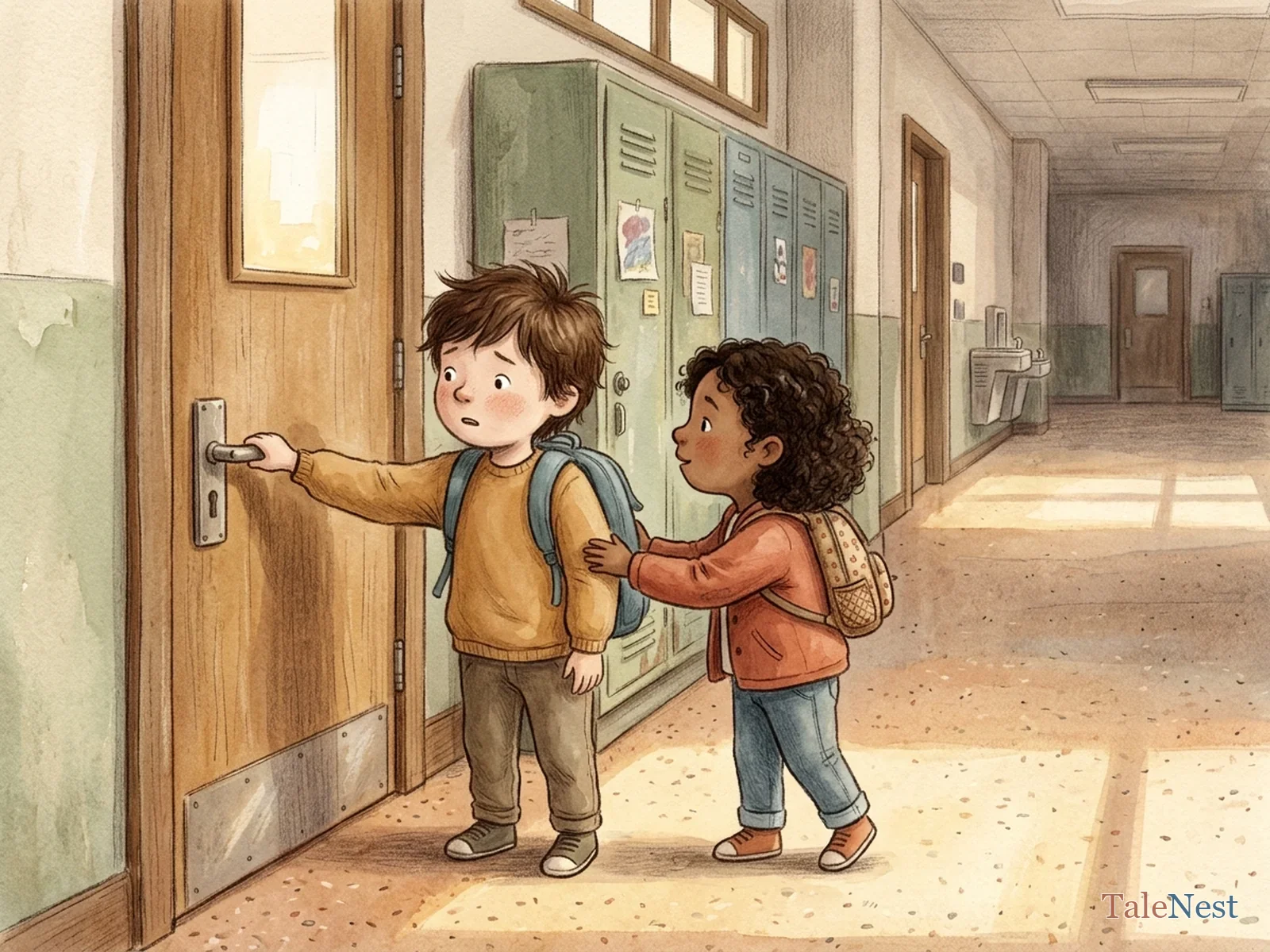
Not every brave act needs a dragon. Some of the clearest stories are about a child who tells the truth when it would be easier to stay quiet, or who sits beside a lonely classmate at lunch. These tales work because the stakes fit inside a child's day. The reader can picture the cafeteria, the sentence that was hard to say, the walk across the room. When courage is scaled down to everyday size, it stops belonging only to legends. It becomes a set of options rather than a distant ideal. A child can ask themselves what the small version of that act would look like in their own week, and the story has handed them a script without delivering a lecture.
Brave without violence
Plenty of traditional tales solve problems with strength or force, and there is a place for them. But a story where courage means kindness, patience, or refusal can widen a child's idea of what power is. Think of the character who stands calmly while others shout, or who protects something fragile without harming anyone. These stories show that bravery can be quiet and still be real. They also give children a safer vocabulary for their own conflicts. When the brave thing in a tale is walking away, asking for help, or saying no, a child learns that courage is not the same as fighting.
Talking about fear at home
Naming the fear out loud
Children often know what scares them but lack the words to say it. A story can supply those words. After reading, a simple question, what was the hardest moment for that character?, invites a child to point at a feeling without having to explain themselves from scratch. Once they have named it in someone else's story, naming their own becomes less exposing. The adult's job is to listen and repeat the word back, not to replace it with a more acceptable one. If a child says the dark or the dog or the test made them scared, that is enough. Accurate names make fear manageable; dismissed names tend to go underground and grow.
Separating danger from discomfort
Not every fear points to real danger, and not every uncomfortable situation is harmful. This is a hard distinction for children, who feel both as equally large. Stories help because they let us sort the two at a safe distance. A tale might include a moment where a character's fear was worth heeding, a creaking bridge, a stranger's offer, and another where the fear was about embarrassment or change. Talking through the difference teaches a child to ask a useful question: is this something I need to avoid, or something I need to get through? That question is a tool they can carry into a schoolyard, a doctor's office, or a new room full of people.
What not to say
“Don't be scared”
It is a natural thing to say to a frightened child, and it rarely lands as intended. The child hears that the feeling they are having is not welcome, so they learn to hide it rather than work through it. A story offers a better opening line. Instead of dismissing the fear, point to the character who carried it and ask what helped them go on. This keeps the conversation on the page for a moment, which is less threatening than turning the spotlight on the child. Over time, the child absorbs the idea that fear can be talked about. That is more useful than being told it should not exist.
“Be a big kid”
Phrases like this tie bravery to age or status, and they quietly shame the child who is struggling. A three-year-old cannot become a big kid on demand, and an older child may feel they have lost the right to be frightened. The tales we read can reset this. When a story shows a small, young, or unlikely character being brave, it tells children that courage is not reserved for the grown-up or the strong. The phrase to reach for instead is one that names the attempt: you kept going, you tried, you told someone. Praising the action rather than the identity keeps the door open for the next attempt.
Common questions
Are heroic tales still useful?
Yes, with a little framing. Heroic stories give children a language for big feelings and a sense that good can prevail. The risk is only in the message that heroes never tremble. After reading one, ask where the hero might have been afraid and what they did with that fear. A single question restores the human part of the character and keeps the tale from setting an impossible standard.
How do we praise courage?
Praise the specific thing the child did, not their character. You went back into the room even though you were unsure is better than you are so brave. Specific praise names the behaviour a child can repeat, and it avoids turning courage into a fixed label they feel pressure to live up to. It also leaves the fear intact, which is where the real courage was.