Legends of the Sea and Why Children Keep Asking for Them
Ask a child for a sea story and you will often get a creature, a storm and a boat in trouble. Sea legends have a way of sticking that calmer stories do not.
This article offers general information for families. It is not medical, psychological or developmental advice; ask a qualified professional about your own child.
Ask a child for a sea story and you will often get a creature, a storm and a boat in trouble. Sea legends have a way of sticking that calmer stories do not. They come from a world where the horizon is the edge of what anyone can see, and where weather decides everything. Parents sometimes worry that these tales are too wild or too frightening, but the appeal is easy to understand once you notice how simply they are built. This is a look at what makes them different, why young listeners return to them, and how to read them without reshaping them into something they are not.
What makes a sea legend different
Vastness, danger and the unknown
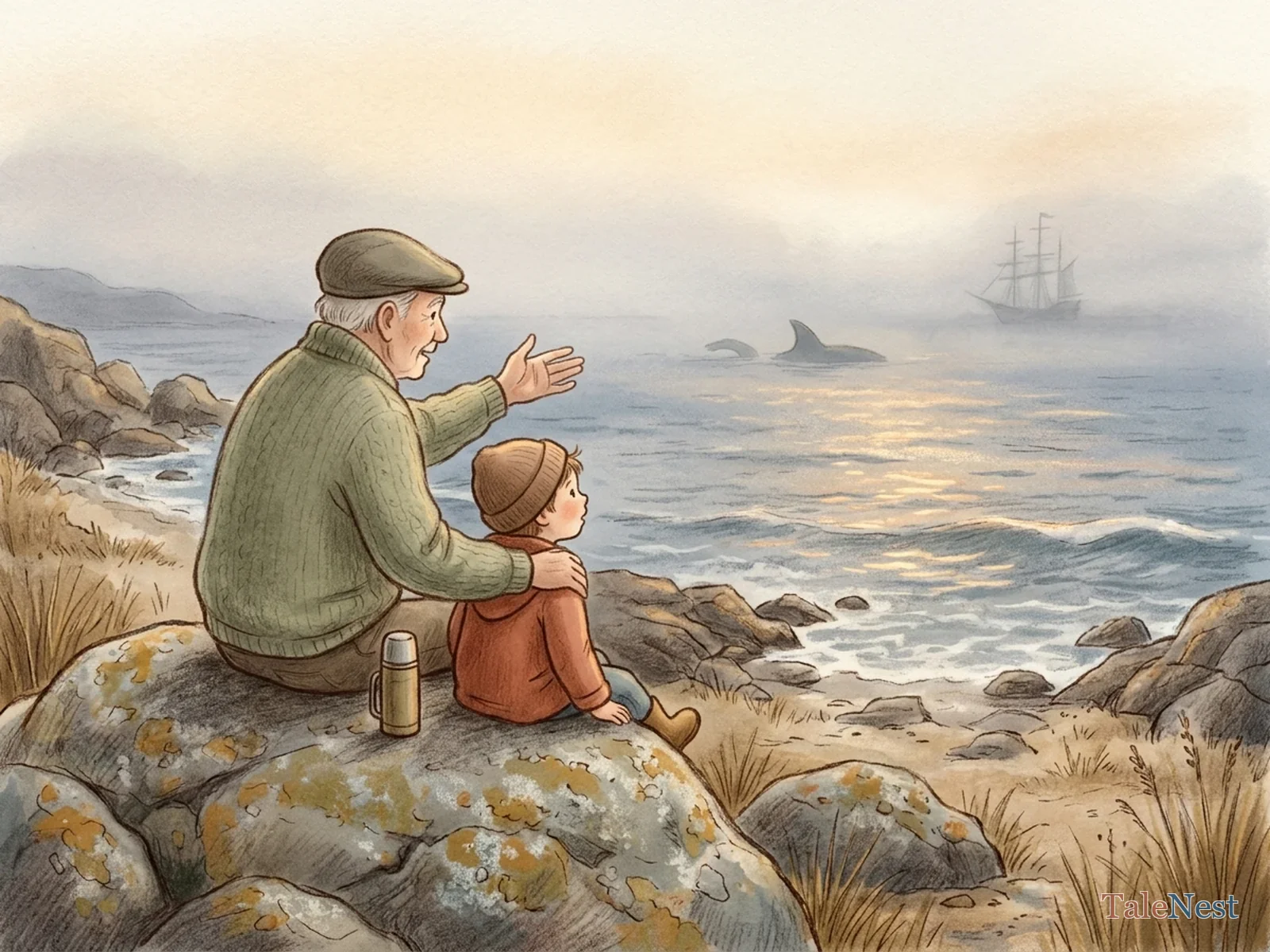
A sea legend begins with scale. The ocean is larger than any person, older than any village, and largely unseen beyond the shoreline. That fact alone gives a story room for wonder and unease. On land, a child can picture the path home; at sea, the familiar landmarks disappear and the rules of ordinary life feel thinner. Legends grow in that gap. They fill the unknown with something enormous and deliberate, whether a creature beneath the boat or a voice in the fog. The danger is real within the story, but it is also distant enough to be safe from the listener's own evening.
Sailors as storytellers
These tales were carried by people who lived with the sea every day. Sailors had long stretches of idle time and a strong reason to make sense of what they had seen. A strange light, an unusual catch, a night of impossible weather: each could become a story by the time the boat came in. That origin shapes the tales. They tend to be practical, a little dry, and interested in seamanship as much as marvel. The supernatural arrives in ordinary working clothes. Knowing this helps a reader hear the voice behind the story: not a frightener, but someone passing the time and marking something they could not explain.
Why they appeal to young readers
Big creatures, simple rules
Children respond to scale, and a sea legend offers it without complication. The creature is huge, the boat is small, and the difference is settled in the first sentence. The rules are just as plain: do not anger the sea, do not answer the voice, return before the storm. A young listener can hold the whole situation in mind without tracking a complicated set of motives. That clarity is not a limitation. It lets the story work as a clean contest between caution and curiosity, which is a conflict children understand from their own lives, even if they have never seen the ocean.
A world just beyond the shore
The second appeal is the threshold. A sea legend starts somewhere familiar, then moves past the point where anyone can follow. For a child, that movement is both exciting and contained. The strange world is out there, beyond the beach or the harbour, and the story brings it close for a few minutes before closing the book. This is different from a tale set entirely in a faraway place. The shore gives the listener a foothold. Reading these stories is a way of looking at the unknown from a position of safety, which is why the request for one more tale often comes from a child who is not quite ready to sleep.
Reading them aloud
Letting the refrain carry the page
Many sea legends are built on repetition. A line returns with each wave, each night, each sighting, and that refrain is the part a listener will remember. Give it room when you read. Keep the repeated words steady and let them land the same way each time, rather than rushing them to reach the ending. The refrain is not filler; it does the work of building anticipation. If your edition has shortened or removed it, you can restore a simple repeated line in your own reading. Children often join in by the third telling, and that participation is a sign the story has found its rhythm.
Pausing before the storm
The moment before the storm is the hinge of most of these tales. Everything up to it is setup, and everything after it is consequence. Slow down there. A short pause before the weather turns gives the listener time to feel the shift, and it makes the storm itself land harder without extra description. This is a small piece of pacing that costs nothing. Resist explaining what is about to happen. The child's own anticipation is doing useful work. Hold the page, take a breath, then read the turning line plainly. The restraint makes the legend feel larger than a heightened voice ever could.
Keeping the context honest
Naming the tradition
A sea legend belongs to a coastline and the people who worked it. Say which one when you introduce the story. A sentence is enough: where the tale was told, and by whom in broad terms. This is not a history lesson but a way of placing the story in the world. It tells a child that the tale came from real people looking at a real stretch of water, rather than from nowhere. If your edition already names the tradition, read that note aloud once. Keeping the context visible is one of the simplest ways to treat the material with care.
Not turning legend into fact
These stories explain things, but they do not report them. A legend about a creature in a particular bay is not a claim that such a creature lives there, and it should not be presented as one. When a child asks whether the story is true, an honest answer is that it is a story people told, not an account of something proven. That answer does not spoil anything. Legends lose nothing by being called legends. In fact, naming the form makes it easier to enjoy the scale and the strangeness, because no one has to defend the tale as a fact.
Common questions
Are these stories too scary?
Some are, and the right choice depends on the child. A tale built around a storm and a small boat can feel intense to a sensitive listener. You can soften the description while keeping the shape of the danger, or choose a legend whose threat stays mostly off the page. Watch how your child responds during the reading rather than relying on an age guide. If fear shows up, name it plainly and return to the shore at the end. There is no prize for finishing the most frightening version on the shelf.
Which one works best at bedtime?
Pick a tale with a clear return. The ones that end with the boat safely back in harbour, or with the strange thing receding into the dark, settle better than stories that stop on an open question. Avoid choosing purely on the strength of the creature. A quieter legend with a repeated line and a firm ending often works better at the end of the day than a dramatic one. Read it the same way each night for a few nights, and let the familiar shape do the work.