Teaching Kids the Value of Money: Practical Lessons That Stick
Money is an abstract idea until children can see and touch it. These everyday activities turn a tricky concept into lessons your kids will actually understand.
This guide offers general information for parents and carers. It is not medical, psychological or developmental advice; ask a qualified professional about your own child.
We tend to think of money as a grown-up subject, something children will pick up eventually once they start earning and paying bills. But the truth is that the earlier you introduce the idea, the better. Teaching kids what money is and what it can do does more than set them up to become careful, responsible adults. It also gives them a sharper eye for the value of everyday things, the effort behind a meal, the cost of a toy, the trade-offs hidden in every choice. A child who understands money early is a child who understands a little more about the world.
And that matters, because plenty of adults never quite get the hang of it themselves. Understanding the real worth of a coin, the discipline of putting something aside, and the patience required for sound financial planning all remain stubbornly difficult for many grown-ups, and those gaps have consequences. You can spare your child that confusion simply by being open about the basics: what money actually is, what it is used for, and how it ends up in your hands in the first place. There is no need for a formal lesson. Everyday life supplies the material.
Here are a handful of simple ways to start the conversation and keep it going.
Take a trip to the bank. Even a quick visit to the cash machine can teach a child a surprising amount. Talk through how much money you are taking out, where the rest of it is kept, how it got there, and what you plan to spend it on. If you use a card to withdraw cash or pay, explain what that card is doing. Each small question opens a door to a bigger idea about saving, access, and trust.
Once a child begins to read, the bank itself becomes a lesson in disguise. Posters and leaflets advertising insurance, pensions, and mortgages will catch their eye, and the questions that follow are gifts. Answer them honestly and let your curiosity lead the conversation further. A child who asks why a pension matters is a child ready to hear about planning for the future.
Let them play with real coins and notes. Children need to handle the physical things money is made of before they can grasp the abstract idea behind it. Start with coins and introduce notes later; each gives them something solid to hold. Coins can be stacked, sorted, counted, and grouped into piles. They work beautifully for make-believe shops at home, and they are a natural way to practise early arithmetic without it feeling like homework.
Make paying part of the outing. When you take your child shopping, the checkout is a perfect place to hand over some of the action. Depending on their age, they can help find the right coins, count the money, check that the change is correct, or simply recognise which notes and coins you are handing over. Small children love being trusted with this job, and it quietly builds confidence.
For an older child, go a step further. Give them a set amount and send them to buy something specific for the household. Suddenly they are managing a budget: deciding whether they have enough, comparing prices, and realising that money spent on one thing cannot also be spent on another. That is planning and prioritising learned through experience, not a lecture.
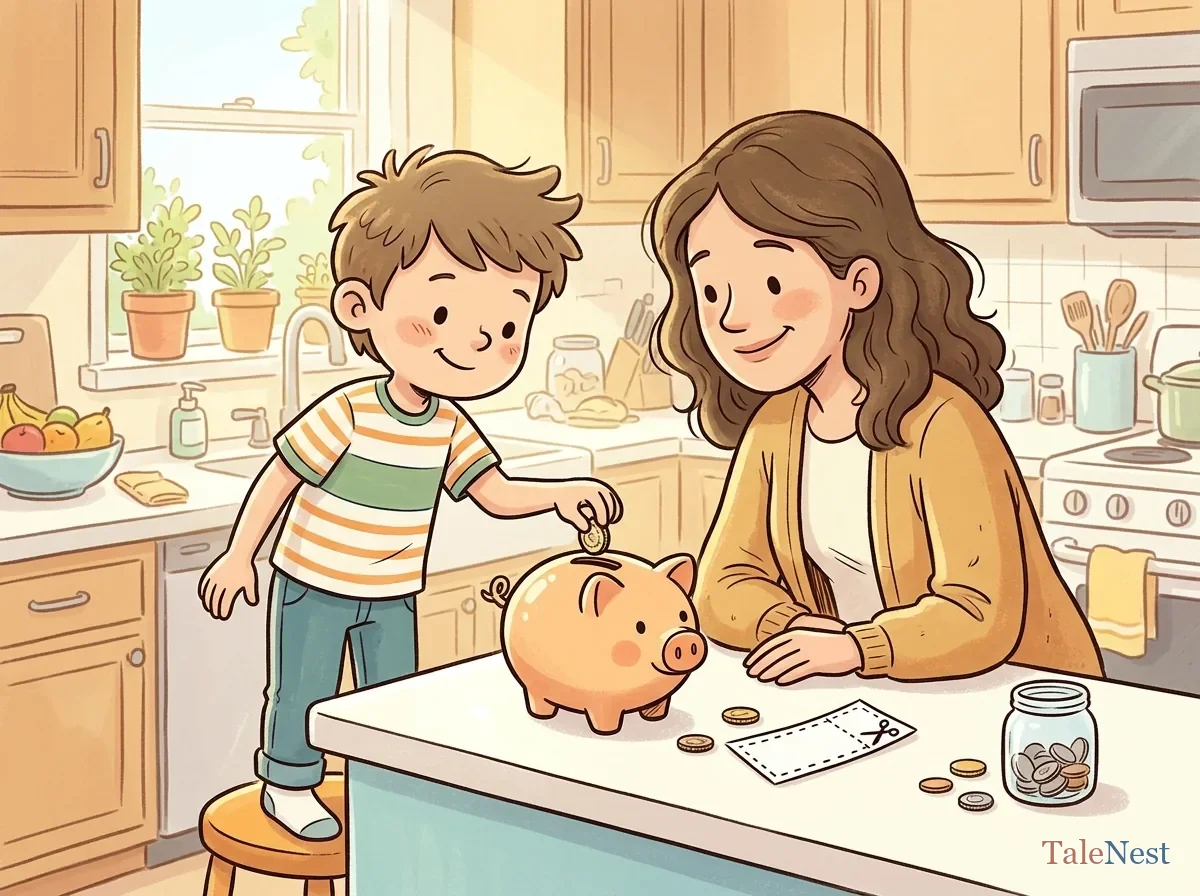
Put coupons to work. Many products, magazines, and flyers carry discount vouchers, and cutting them out together is a neat way to talk about saving. The money you do not spend is money you can use elsewhere. Try setting aside the saved amount in coins, dropping them into a piggy bank, and letting your child choose something useful for the family to buy with the total. Seeing the savings pile up makes the idea concrete.
Offer paid chores. Young children can contribute far more around the house than adults often expect. Give them regular tasks and a small reward for completing them, and you have a natural opening to explain the link between work and money, where it comes from and why it is earned. Hand them a jar or piggy bank for their earnings so they can save toward something they really want. The combination of effort, reward, and patience teaches the value of money better than any explanation alone.
Children grasp money fastest when they can see it, touch it, and spend it in real everyday moments.