
Great-Grandfather and the New Age
A stubborn old man grumbles about modern times until a telegram crosses an ocean and brings his wandering grandson safely home, and wins him over for good.
 Retold by Idalia SantosAges 6+4 min read804 words

This is a work of fiction, retold in original language for TaleNest. Names, places and events are part of the story.
How loving, how sharp, how good great-grandfather was! We saw the world through his eyes. For as long as I could remember we had called him grandfather, but when my brother Frederick's little boy came to live with us, the title grew, and he became our great-grandfather. He loved us all dearly, though he never quite agreed with the age in which he found himself.
'The old days were the good days,' he would say. 'Everything gallops now, everything is turned topsy-turvy. Young people call the tune, and they talk of kings as though the kings were their equals.' While he delivered such a speech his face would go red as a turkey cock's; but in a moment the kind smile would return, and he would add: 'Well, perhaps I am wrong. I belong to the old times and cannot find my place in the new.'
When he spoke of the years gone by, I felt carried back into them. To be sure, there were ugly and frightening things in those days too, but there were splendid ones as well, and it was wonderful to hear him tell of them and of his own youth. Through his stories the past seemed to stand in the room beside us, as real as the lamplight. I liked best the tales of his boyhood, when the roads were quiet and a letter took days instead of hours.
He would sit with shining eyes while Frederick read aloud or spoke of the progress of science, of the strange forces hidden in nature, of discoveries that made the impossible everyday, of all the remarkable things happening in our own time. He was not against learning; he only feared that in our hurry we might lose something worth keeping. 'Men grow cleverer,' great-grandfather would say, 'but not better. They invent dreadful weapons to destroy one another.' 'That makes wars shorter,' Frederick would answer. 'No need to wait seven years for blessed peace to come.'
They could never agree, and yet they could not bear to be apart, just as the old age and the new could not be pulled asunder. We all saw this when Frederick had to go on a long journey to America. Though travelling was common enough in our family, that parting was hard for great-grandfather; he said little, but he went often to the window.
“Wisdom means welcoming the wonders of a new age without scorning the old, and treasuring the people who live across both.”The little lesson
A greeting came over the telegraph wire on the very day Frederick sailed from England. Swifter than any letter, a message reached us from America as he stepped ashore, only a few hours after he had set foot on dry land. 'Truly,' said great-grandfather, 'this is a gift of God to our times, a blessing for the whole human race.'
'And, as Frederick tells me, these forces of nature were discovered in our own country,' I remarked. 'Yes,' said great-grandfather. 'And I have seen the gentle childish eyes that first found out and understood those forces of nature, eyes like yours.'
More than a month later a letter arrived with the news that Frederick was engaged, and with it a photograph. 'Ah, if only they had known of this invention in my young days!' he cried. 'We should have seen the faces of the great benefactors and the great men of the world face to face.'
The newlyweds reached England in health and high spirits and took a steamer for Copenhagen. Within sight of the Danish coast a storm arose and the ship was driven onto a reef. In spite of the peril, every soul on board was saved before dawn. For a whole night we knew nothing, and the sea kept its secret.
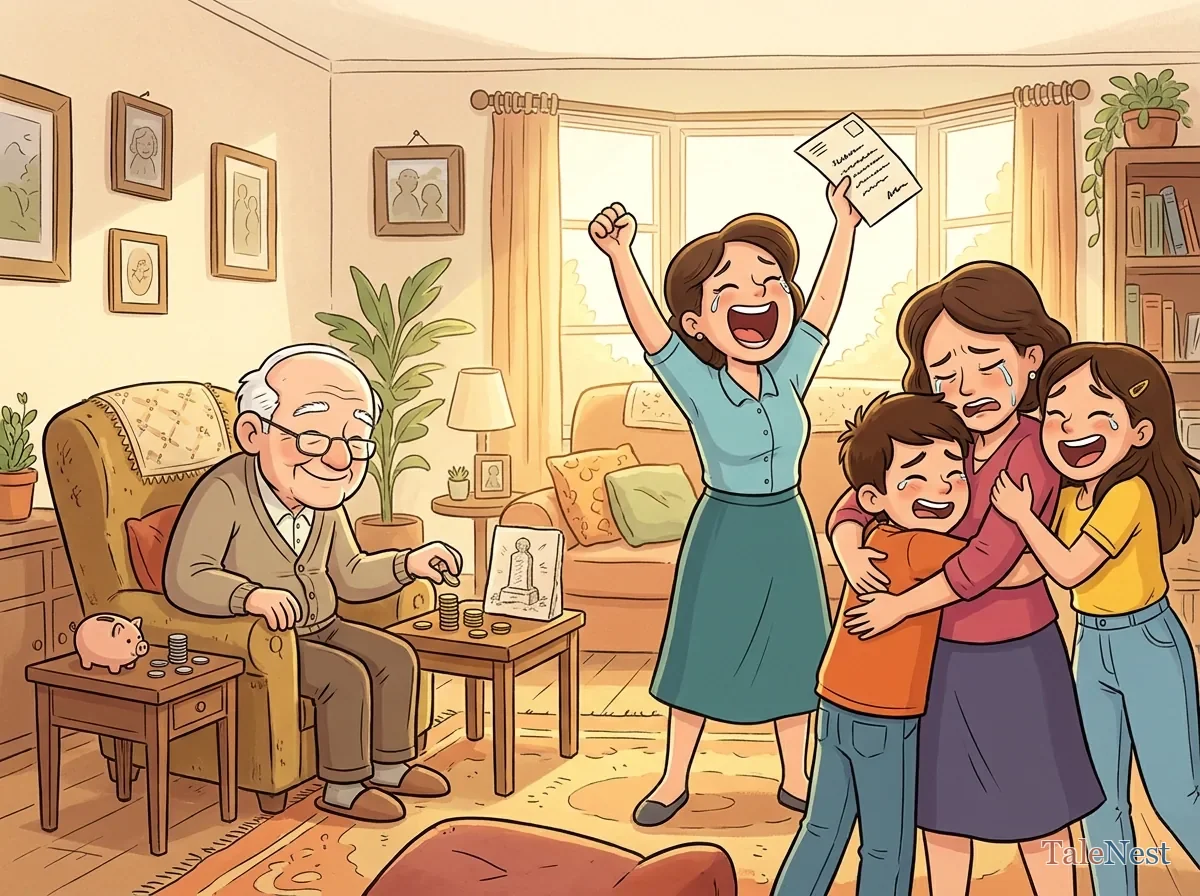
We slept peacefully in Copenhagen, dreaming of no danger. In the morning came a telegram telling of an English ship wrecked on the western coast of the peninsula. Our anguish was terrible; but a moment later another telegram arrived from our dear travellers, Frederick and his wife, announcing that they would soon be home. Fear turned to joy in the time it takes to read two sentences.
We all wept, and great-grandfather blessed the new age. That very day he set aside two hundred crowns for a monument to Hans Christian Ørsted, whose discovery had made the telegraph possible. It was his way of saying that the new age had earned his respect at last.
When Frederick arrived with his young wife and heard what had been done, he said: 'Well done, great-grandfather! Now I will read you what Ørsted wrote many years ago about the old times and the new.' 'He was probably of my opinion?' asked great-grandfather. 'You may be sure of it,' Frederick replied. 'And so are you, since you have helped to build his monument.' Great-grandfather chuckled, and this time he did not say that the old days were better.


