
The Boy They Said Would Never Be Anyone
At a grand children's party a poor boy hears the guests sneer at names ending in -sen. Years later, a magnificent house in the city gives them their answer.
 Retold by Idalia SantosAges 6+4 min read783 words
This is a work of fiction, retold in original language for TaleNest. Names, places and events are part of the story.
A great while ago, the house of a wealthy merchant was filled with children for a grand party. The merchant was opulent and well educated, though his father had been a simple cattle farmer, an honest, hard-working man. Trade had made the father rich, and the son had increased the fortune by his own labour. People of noble birth and of real talent alike came to his door, and the rooms were bright with company. The host himself had been a poor boy once, and he had never forgotten it, though his guests had.
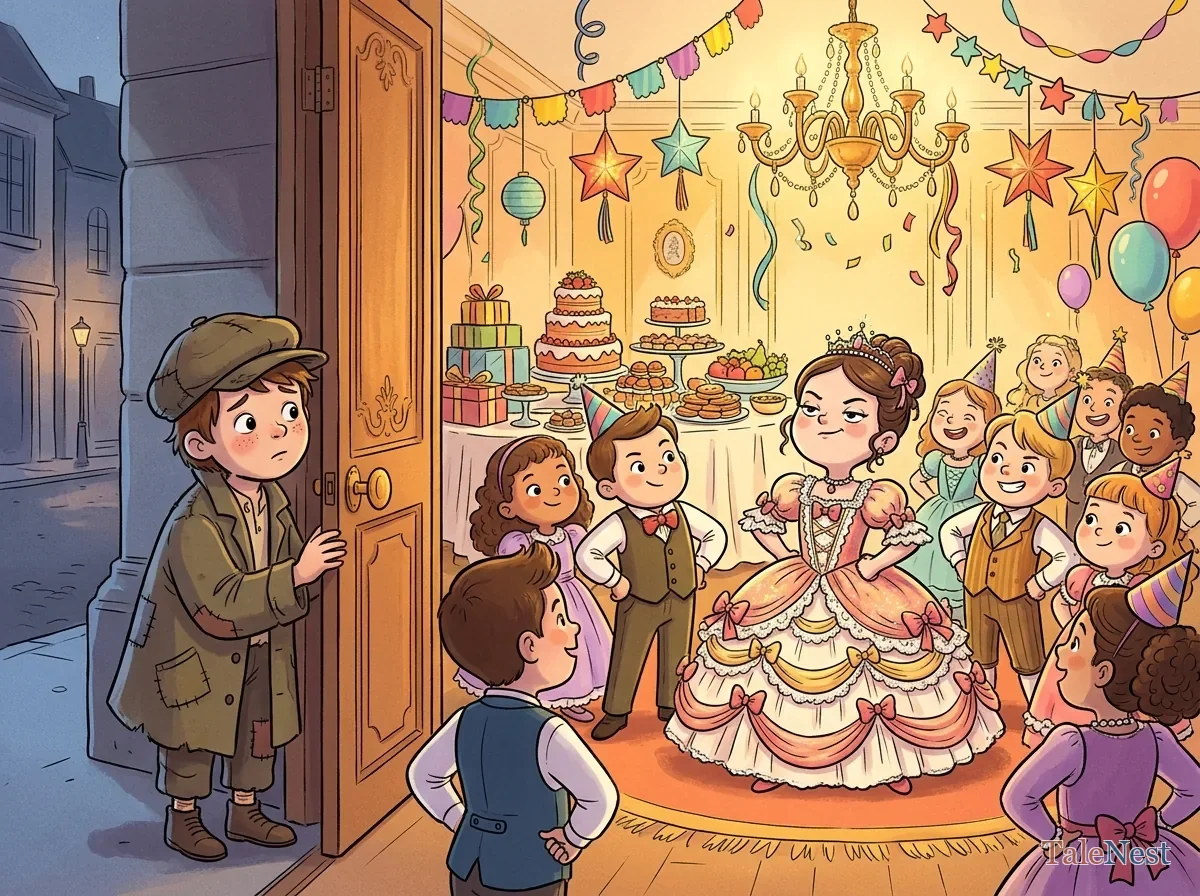
The children talked and argued as children do, with no restraint at all. Among them was a lovely girl, terribly proud of being the daughter of a chamberlain, a post of great importance, as she took care to let everyone know. 'I am the King's chambermaid!' she announced. She might as well have said the chambermaid of a wine cellar; the one post required no more merit than the other. She tossed her head and looked down her nose at the others, waiting for them to admire her.
Then she informed the company that she was well born, and that anyone who was not well born could never amount to anything. Study and work were of no use at all; if you had not come into the world with the right family, there was nothing to hope for. 'And all those whose names end in -sen,' she went on, 'will never get anywhere either. You must plant your hands on your hips and keep those -sen, -sen people at a distance.' She planted her hands on her hips to show how it was done, and her little arms were very pretty. Altogether, she was charming. A murmur of agreement ran through the group, and several children copied her pose without knowing why.
For a moment no one answered. The children shifted on their chairs, half afraid of the proud girl and half ashamed of agreeing with her.
“A person's worth comes from character and effort, never from the family or the name they are born with.”The little lesson
But the shopkeeper's daughter was furious. Her father was called Madsen, and she could not bear to hear names ending in -sen spoken of so scornfully. With every ounce of pride she could muster she retorted: 'My father can buy a hundred crowns' worth of sweets and throw them to the children. Can yours do that?' Her cheeks flamed as she spoke, for she knew quite well that her father had earned every crown himself.
The daughter of a writer chimed in: 'My father can put your father in the newspaper, and yours, and all your parents. Everybody is afraid of him, my mother says, for my father rules the newspaper.' And she held her head as high as a princess who had been born to be looked up to. She had the last word, and she made the most of it.
Out in the street, by the half-open door, a poor boy peered through the gap. He could not go in, for he lacked the necessary standing. He pressed his face closer to the opening, careful not to be seen, and listened to every word. 'If only I were one of them!' he thought; and when he heard what they were saying, his heart sank. He thought of his father's rough hands and his mother's mended apron, and felt a shame he had done nothing to deserve. At home his parents had not a single shilling to put by, nor money even to buy a newspaper. Worst of all, his father's name ended in -sen, and so did his own. According to that rule, nothing could ever be made of him. It was very sad.
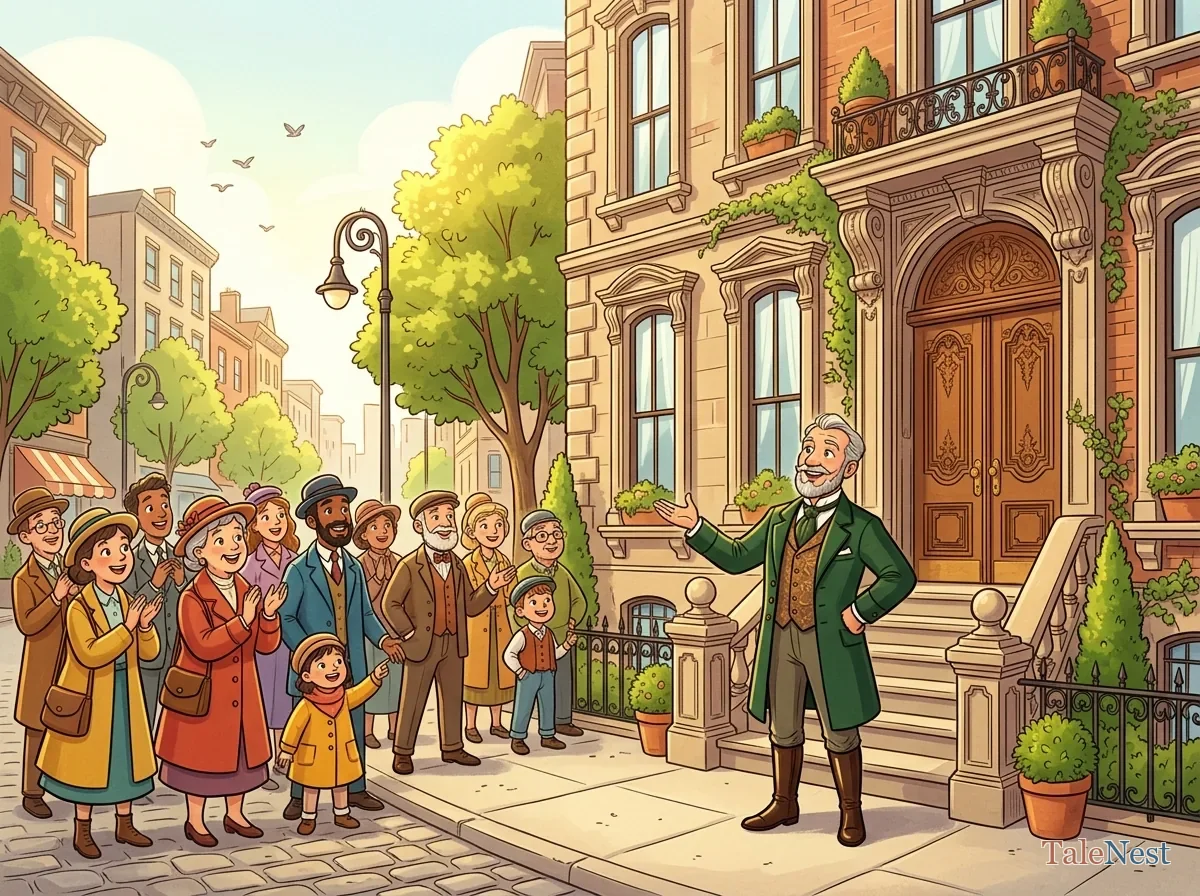
Many years went by, and the children grew into men and women. A magnificent house rose in the city, and everyone wanted to see it. People came from far away to marvel at its carved doors and high windows, and to learn who had built it. Which of those children did it belong to? It was not easy to guess, and the answer was surprising, for the house belonged to the poor boy. He had become somebody, in spite of the -sen at the end of his name. His name was Thorwaldsen.
And the other three, the children of blood, of money and of conceit? They turned out to be good, capable people, for there was sound stuff in all of them. Not one of them had remembered the poor boy at the door, yet the boy had remembered them. What they had thought and said at that party was nothing but children's chatter. It is a poor sort of pride that measures a person before he has had time to grow.


