
Light Through the Bars
From a high rampart we watch a setting sun and a small bird reach a chained prisoner, and for a moment even a hardened heart remembers how to feel.
 Retold by Idalia SantosAges 12+5 min read844 words
This is a work of fiction, retold in original language for TaleNest. Names, places and events are part of the story.
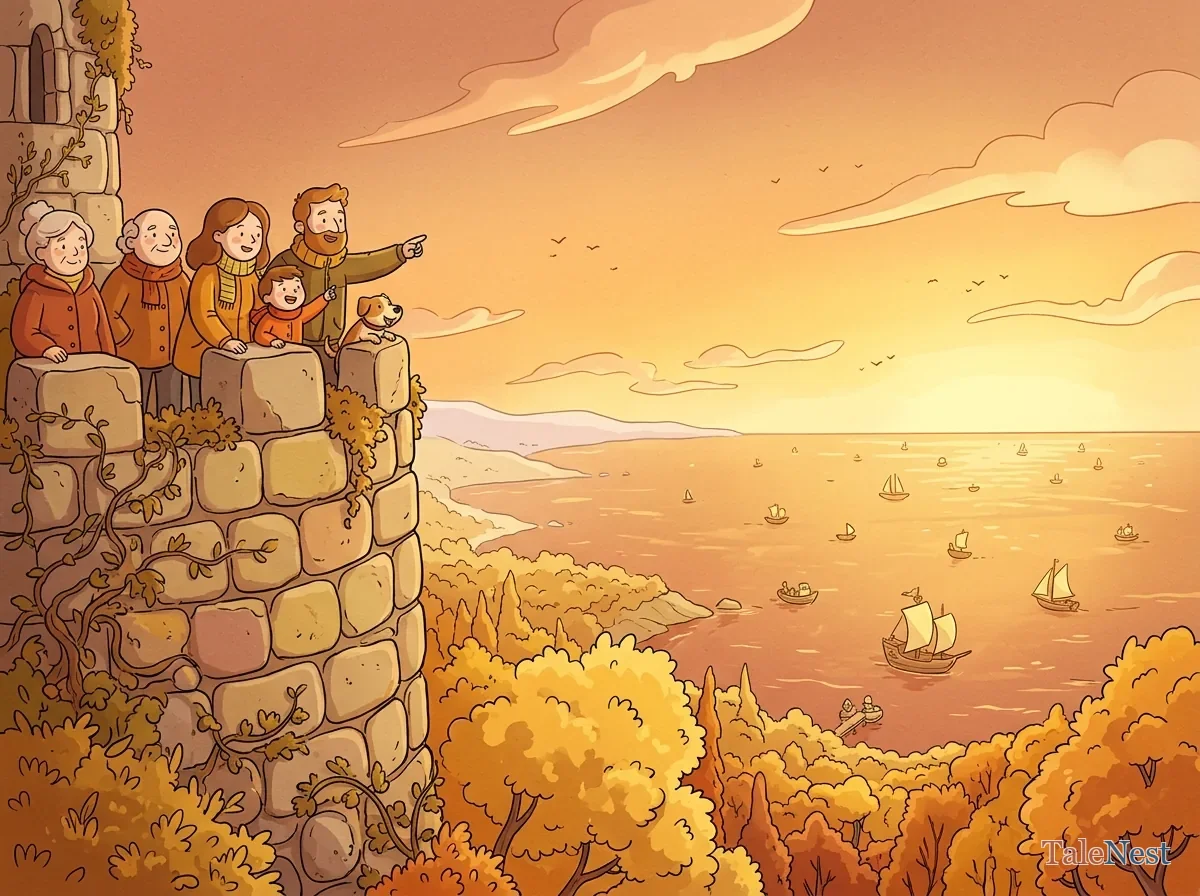
It is autumn, and the season lays its quiet hand on everything. We stand high on the old rampart, looking out over the water. The sea is crowded with ships; pale sails and dark hulls thread the horizon in every direction, some idling on the swell, others carving long, bright wakes through the blue. Far beyond them, at the edge of the sound, the Swedish coast lifts into view—proud, pale, and steeped in the warm gold of the setting sun. That low western light gilds the stone beneath our feet and turns the whole reach of water into a road of molten copper, so that even the simple act of standing here feels like standing at the threshold of something grand.
Behind us the ground falls away sharply into woodland. Great trees press close along the slope, magnificent in their last splendor, their leaves turned to every shade of yellow, amber, and pale gold. As we watch, a breeze moves among them and the foliage begins to loosen; leaf after leaf breaks its hold and comes spinning down in slow, wavering spirals, settling into the hollows and banking up against the old wall. There is a hush about the place, that special stillness of a mild autumn evening when even the insects seem to pause and the air itself appears to be holding its breath.
Below the rampart, clustered at the foot of the slope, stand the gloomy houses with their pointed palisades. Inside the enclosure everything is cramped and cheerless. A sentinel walks his round with a slow, mechanical tread—back and forth, back and forth, the same few paces repeated until the motion itself seems to have become part of the stone. Yet even this narrow, sunless yard is bright compared with what lies beyond the iron-barred prison on the far side. There the cells hold the convicts, the men who committed the worst crimes, shut away from the world and from one another in a darkness that has settled deep into the walls.
“Mercy and beauty can reach even the hardest heart; the sun shines on the guilty and the innocent alike, and no small kindness is ever wasted.”The little lesson
Into one of those bare cells a shaft of the setting sun finds its way through the teeth of the window. It is a small, stubborn beam, no wider than a man's hand, but it brightens the gray wall and lays a warm stripe across the floor. For the sun does not pick and choose; it pours its light upon the good and the wicked without asking which of them deserves it. The prisoner crouches there—a heavy, rough fellow with a face hardened by years of bitter living. He is chained, and his eyes learned to hate long ago. When the warm ray touches him he turns his head aside, and his mouth curls as though the light were an insult, a gift he had no right to receive.
Then a little bird comes flying to the bars and perches there, quivering on the iron. It sings for the good and the bad alike, just as the sun shines for both. The song is only a short trill—a few quick notes, thin and clear—but the bird does not leave when they are done. It stays on, fluttering its wings, ruffling the soft feathers at its throat, and at last it tugs one feather free and lets it drift down. The chained man watches. He could not have said what drew him, but he watches. Something in that small, fearless creature reaches a part of him that has been locked away for years. The harsh lines of his face loosen, and a gentler look steals across it—the shadow of a thought he cannot quite grasp, a thought that has something in common with the stripe of sunlight on his wall and with the violets that come up so thickly in spring outside these very bars, blooming for whoever will stop to look.
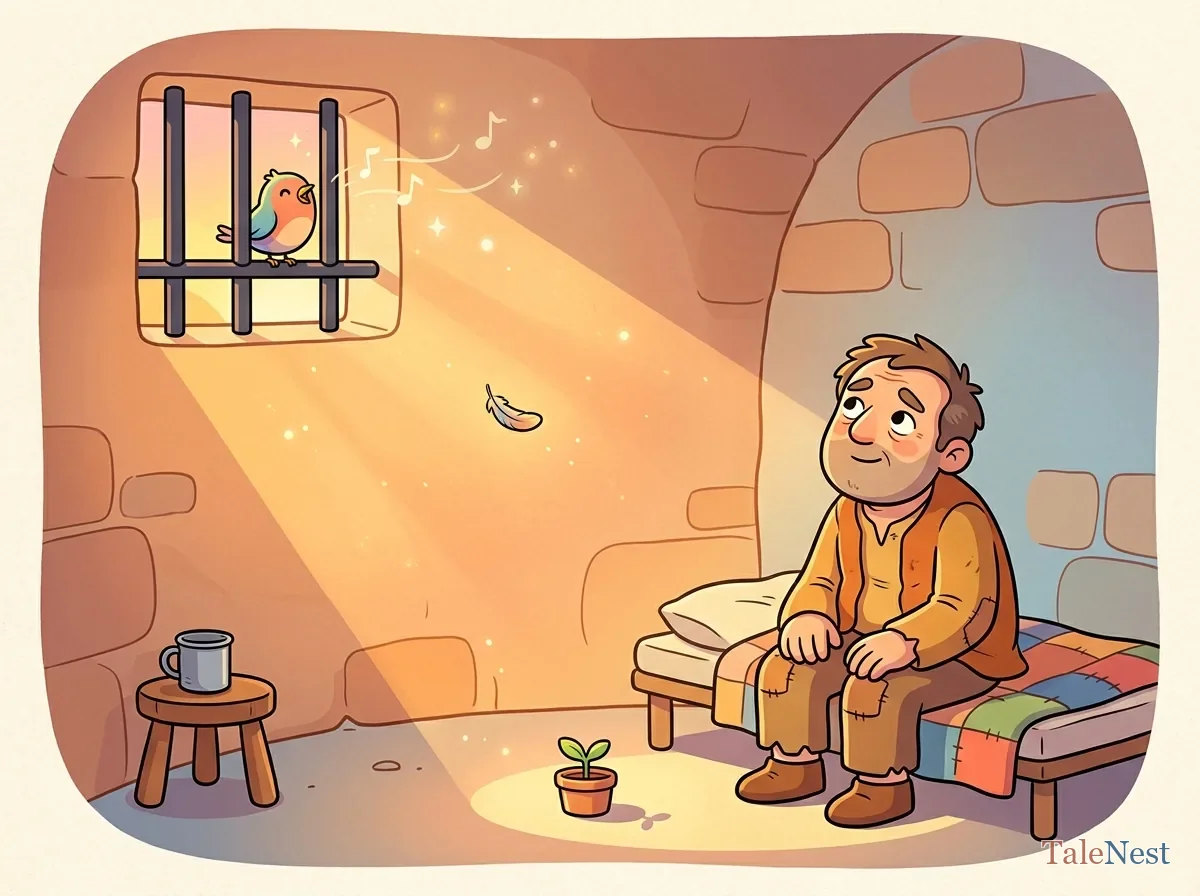
Then, from the forest behind us, a hunting horn rings out—clear, vigorous, and full of melody. The sound rolls down the slope and across the yard and reaches even the prison. The bird starts, spreads its wings, and is gone from the bars in an instant. The sun sinks a little lower; the stripe of light slides off the wall and disappears. Darkness settles back into the cell, and with it the old darkness settles back into the man's heart. Once more he is alone with his chains. But something has happened that cannot be undone: the sun did shine into that place, and the little bird did sing there.
Keep sounding, then, you beautiful notes of the hunting horn; let them ring and ring across the walls. The evening is gentle and at peace, the air is still, and the sea lies calm and smooth as a polished mirror, holding the last light of the sky. Far off, the Swedish coast still stands in the sun's farewell. There is nothing grand in any of this—only a beam of light, a bird's brief song, and a man who for one moment remembered what tenderness felt like. And that, it seems, is enough to make the horn worth hearing.
Mercy and beauty can reach even the hardest heart; the sun shines on the guilty and the innocent alike, and no small kindness is ever wasted.


