
The Bread Beneath Her Foot
A proud girl tosses a loaf into the mud to save her shoes, and learns too late how heavy a single ungrateful step can be.
 Retold by Idalia SantosAges 10+5 min read933 words
This is a work of fiction, retold in original language for TaleNest. Names, places and events are part of the story.
Once a girl trampled a loaf of bread into the mud to keep her shoes clean, and that single act brought her to a dreadful end. Her parents were poor but honest; she was proud as a peacock, and each year her vanity grew worse.
Her mother often said, “A good thrashing is what you need. As a child you trampled my apron a hundred times; I fear that when you are grown you will trample my heart.” And that is just what happened.
She went into service with a rich family who treated her like a daughter. Instead of gratitude, their kindness bred pride; she thought fine clothes her due and looked down on the poor parents she had left.
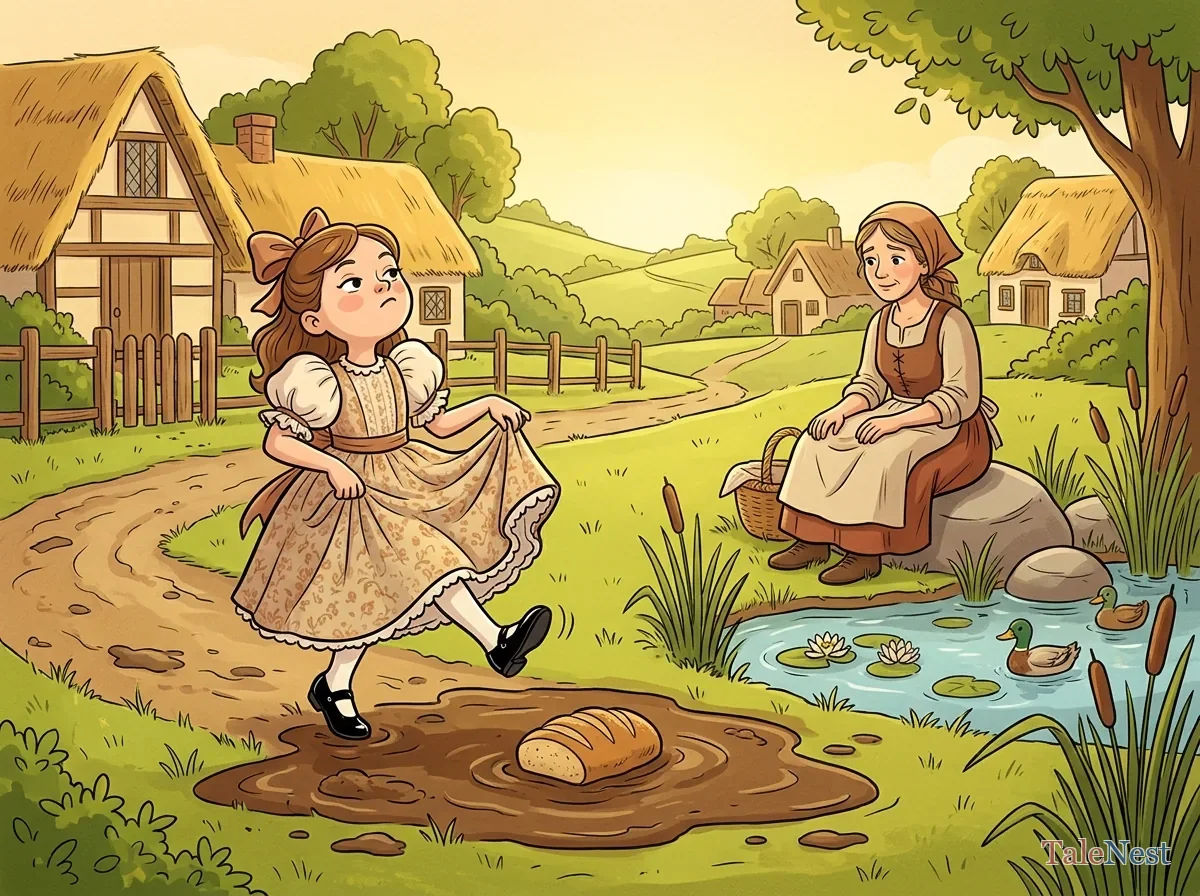
After a year her mistress said, “Go home to your parents; here is a wheat loaf for them.” But she went only to show off. Seeing the village girls by the pond and her rough old mother resting on a stone, she turned back, ashamed, not of her cruelty, but of having dressed so finely for nothing.
Another half year passed.
“Visit your parents again,” said her mistress. “Take this loaf.”
She put on her best dress and new shoes and picked her way carefully. Where the path crossed a marsh lay a puddle; rather than wet her shoes she threw the loaf into the mire and stepped on it as on a stone. One foot on the bread, the other raised, the loaf sank, and she vanished into the water.
She did not drown but fell into the hall of the Marsh Woman, aunt of the elves, who lives at the bottom of the bog. That day the Devil and his ancient grandmother, a wicked witch, were visiting.
“Pride tramples what it should cherish, but love, repentance, and small acts of kindness can redeem even the hardest heart.”The little lesson
The Marsh Woman put on her spectacles and peered at her. “Fine clothes,” she said. “Give her to me as a keepsake of your visit.”
So the girl was given to the witch and carried to Hell. Her dress was blotched with mud, a snake coiled in her hair, and toads crawled from every fold, yapping like dogs. “Everyone here looks as dreadful as I do,” she comforted herself.
Worst was the hunger. Could she not break off a bit of the loaf beneath her foot? She could not: her body was a pillar of stone, and she could move only her eyes. “I cannot bear it,” she thought; but she must.
A hot tear fell on her head and rolled onto the bread, then another, and many more. Who wept? Had she no mother on earth? A mother's tears reach her children but do not save them, they burn. Her mother wept, yet cried: “Pride goes before a fall! How you have grieved me!”
The shepherd who had seen it from a hill told the village, so all knew. Now she felt her insides eaten away, a hollow reed catching every hard word spoken above.
One day she heard her story told to a little girl, who wept. “Will she never come back?” “Never.” “What if she were sorry and promised?” “She will not ask forgiveness.” “Oh, I want her to be sorry!” cried the child. “I'd give my whole doll's house to have her back.”
The words went to the girl's heart with strange relief. An innocent child was weeping for her, so wonderful that she felt she could weep too.
Years passed above; nothing changed below. Once she caught a sigh: “My daughter,” said her dying mother, “how much sorrow you have cost me!”
Then she heard her name again, and two stars trembled above her: gentle eyes closing on earth. So many years had passed that the weeping child was now an old woman, whom God was about to call. As her thoughts turned to heaven she remembered that tale, and the memory came so strongly that she cried: “Lord, how often have I trampled Thy gifts of grace, never thinking! How often have I been proud, yet in mercy Thou didst hold me up! Do not forsake me now.”
The old woman's eyes closed; the eyes of her spirit opened on the hidden world. Because the girl was her last thought, she saw her. The tears and prayer echoed in the hollow shell below, and the girl was overcome by love, an angel of the Lord was weeping for her.
The tormented soul reviewed her life, and a flood of tears shook her; it seemed mercy's gates could never open. Suddenly a shaft of light pierced Hell and entered her stone figure. A little bird rose toward the world of men, but drew back, ashamed, and hid in a dark hole. It had no voice yet, and lay still a long while before it could take in the magnificence around it.
Those thoughts stirred in the bird's breast, longing to be spoken, but it had no words. The silent song swelled, waiting to break at the first flutter of a good deed, and the deed had to be done.
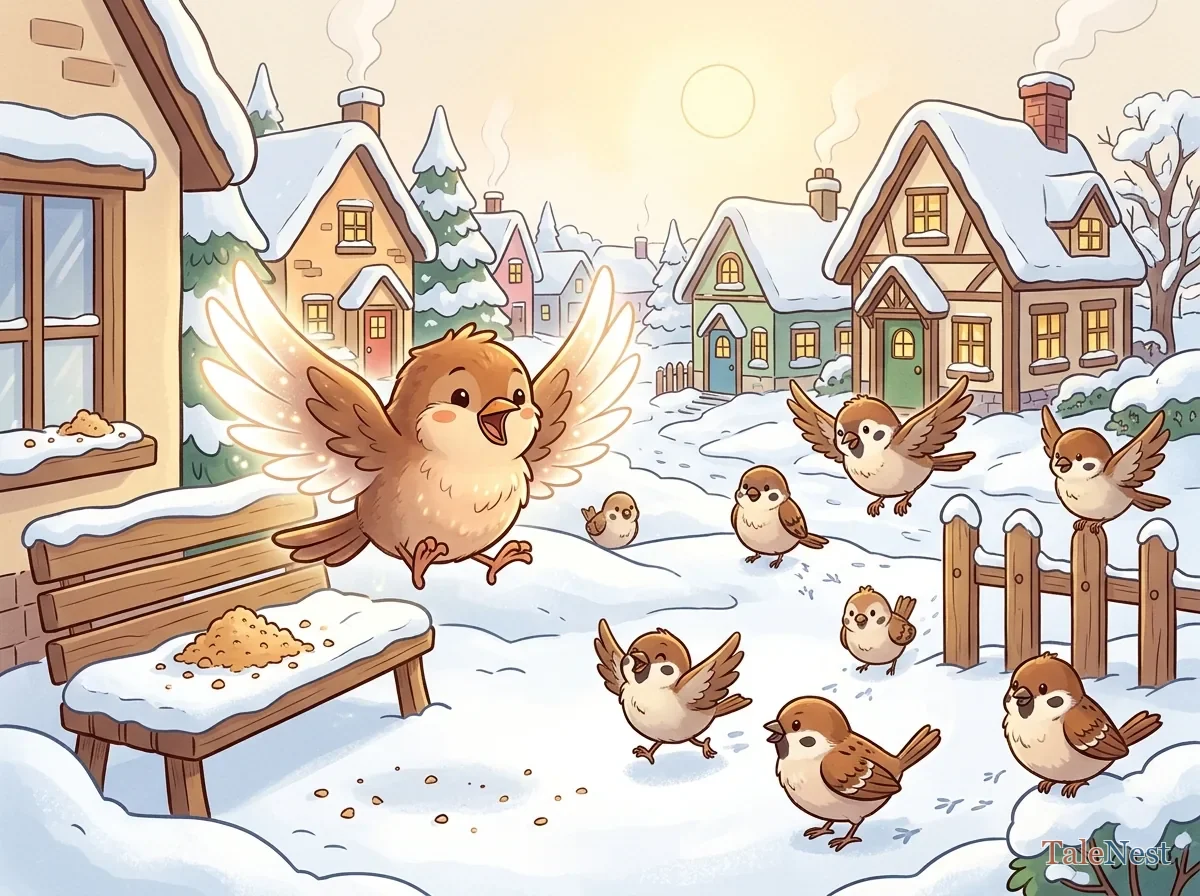
Winter came bitterly; birds and beasts found little food. The bird picked grains from the road, found a crust, ate a few crumbs, and called the hungry sparrows to share. In the towns, wherever it saw crumbs on a sill, it ate a few and left the rest.
All winter it gave away crumbs whose weight equaled the loaf she had trampled. At the last crumb its brown wings turned white and spread, shining so brightly the eye could not follow, and it vanished. The children said it had flown to the sun.
Pride tramples what it should cherish, but love, repentance, and small acts of kindness can redeem even the hardest heart.


