
The Goblin with Two Umbrellas
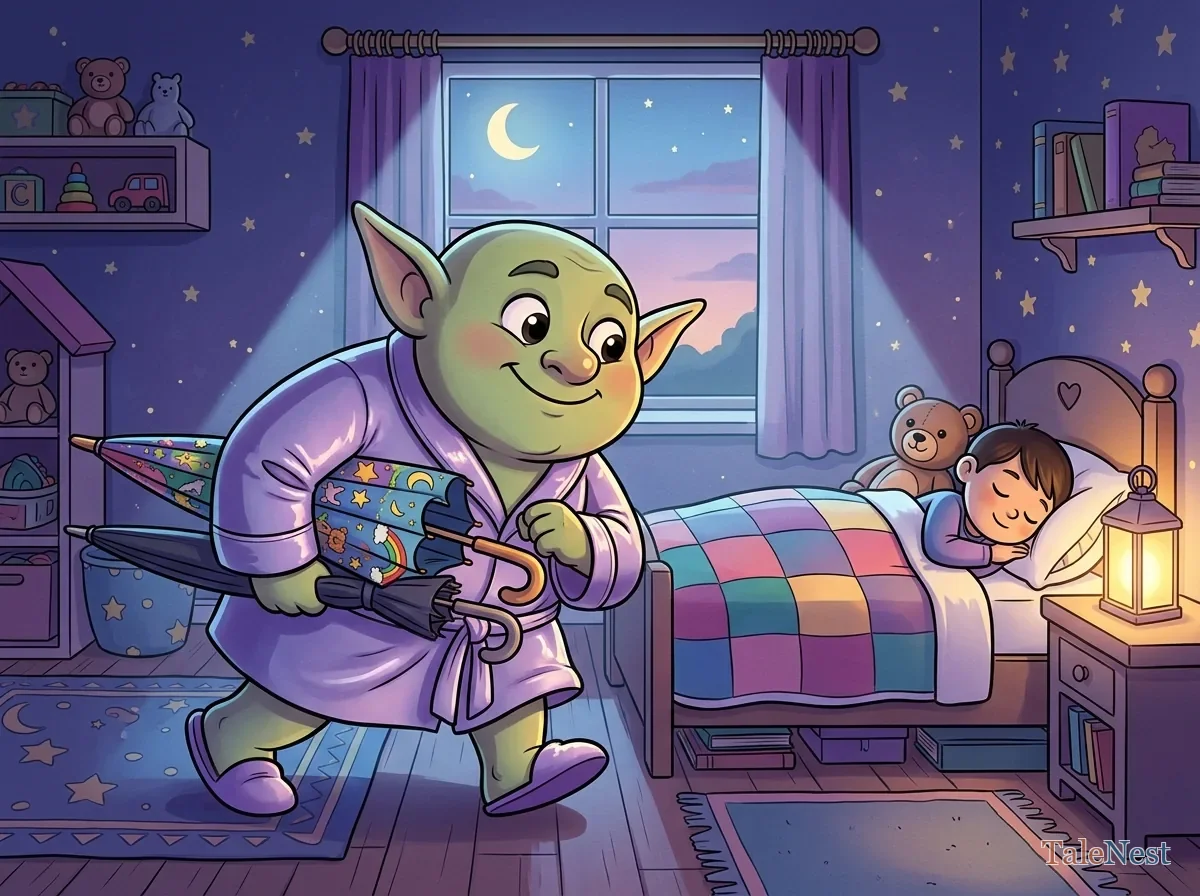
Each night a gentle goblin tiptoes in with two umbrellas: one weaves glorious dreams for good children, the other sends naughty ones to sleep with nothing at all.
 Retold by Idalia SantosAll ages5 min read985 words
This is a work of fiction, retold in original language for TaleNest. Names, places and events are part of the story.
Nobody knows as many stories as the goblin Ole. At dusk he creeps up behind them and breathes softly on their necks, and their eyelids grow heavy. It never hurts, for he is a friend to children; he only wants them quiet for his tales.
Once they sleep he settles on the bed's edge in silk, two umbrellas under his arms. One is embroidered with pictures; opened over a good child, it brings delicious dreams till morning. The other is plain; spread over a naughty child, it sends him to sleep like a dormouse and he wakes remembering nothing, not even the smallest dream.
Now hear how Ole visited a boy named Frederick every night for a week, seven visits for seven days.
On Monday, when Frederick was in bed, Ole said, “Listen.” Every flower in the pots shot into a tall tree, its branches hung with blossoms lovelier than roses, breathing sweet perfume and tasting sweeter than jam.
But from the schoolbook drawer came dreadful moans. “What is that?” asked Ole, pulling it open. A wrong figure had slipped from a sum on the slate, leaving all in confusion, and the pencil hopped like a nervous dog. Worst was the copybook, full of complaints. “Look,” scolded the example. “Slanted, with a bold, sure stroke.”
“How we wish we could!” whimpered the letters. “We are so feeble.”
“Then I shall give you cod-liver oil,” said Ole. The letters cried out and stood straight. “Then no story tonight,” said the goblin. “Exercise is what you need. One, two, one, two!” He drilled them till they were slim and perfect as the example. But in the morning Frederick saw they were as feeble as before.
On Tuesday Ole sprinkled the furniture and every piece began to chatter; only the spittoon stayed silent. Above the dresser hung a picture of old trees, flowers, and a river. He touched it: birds sang, branches swayed, clouds drifted past, as their shadows showed.
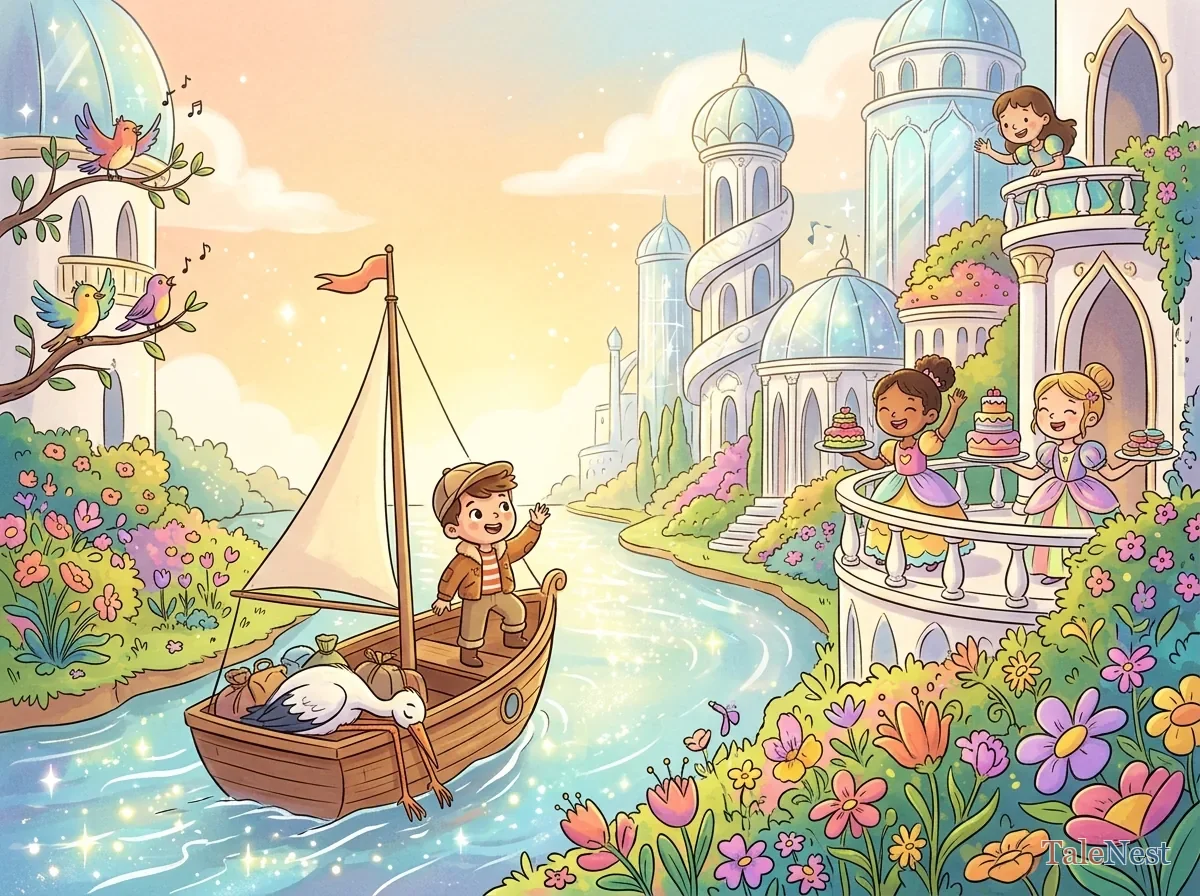
Then he set Frederick on his feet in the picture, among tall grass. He ran to the river and climbed into a little boat with splendid fish alongside. There were palaces of glass and marble with princesses on the terraces, all girls he knew, each offering a cake. Frederick took a sweet by one end, the princess held the other, and as the boat glided they each kept a piece, she the smaller. Princes stood guard with sabers, handing out raisins and lead soldiers.
“Imagination is a gift that flourishes in a gentle heart, turning the humblest evening into a voyage beyond the ordinary.”The little lesson
The boat passed his old nurse's town, and she sang the song she had made up as a child. All the birds joined the chorus, flowers danced on their stems, and the old trees bowed their crowns, as though Ole were telling them stories too.
On Wednesday Frederick dreamed of rain; Ole opened the window and he saw water at the sill. Beside the house floated a ship.
“If you would sail, you may set off tonight for strange lands and be home tomorrow.” He went aboard. The sky cleared and the ship sailed down the streets and out upon a boundless sea until all land vanished. They saw storks leaving for a warmer country. One was so weary her wings could barely hold her; they watched her sink, beat them frantically, touch the rigging, slide down a sail, and bump! land on the deck.
The cabin boy shut her in the henhouse with chickens, geese, and turkeys, where she felt out of place. “Look at this one!” cried the chickens. The turkey puffed up and demanded who she was; the ducks waddled backward, quacking, “Mind! Mind!”
The stork told them of Africa, the pyramids, and ostriches faster than a camel. But the ducks understood not a word and went back to shoving. “We all agree she is stupid, don't we?” “Of course she is stupid!” cried the turkey. She fell silent, thinking of her Africa.
“What thin legs you have!” said the turkey hen. “How much a yard?” “Quack, quack, quack!” gabbled the geese. The stork pretended not to hear. “Why will you not laugh with us?” asked the hen. “Is my question beyond you? Bah, what a dull mind.” She quacked again and the ducks joined in.
But Frederick opened the henhouse and called the stork, who followed him gladly to the deck. Rested, she thanked him with little nods, then spread her wings and flew off, while hens clucked, ducks quacked, and the turkey's head turned red.
“Tomorrow we shall make soup of you!” Frederick called after her. And he woke in his own little bed.
On Thursday Ole said, “I will bring out a little mouse, but do not be afraid.” He held out his hand. “He has come to invite you to a wedding. Two mice are marrying tonight in your mother's pantry, a handsome residence.”
“But how shall I get through the mousetrap?” asked Frederick.
“Leave that to me,” said Ole. He touched the boy, who shrank to a finger's length. “Ask the lead soldier for his uniform,” said the goblin. “In company it is best to appear in uniform.”
“Would you sit on my mother's thimble?” asked the mouse. “It would be an honor.”
“If the young lady is so kind,” said Frederick, and off they went. “Does it not smell wonderful?” said the mouse. They had greased the passage with bacon.
At the hall the lady mice sat on the right, the gentlemen on the left, and the bride and groom kissed in the middle. More guests arrived; the room was greased with bacon, and the banquet consisted in that delicious smell. For dessert a pea bore the couple's initials, bitten by a mouse. Never was such a sight. Every mouse declared it a beautiful wedding and a magnificent feast.
Then Frederick went home, delighted with such distinguished society, though it was a pity he had to shrink so small and dress as a lead soldier.
Imagination is a gift that flourishes in a gentle heart, turning the humblest evening into a voyage beyond the ordinary.


