
The Great Honey Trial
When idle drones claim a hive's honey they never made, a wasp judge drags the case on for months until one sharp bee proposes a simpler test: just make some.
 Retold by Idalia SantosAges 4+4 min read767 words
This is a work of fiction, retold in original language for TaleNest. Names, places and events are part of the story.
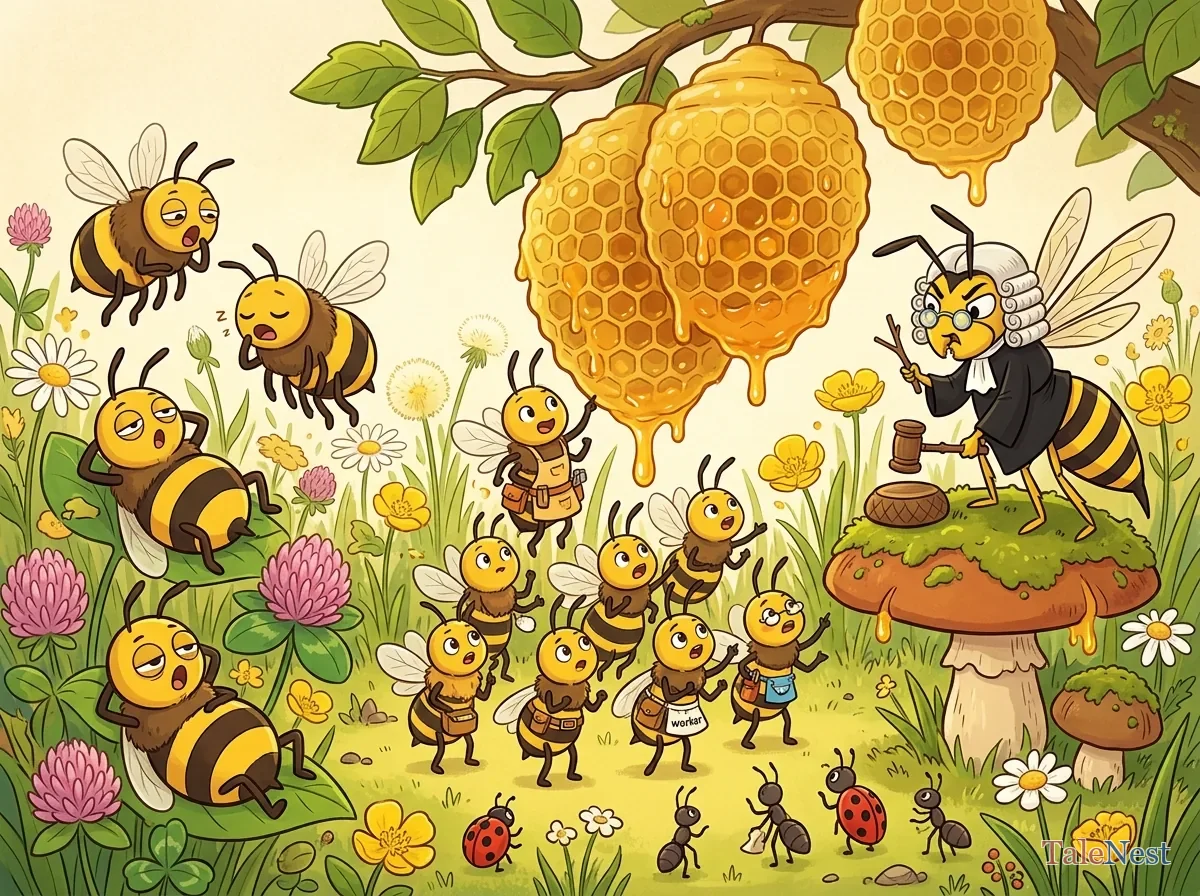
Once upon a time there stood, in the middle of a flowery meadow, a cluster of honeycombs that belonged to nobody at all, and yet were brimming with golden honey. The combs hung in the warm air, dripping and sweet, and the scent of them made every passing fly envious. The drones, who considered that eating without working was their proper birthright, since that was precisely what drones were made for, claimed the sweet treasure as their own. The bees, on the other hand, who had toiled among the flowers from dawn till dusk to build the combs and fill every cell, protested long and loudly.
There was no settling it between themselves, so the quarrel was carried before a Wasp, who took her seat as president of the court and prepared to hear the case. Neither side would give an inch, and so the matter had to be argued out in court, with all the solemnity such a grave dispute seemed to deserve.
It was a knotty business, and everyone soon discovered how hard it is to tell one buzzing insect from another. Who was in the right? Who ought to have the honey of that abandoned hive? Witness after witness stepped forward, each swearing upon his honor that he had seen dark, winged, bee-like creatures hovering around the combs. Some said the creatures had six legs, others swore to four; one witness was certain they wore striped jackets, and another insisted they were entirely black. The drones said precisely the same thing, they too had seen winged creatures that looked very like bees. The more the witnesses talked, the more hopelessly tangled the matter became, until nobody could remember who had seen what.
“The fruits of labor belong to those who did the work, and plain common sense settles disputes far faster than endless legal wrangling.”The little lesson
Madam Wasp, quite at a loss, ordered the case reopened and, in the hope of shedding a little light upon it, summoned an entire ant colony to give evidence. Thousands of ants came marching in, each one ready to testify to something or other. She questioned them about the weather, about the hour, about the color of the creatures' wings; the ants answered everything with great precision, and not one word of it helped. Even the combined wisdom of all those busy little creatures left the Wasp no wiser about what had really happened. She sat and frowned and tapped her claws upon her bench; and while she sat, the honey grew slowly sour in the sun. The case had begun in spring; already the first leaves of autumn were turning on the hedgerow.
Then a particularly sharp and sensible bee spoke up from among the crowd. “What is the meaning of all this?” she asked. “The suit has been dragging on for six whole months, and here we are today exactly where we stood on the very first day. All the while, the honey is going to waste. Is it not high time that the judge made haste? This affair has lasted quite long enough. Let us forget the writs and the rulings and the grand words: let the drones and us set to work side by side, and we shall soon see which of us truly knows how to build a finished comb and cram it with rich, sweet honey.” The bees buzzed their approval; the drones shifted uneasily and hummed among themselves.
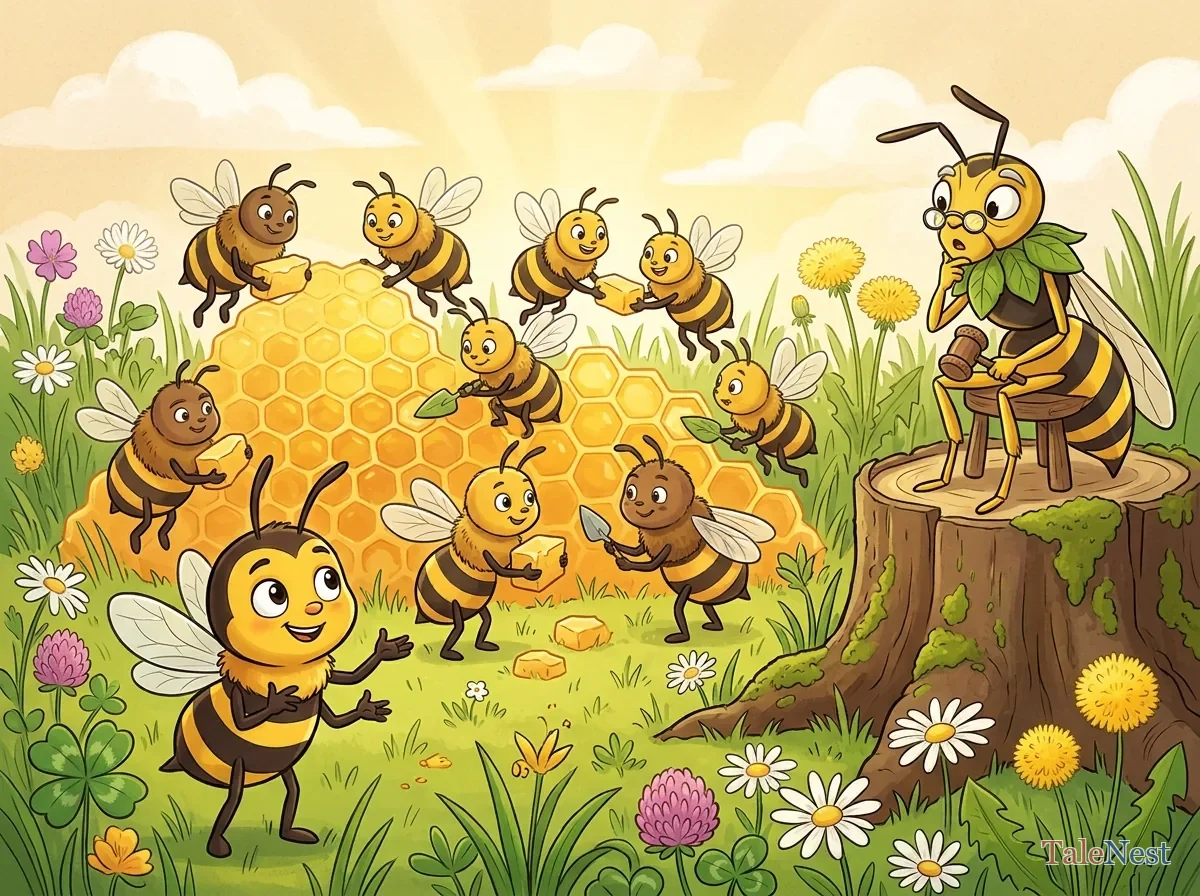
But the drones would have none of it. They were willing to talk, and to claim, and to look important, but the honest test of work was another matter. They refused it flatly, and by refusing it they proved, for all the meadow to see, that the art of making honey was altogether beyond their cleverness. Thereupon the Wasp, presiding over the trial, gave judgment at last and awarded the honey to its rightful owners, the bees. The bees went back to the flowers with a will, while the drones, having no trade at all, buzzed off to find some other dinner.
This is how every lawsuit ought to be settled: by a little plain common sense, rather than by mountains of written law. Then the cost of going to court would not climb so high, and it would not happen nearly so often as it does that the judge opens the oyster, swallows the oyster himself, and hands the two empty shells to the poor folk who brought the case in the first place. Better one honest hour of work than a whole season of arguments. Let the work speak, for it never lies. A court that cannot see the simple answer before it is a court that has forgotten why it exists.
The fruits of labor belong to those who did the work, and plain common sense settles disputes far faster than endless legal wrangling.


