
The Juniper Tree
A boy born of snow and blood is taken by a jealous stepmother, then sung back to life by a bird rising from the juniper tree that holds his bones.
 Retold by Idalia SantosAges 10+6 min read962 words
This is a work of fiction, retold in original language for TaleNest. Names, places and events are part of the story.
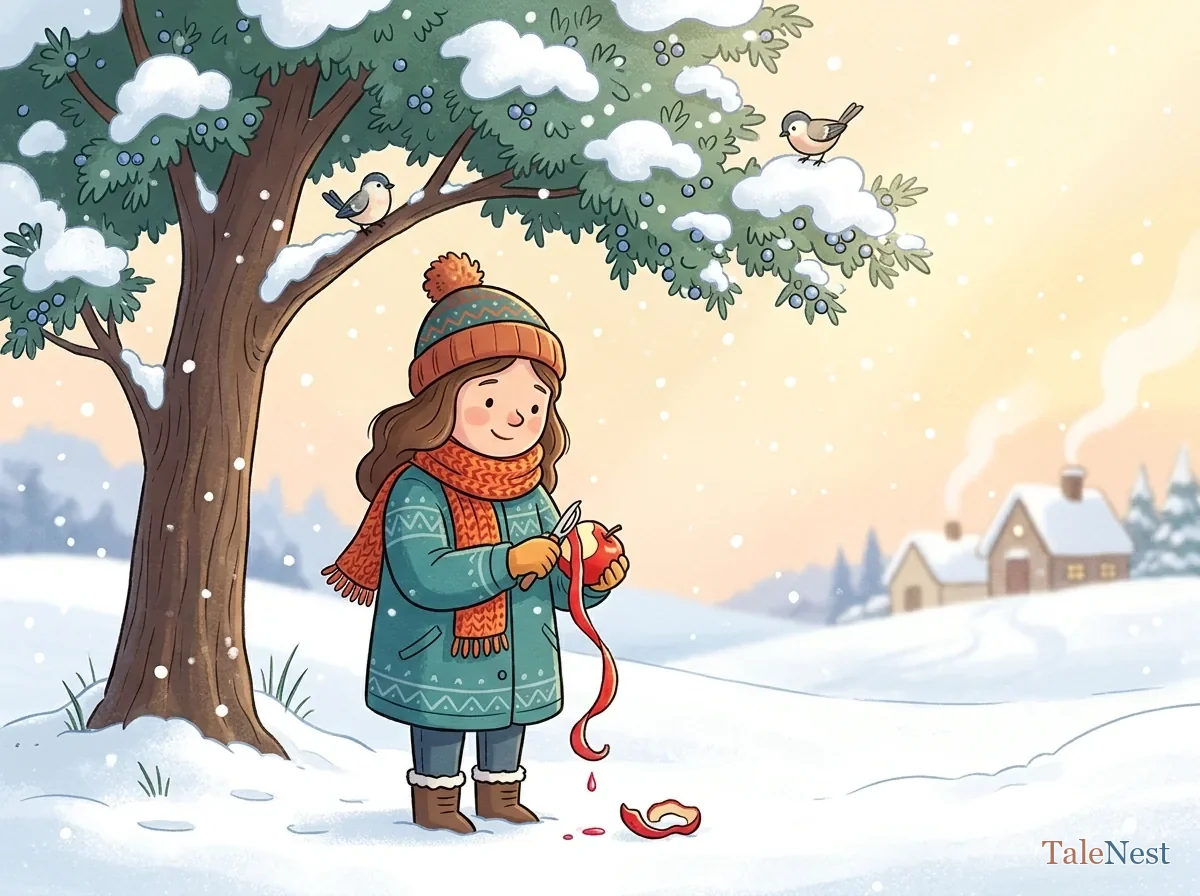
There was once a rich man whose wife was as lovely as she was devout. They loved one another dearly, yet had no children, though they longed for one with all their hearts. In front of the house there grew a juniper tree. One winter's day the wife was standing beneath it, peeling an apple, when the knife slipped and cut her finger, and a drop of blood fell onto the white snow. 'Ah!' she cried, and then, with a deep sadness in her voice, she added, 'If only I had a child as red as blood and as white as snow!' As she spoke, a strange gladness filled her, as if she knew something wonderful was about to happen.
The months went by, and the woman spent hour after hour beneath the juniper, for she felt strangely at peace there. In the seventh month she ate many of the tree's berries and fell ill, filled with sorrow. In the eighth month she called her husband to her and said through her tears, 'If I die, bury me beneath the juniper.' In the ninth month she gave birth to a little boy as white as snow and as red as blood; but the joy of seeing him was so overwhelming that she died. Her husband buried her under the juniper, and for a long time he wept.
After a while, however, the man married again. By his second wife he had a daughter, and the woman was devoted to the little girl. But whenever she looked at the boy—the son of her husband's first wife—a jealous fury rose in her, and she grew to hate him. One day, when the woman was upstairs, her daughter came to her and said, 'Mother, give me an apple.' 'Yes, my child,' said the mother. 'Could you give one to my little brother as well?' asked the girl. The woman made an impatient face, but answered, 'Yes, when he comes from school.'
“Jealousy and cruelty destroy, but a sister's loving grief can gather the scattered pieces and coax new life out of sorrow.”The little lesson
Then, looking out of the window, she saw the boy approaching, and she snatched the apple away from the girl. 'You shall not have it before your brother,' she said. When the boy came to the door, the mother said, 'My son, would you like an apple?'—but her eyes were hard and angry as she spoke. 'Mother,' said the child, 'you look at me with such a frightening face! Yes, I would like an apple.' The woman opened the chest where she kept the apples and said, 'Help yourself.' And as the boy bent down into the chest, she slammed the lid shut with such violence that his head was cut clean away and fell in among the fruit.
Seized with remorse, she hurried down to her room, took a white cloth from a drawer, fitted the head back onto the neck, and tied it on like a scarf so no one could see the wound. Then she seated the dead boy in a chair by the door with an apple in his hand. Presently the girl came into the kitchen looking for her mother. 'Mother,' she said, 'brother is sitting in front of the door, all white, with an apple in his hand. I asked him to give it to me, but he did not answer, and it frightened me.' 'Go back,' said her mother, 'and if he still will not answer, box his ears.'
Out the girl went and called, 'Brother, give me the apple!' He said nothing, and she struck his head, which came away and fell. Terrified, she screamed and wept, then ran to her mother crying, 'Oh, Mother! I have cut off my brother's head!' 'What have you done?' said the woman. 'Hush—tell no one. Since it cannot be undone, we shall cook him in a stew.' When the father came home and sat down, he asked, 'Where is my son?' His wife set a great dish of meat in dark sauce before him, while the girl wept without stopping. Again he asked, 'Where is my son?' 'Oh,' said the wife, 'he has gone to stay with his mother's relatives for a while.' 'What will he do there? He might at least have said goodbye.' 'He was in such a hurry—he begged to stay six weeks. He is in good hands.' 'That troubles me,' said the father. 'He might at least have taken his leave.' Then he began to eat. 'Why do you weep, my child?' he asked. 'Your brother will come back. But this soup is delicious—I will have more.' The more he ate, the better it tasted, and he ate until nothing remained but the bones, which he pushed aside.
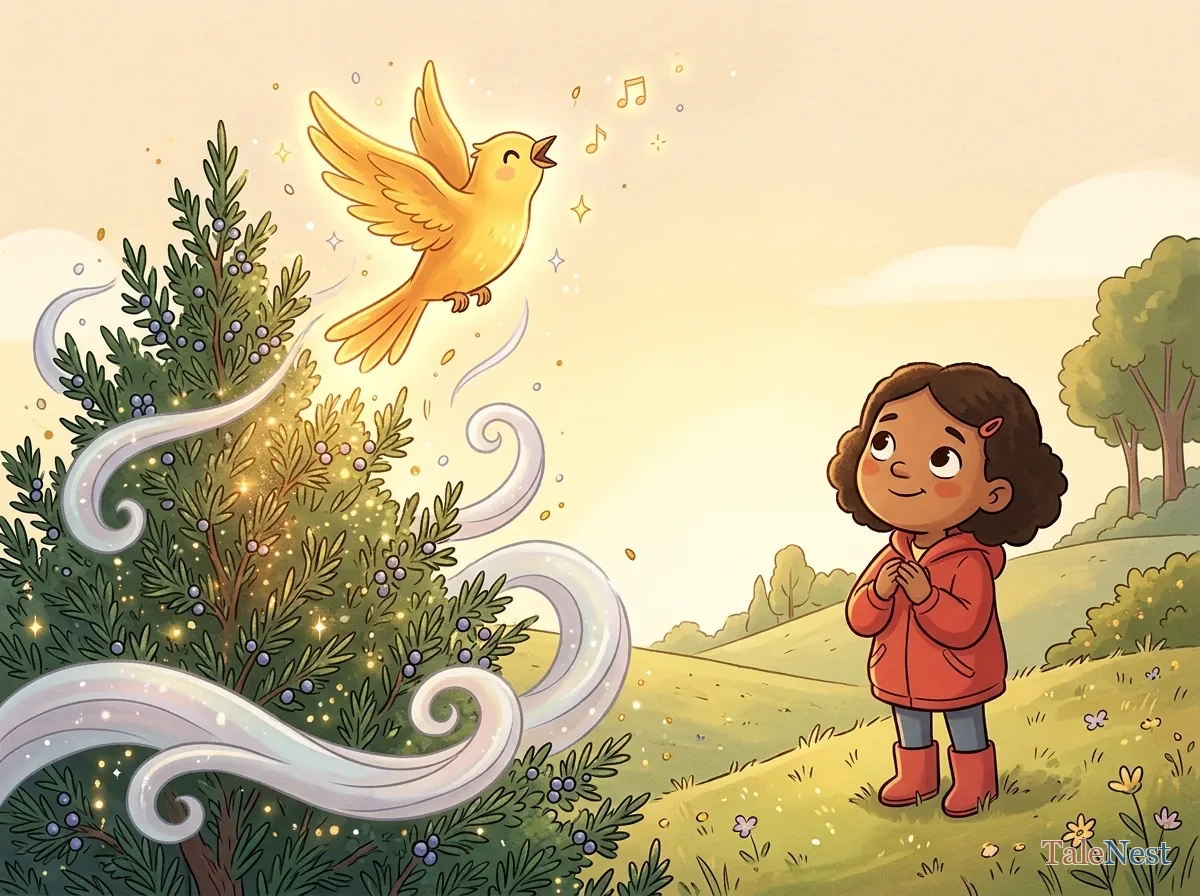
The girl went to the bottom drawer and took out her prettiest silk handkerchief. She gathered up the bones from under the table, wrapped them in it, and carried them outside, weeping tears of blood. She laid them beneath the juniper, and a great relief came over her; she stopped crying. Then the juniper began to stir: its branches moved together and apart, like a person clapping their hands for joy. A mist gathered around the tree, and in its midst a flame appeared, and from it a beautiful bird flew up, singing sweetly. When it vanished, the juniper was as before, but the cloth of bones was gone. The girl felt such peace that it seemed her brother was alive again, and she went in and ate her supper.
The bird flew on until it came to a goldsmith's house, where it perched and sang: 'My mother killed me, my father ate me, and my good little sister gathered my little bones. She wrapped them in a cloth of silk, so pretty, and buried them beneath the juniper. Kivit, kivit, what a lovely bird I am!'


