
The Pear Tree That Bore No Pears
A poor turner carves toy pears from a storm-broken branch for his children, and finds that the luck he has chased for years was hidden in that very wood.
 Retold by Idalia SantosAges 4+6 min read771 words
This is a work of fiction, retold in original language for TaleNest. Names, places and events are part of the story.
I am going to tell you a story about luck. We all know what luck is; some people meet it every day of the year, others only now and then. But sooner or later, each of us meets it. And sometimes it comes from the most unlikely place of all.
There was once a poor man, born in poverty, raised in it, and married in it. He was a turner by trade, and made chiefly handles and rings for umbrellas; yet he could scarcely earn enough to keep body and soul together. His little shop stood at the end of a cobbled lane, and from dawn to dusk the shavings curled away beneath his lathe. “I shall never find my luck,” he used to say. This is a true story, and I could tell you the country and the very town where he lived, but it is of no importance.
Red, sharp-tasting berries grew around his house and in his garden, a splendid ornament. In the garden stood a pear tree as well, but it never bore a single pear. He would often stand before it and shake his head, for a pear tree that gives nothing is a sorry sight. And yet his luck was hidden in that tree, tucked away in invisible pears.
One night there came a frightful gale. The newspapers reported that the great stagecoach had been overturned and swept along the road like a scrap of cloth. Trees were uprooted, chimneys toppled, and for a whole day the roads were impassable. Small wonder, then, that the storm also tore one of the largest branches from the pear tree.
“Luck often hides in plain sight: patient work and a willingness to try something new can turn the humblest scrap into a fortune.”The little lesson
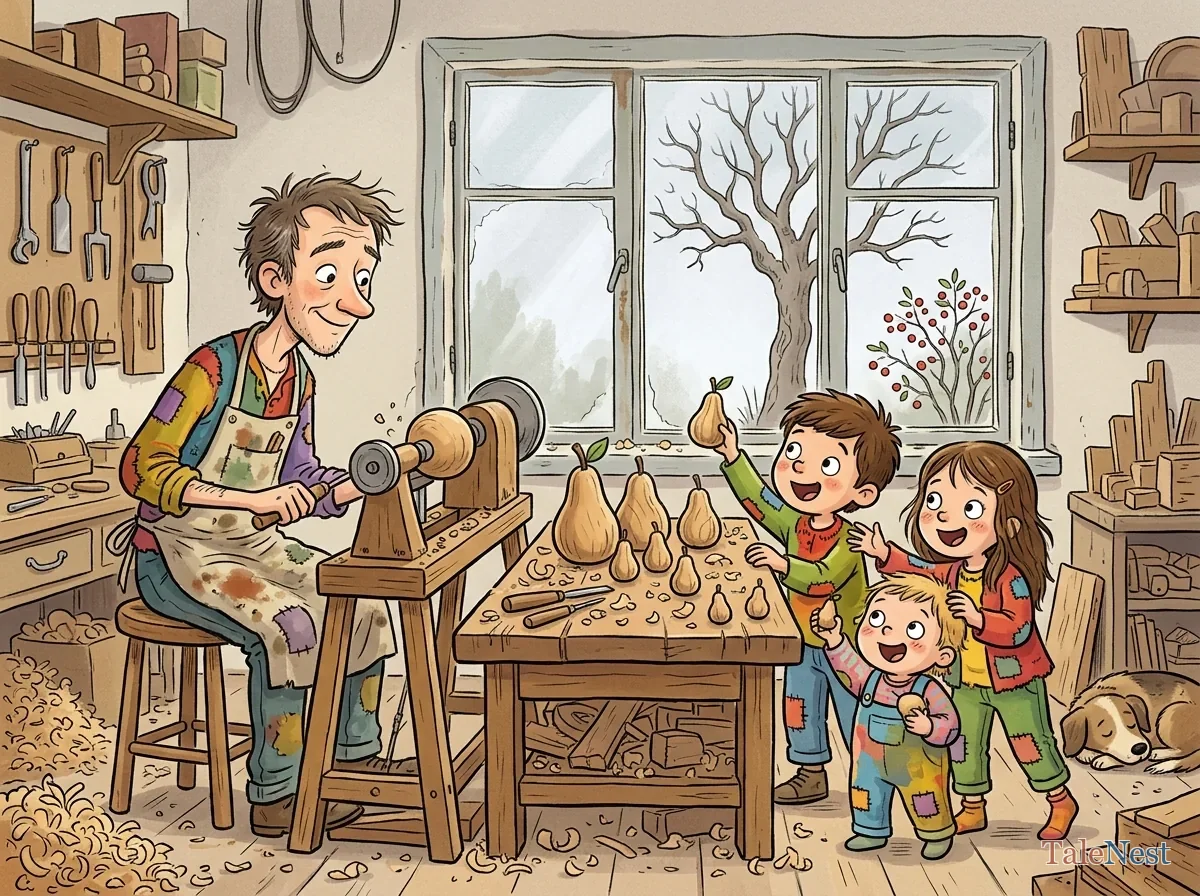
The branch was carried into the workshop, and the man, half in jest, turned a fat wooden pear from it on his lathe; then a smaller one, then a third still smaller, and at last a whole handful of tiny ones. He turned them with such care that each little pear was smooth and round, with a tiny stem where the branch had been. So the tree bore fruit for once, at any rate. Afterwards he gave the wooden pears to the children to play with.
In a rainy land an umbrella is a necessity. This family had but one, and it was broken. When the wind blew hard it turned inside out, and two or three times it snapped; but the man always mended it. It had served them through many winters, and he patched it with string and glue each time it failed. Worst of all, the little button that held it shut kept springing off, or the ring that closed the ribs would break.
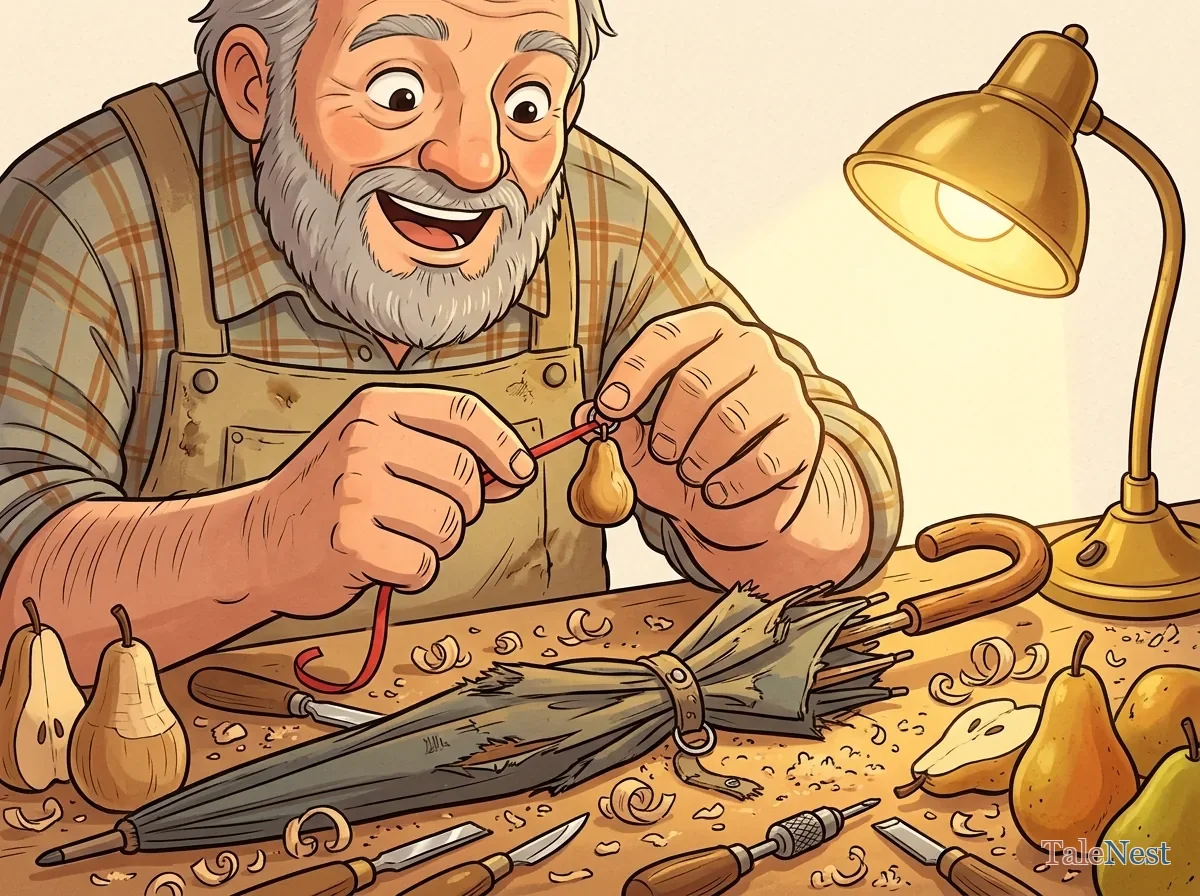
One day the button fell away. As the man searched the floor for it, his hand closed instead on one of the tiny wooden pears he had given the children. “I cannot find the button,” he said, “but this trifle will serve just as well.” He bored a hole through it, threaded a ribbon, and the little pear settled perfectly into the broken ring. He held it up to the light, turned it this way and that, and could not help laughing at his own good fortune. It was the finest fastening that umbrella had ever had.
The following year, when he sent his consignment of umbrella handles to the capital, he included a few of the turned wooden pears with half a ring attached, begging the merchant to try them. And so they travelled all the way to America. There it was soon seen that the little pear held better than any button. The merchant wrote back at once, delighted with the novelty, and the first consignment sold out in a matter of weeks. He wrote asking that in future every umbrella should be sent closed with a wooden pear.
What a rush of work followed! Pears by the thousand! Wooden pears for every umbrella in the land. The poor man had not a moment to rest; he turned and he turned. His fingers flew from dawn until late at night, and the floor of the workshop lay deep in golden curls of wood. The whole pear tree was transformed into little wooden pears, and shillings and crowns came pouring in like rain.
“My luck was hidden in the pear tree all along!” he cried. The man who had once owned a broken umbrella and a barren tree now had more work than he could handle. He built a great workshop, with journeymen and apprentices to help him, and he was always in a good humour. “Luck may lie in a stick,” he would say, and he was right.
Luck often hides in plain sight: patient work and a willingness to try something new can turn the humblest scrap into a fortune.


