
The Prince and the Carnation
A stolen prince with the power to wish anything true returns to the court that wronged his mother, carrying the girl he loves in the buttonhole of his coat.
 Retold by Idalia SantosAges 8+5 min read921 words
This is a work of fiction, retold in original language for TaleNest. Names, places and events are part of the story.
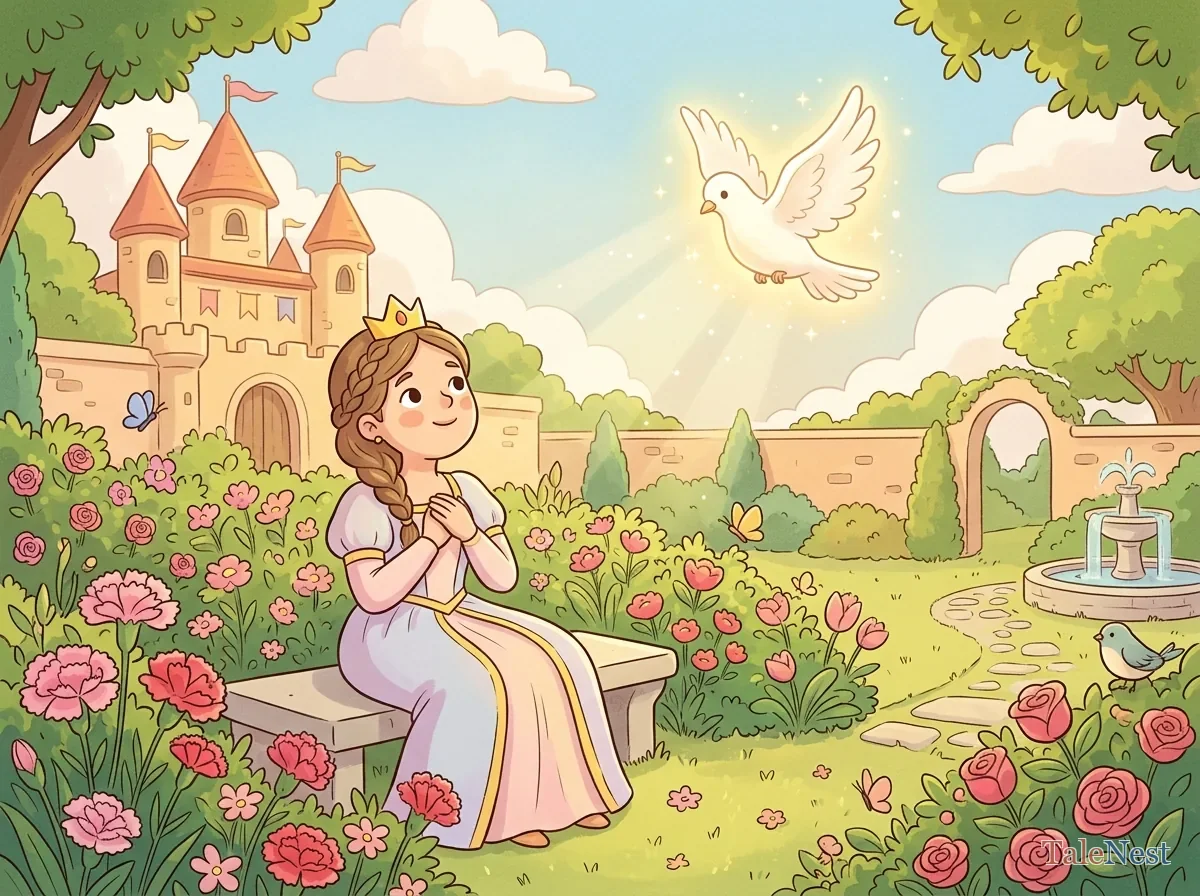
Once a queen had no children. Each morning she went into the garden to beg heaven for a child. One day an angel came down and said, “Rejoice: you shall have a son, and all his wishes shall come true.” She told the king the glad news, and in time a boy was born, to his great joy. Every morning she took him into the park.
One day in the park the mother fell asleep with the baby in her lap. The old cook, who knew of the boy's gift, crept up and snatched him away, then killed a chicken and smeared its blood over the queen's apron and dress. Having hidden the child, he went before the king and accused his wife of letting wild beasts steal their son. The king saw the bloodstained apron and believed him. In a fury he had a dungeon built and shut her inside, condemning her to seven years without food or drink, that she might die of hunger and thirst.
But God sent two angels in the form of white doves, who brought her food each day. The cook, meanwhile, thought, “Since the boy's wishes always come true, my being here may yet ruin me.” He left the palace and went to the child, now old enough to talk, and said, “Wish yourself a fine palace, with a garden and all that goes with it.” The words were scarcely spoken when it appeared. Later he said, “You should not live alone. Wish for a beautiful girl to keep you company.” The boy wished, and a lovely maiden stood before him. They played together and loved each other dearly while the old cook went hunting.
One day the cook feared the prince might wish to return to his father, which would land him in trouble. He took the girl to a lonely place and said, “Tonight, when the boy sleeps, go to his bed, stab him through the heart, and bring me his heart and tongue. If you refuse, you die.” When he had gone, she had a young doe killed, took out its heart and tongue, and placed them on a dish. Seeing the old man approach, she told her companion to hide.
“Where are the boy's heart and tongue?” asked the cook. The girl held out the dish, and at once the prince cried, “Hear your sentence: you shall become a water spaniel, wear a golden chain, and eat burning coals till the fire sears your throat.” It was done as he spoke.
“Love and loyalty outlast betrayal, and justice, though long delayed, restores at last what was cruelly stolen.”The little lesson
The prince lived on there, thinking of his mother, wondering if she lived or died. “I want to go home,” he told the girl at last. “Come with me and I will care for you.” “It is so far,” she said, “and who will know me there?” Seeing her hesitate, he turned her into a carnation and pinned it on his coat. He set off for home, the dog following.
He went to the tower where his mother lay and wished for a ladder reaching to the dungeon. Climbing down, he called, “Dear mother, are you alive or dead?” Thinking them angels, she answered, “I have just eaten.” “I am your dear son,” he said, “whom they told you beasts had stolen. I am alive, and soon I shall free you.”
At the palace he announced himself as a huntsman seeking work. The king agreed, but only if he could find game, none having been seen for years. He led the huntsmen into the forest, set them in a wide circle, stood in the middle, and wished. About a hundred fine beasts came into the circle, and the hunters had only to shoot. Sixty cartloads went to the king, whose table was full at last.
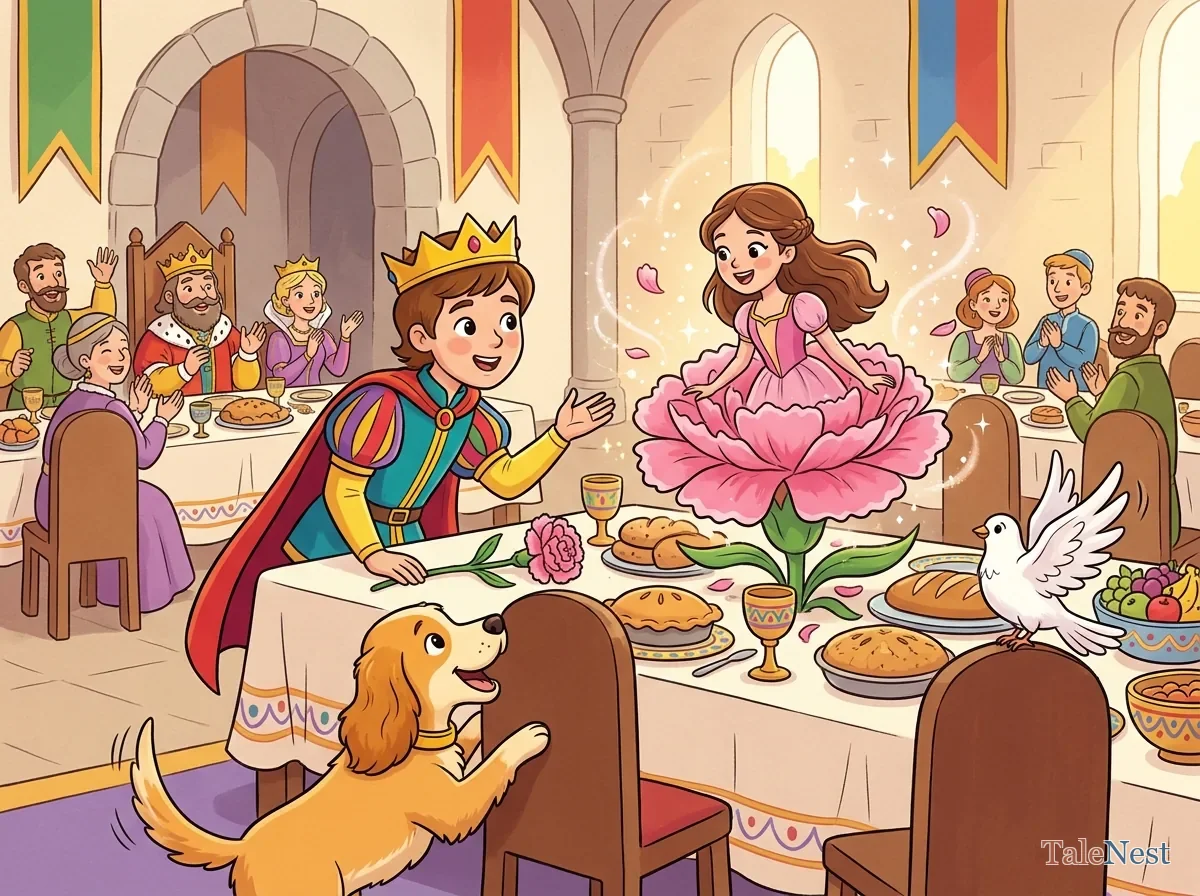
Delighted, the king held a feast and told the young huntsman to sit beside him. “Lord King, you honor me too much; I am but a simple huntsman,” he said, but the king insisted. Thinking of his mother, he wished that a courtier would speak of her. Hardly had he wished it when the marshal asked, “Majesty, since we are so merry, how does the queen fare, alive or dead?”
“She let beasts devour my son,” said the king. “Let her not be named.” The huntsman rose. “Honored father, the queen lives, and I am her son. Not beasts but that wicked old cook stole me while my mother slept, staining her apron with chicken's blood.” Seizing the dog's golden collar, he cried, “Here is the criminal!” and had burning coals brought for it to eat, scorching its throat.
He asked to see the creature in human form; the king consented, and it became the cook again, to be flung into the deepest dungeon. “Father,” said the huntsman, “will you see the maiden who cared for me, whom they ordered to kill me, yet would not?” “Gladly,” said the king. Taking the carnation from his pocket, he laid it on the table. “Now in her true form.” He wished, and she stood there.
The queen was brought to the table but would not eat. “Merciful God, who sustained me in the tower,” she said, “will soon call me.” She lived three more days and died as a saint. The two white doves that had fed her, angels from heaven, followed her funeral and settled on her tomb. The king punished the cook, and his son married the maiden he had carried as a flower. Whether they still live, God alone knows.


