
The Rose, the Sermon, and the Fish
A prince doomed to die by a stag meets a giant with three daughters, and only the youngest girl's clever love can save him again and again.
 Retold by Idalia SantosAges 6+5 min read855 words
This is a work of fiction, retold in original language for TaleNest. Names, places and events are part of the story.
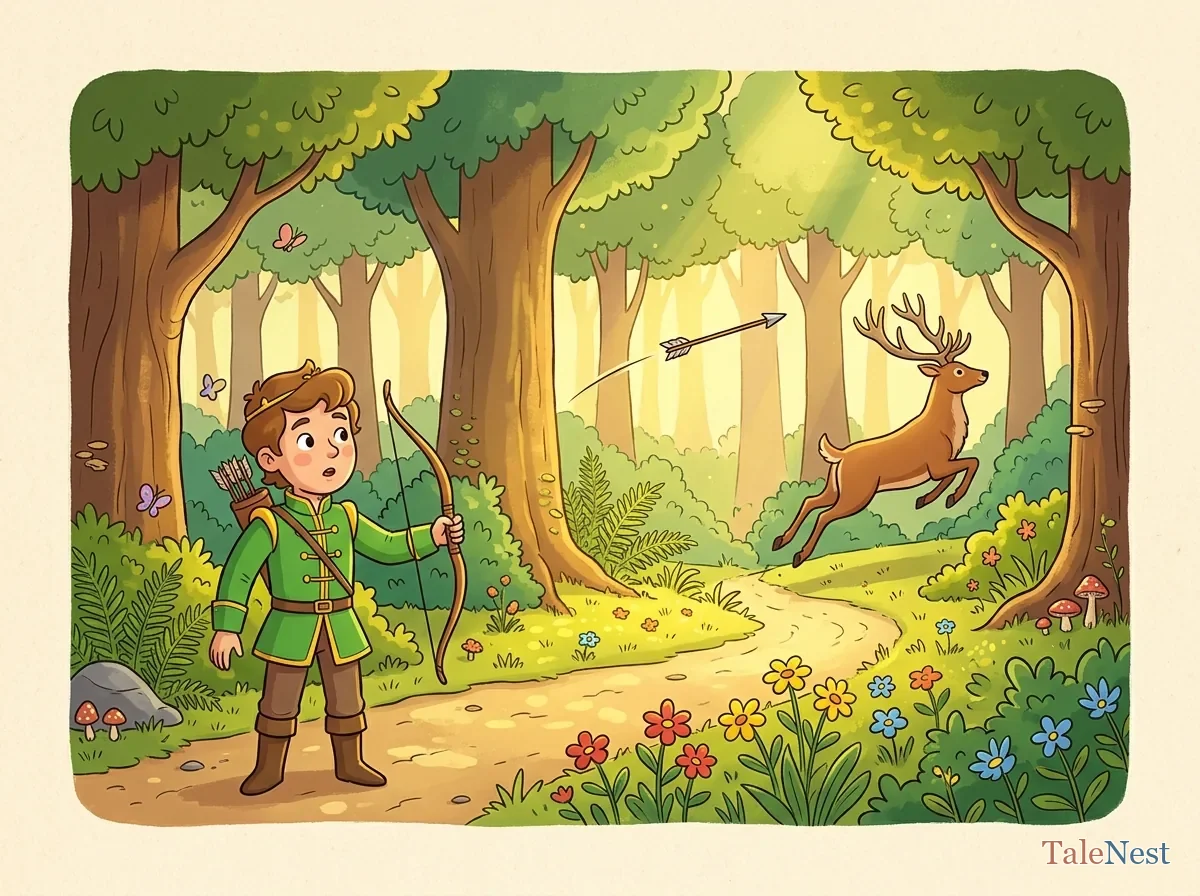
A king's son was warned by a seer that a stag would kill him at sixteen. The king kept him close, yet on that birthday he let the youth go hunting, surrounded by his best guards and heavy of heart.
In the green forest the prince strayed from the others. A great stag appeared, its antlers like bare branches. He shot and missed, then chased the bounding animal into open country.
The stag vanished. In its place stood a giant. “At last you are mine,” he growled, swept the prince up, crossed a roaring river, and set him before a huge castle. He fed him and named his price.
“I have three daughters,” said the giant. “Watch with the eldest from nine till six. Each hour at the stroke I will call. Answer and she is yours; fail, and you die at sunrise.”
In her room stood a stone Saint Christopher. “From nine till three my father will call,” the princess told it. “Answer for the prince.” The statue nodded once. All night the deep voice came and the stone replied.
At dawn: “Good, now the second daughter, and then I decide.” A taller saint waited; again she asked it to answer, again it nodded. The prince lay on the threshold, hand under cheek, and slept through the hours.
“A third night, with the youngest,” said the giant next morning. Her room held a still taller saint. She whispered, it bowed, and he slept as peacefully as the stone while the calls and answers went on.
Still he was denied. “Fell the forest beyond the castle between six and six, and we will talk,” said the giant, giving him an axe, wedge and pick of glass. They shattered at a single blow; the prince sat weeping.
“Perseverance and true love can restore even a stolen memory, and a faithful heart is worth more than any giant's promise.”The little lesson
At noon the giant said, “Send food.” The two elder refused: “Let the one who watched with him go.” She came, found him hopeless, and coaxed him to eat. “Let me stroke your hair,” she said; he slept.
She tied a knot in her kerchief, struck the ground three times, and cried, “Workers, come!” Dozens of little people sprang up, summoned their kin, and in three hours felled and stacked the whole forest. “Home by six,” she said, and he was.
“Felled?” asked the giant at supper. “Yes.” “Still no wife. Clean the pond of all its mud by six tomorrow, smooth as a mirror, full of fish.” The glass spade broke in the muck. At noon she fed and sang him to sleep; the kerchief called the workers; by evening the pond shone.
“One more thing,” said the giant. “A mountain of thorns: clear it, build a grand palace on the peak, fully furnished, by six.” The glass axe and auger burst. She came at noon, soothed him to sleep, and the dwarfs raised the shining palace. He walked back at six, happy as a bird.
“Done?” “Done.” “Yet I cannot give you my youngest before her sisters wed.” The lovers despaired and fled that night.
She looked back: her father was coming. “I will be a thorn bush, you a rose.” He found a hedge with one perfect rose, pricked his finger trying to cut it, and returned. “Cut the rose! The bush would follow,” said his wife.
He chased again. “I will be a church, you the priest.” He heard the sermon and went home. “Bring the priest! The church would follow. I'll go myself.”
Seeing the queen, she cried, “I will be a pond, you a fish.” The queen saw a pool with a leaping fish, failed to grasp it, drank the pond in fury, grew dizzy, and vomited every drop. “No remedy,” she said, made peace, and gave her daughter three nuts.
After ten hours they reached his palace. “Wait in the village; I'll bring a carriage.” All rejoiced to have him home, but as he boarded, his mother kissed him and he forgot everything. The horses were unhitched.
The girl waited, then served in the king's mill. One day the queen saw her sweeping: “What a hardworking girl, I like her.” No one recognised her.
The queen chose a new bride for her son and set the wedding. The girl opened the first nut, a gorgeous dress, and stood near the altar. The bride refused to wed without such a gown. “I won't sell it,” said the girl, “but the bride may earn it: let me sleep tonight before the prince's door.”
From the threshold she wept and told all, forest, pond, palace; rosebush, church, lake. The prince heard nothing, drugged by his servants, but they heard everything, amazed. Next day the bride wore the dress; from the second nut came a finer one. But this time the servants gave him a wakeful draught. He heard, and his memory blazed back.
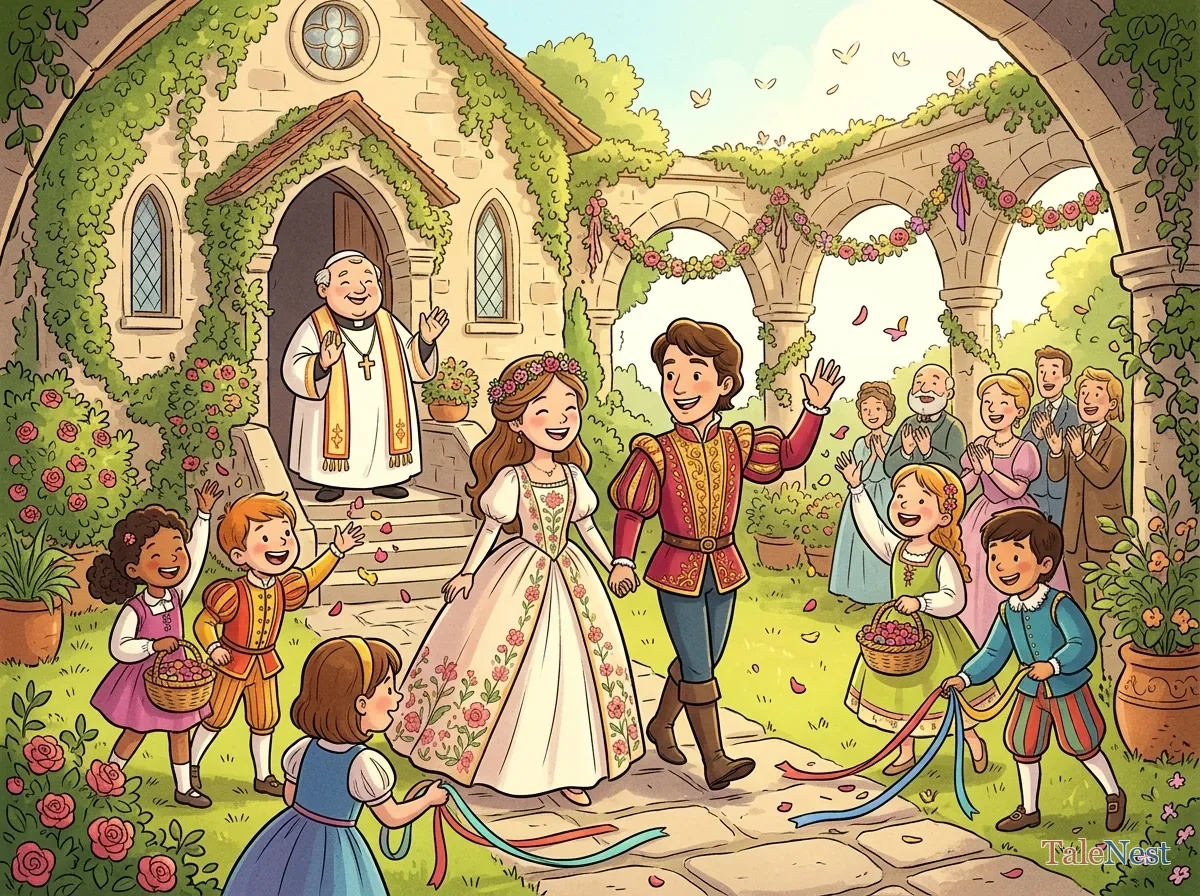
At dawn he found his love, begged forgiveness, and she opened the third nut, the loveliest dress. Children strewed flowers and ribbons as they went to church; the priest blessed them, a great feast followed, and the false mother and her daughter were turned away.
Perseverance and true love can restore even a stolen memory, and a faithful heart is worth more than any giant's promise.


