
The Serpent at the Bottom of the Sea
A tiny fish sets out to uncover the monstrous sea serpent that has thrown the ocean into panic, and finds the strangest wonder woven from human ingenuity.
 Retold by Idalia SantosAges 8+6 min read1005 words
This is a work of fiction, retold in original language for TaleNest. Names, places and events are part of the story.
A little fish had one thousand eight hundred brothers and sisters, all the same age. They never knew their parents and fended for themselves by swimming, which was great fun. Water and food were everywhere; each followed its own appetite.
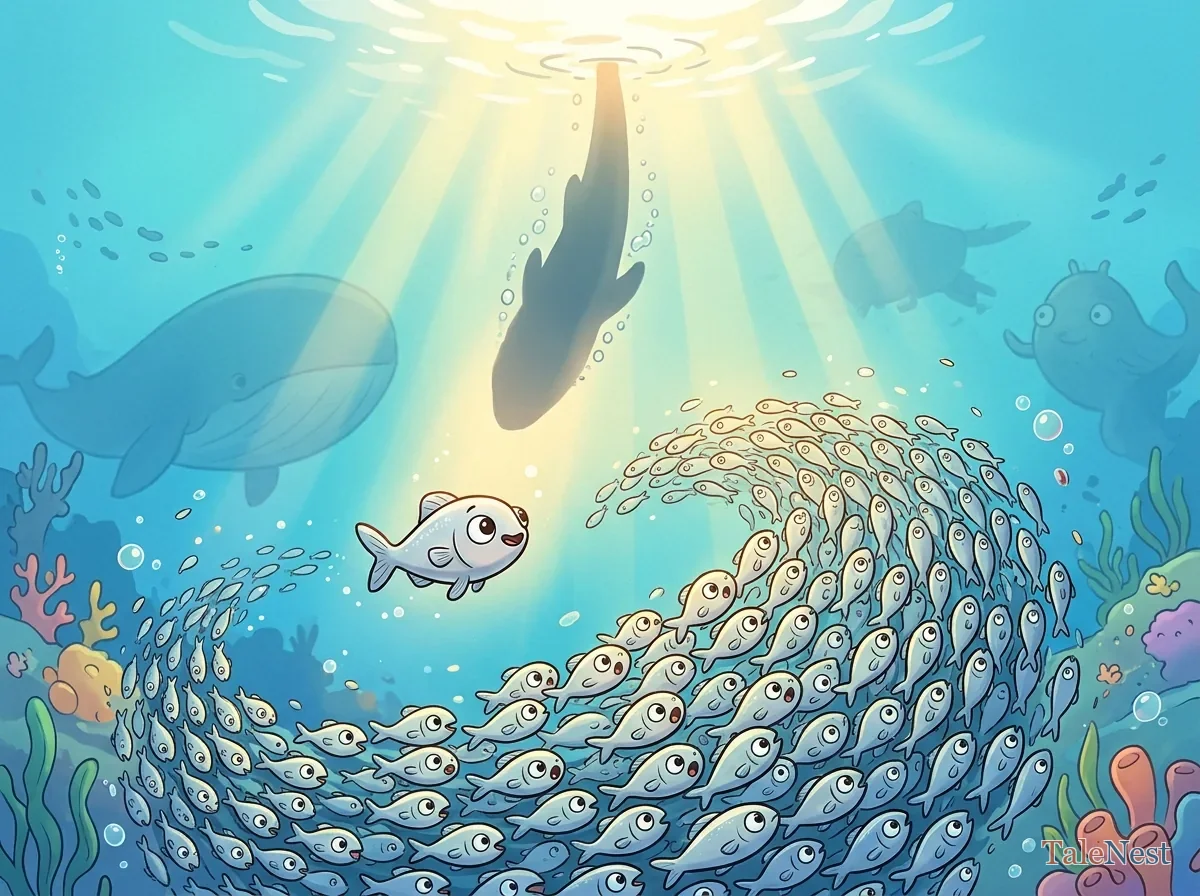
Sunlight reached deep through the clear water, lighting a world of marvellous creatures. The fish swam in a tight school, like herring or mackerel, thousands turning as one.
One day something long and heavy plunged from above. It seemed endless, crushing any fish it touched. Every sea creature panicked. We know what it was: the cable men were laying between Europe and America.
Flying fish leaped high; the red mullet shot off like a bullet; others fled deep. Sea cucumbers, terrified, vomited their stomachs yet lived on. Lobsters and crabs thrashed out of their shells, leaving legs behind.
In the uproar the 1,800 siblings scattered and never met again. Only six stayed together, and after lying still a few hours they felt the tickle of curiosity.
They thought they glimpsed the monster on the seabed beyond sight, very thin, but how far it might swell they could not tell. It lay still, yet they feared a trick. “Leave it,” said the cautious ones. But the smallest meant to find out.
Since it came from above, those above would know. The six swam up into a calm sea and met a dolphin, a leaping clown of the waves. But he had watched only his own tricks and said nothing, looking proud.
“Wonder and respect for the world around us turn fear into understanding, teaching us to look closely before we judge what we do not know.”The little lesson
Next a seal, diving, politer, and full today. “From a wet rock I watched crafty men who chase us, yet we slip their hands, as I did, and no doubt the sea eel did too. They shipped it across the sea and coiled it; I heard them fastening it, yet it slid over the rail, escaped to the bottom and stays till further orders.”
“It looks thin,” said the little fish. “Starved,” said the seal, “but it will fatten. It must be the great sea serpent men fear.” He dove. “What that one knows!” cried the fish. “If only it isn't lies!”
“Let's go down,” said the smallest. “Not one flip of a tail,” said the rest, turning away. “Then I go alone,” he said, and struck for the bottom. Down he went, feeling the world immense, till a long dark band appeared, the rail of a great ship split in two, not the cable.
He swam through the holds. Only two of the wreck's victims remained: a young woman stretched out with a child in her arms. The fish was frightened; he did not know they could never wake. Seaweed hung over them like a green curtain; the silence was absolute.
He fled and met a huge young whale. “Don't swallow me, I'm not a mouthful!” “What do you seek where your kind never come?” The fish told of the falling eel. “That tickled my back; I took it for a ship's mast,” cried the whale. “It was far off, but I'll find out.” The fish followed through the fierce current.
They met a shark and an old sawfish seeking the thin eel. A sea cat joined. “Unless it's thicker than an anchor rope, I'll snap it.” “There it is!” cried the whale. But it was only a huge eel. “If the new eel is longer than I, there will be a tragedy,” it said. “We'll prevent it,” said the rest.
A whale of Methuselah's age, crusted with shells, barred them. “Come with us.” “I'd rather lie still,” said the old whale. “I am ill. Look! A bird's skeleton sticks in me; small fish picked it clean.” “No fish is ever ill,” said the young whale. “Eels and carp get sick,” said the old one. “Rubbish!” cried the shark, and on they went.
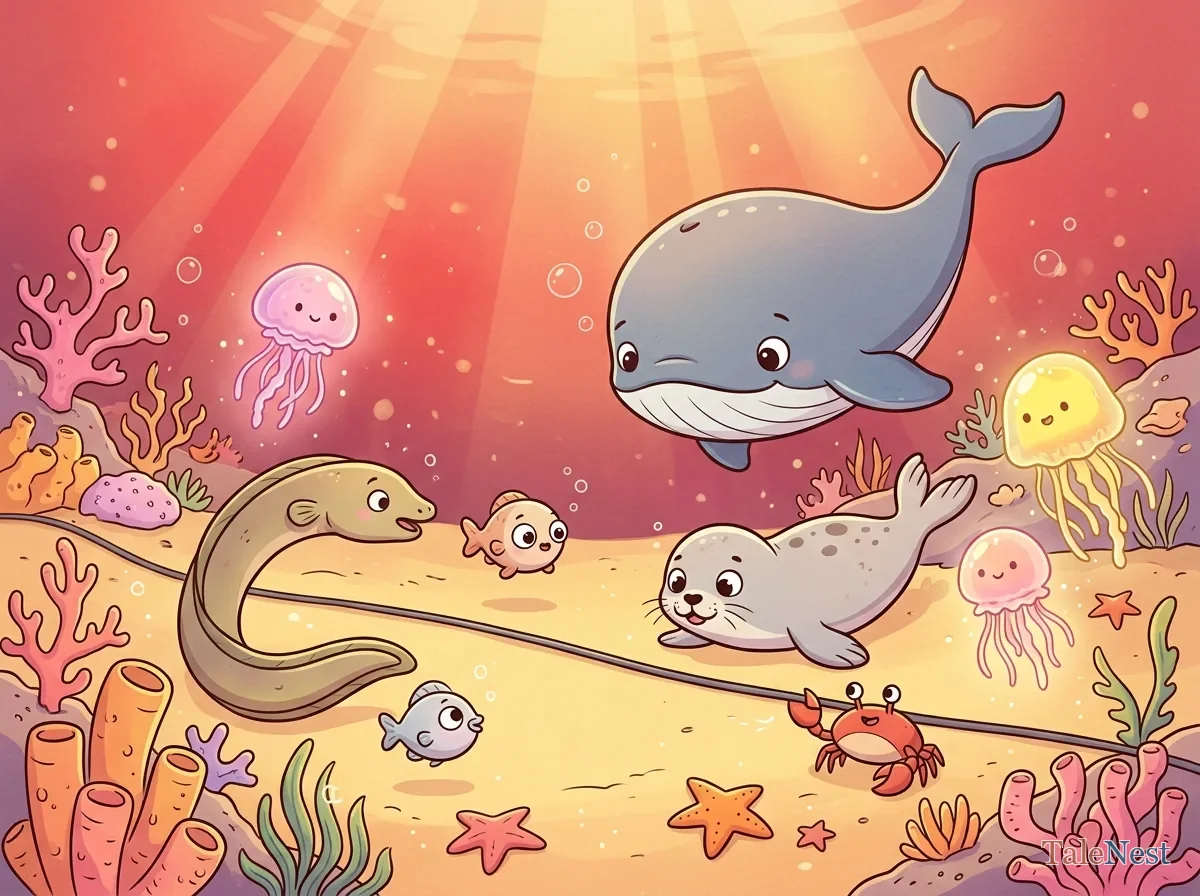
They reached the cable, a rope on the seabed from Europe to America. Fish swarmed thicker than migrating birds. Sponges and jellyfish rose and sank over it; urchins, snails and worms crawled round it; a starfish poked two eye-tentacles from the mud, watching.
The cable lay still, yet human thoughts raced through it. “Let me examine it,” said a polyp, gripping it. “Why, it's longer than I!” cried the eel, stretching beside it. “But one needs skin and swiftness too.” “Fish or plant?” asked the whale, diving. No answer. “Answer, or we'll tear you to bits!” snapped the shark. Still it lay, full of ideas; if bitten they would mend it. Above, the sun set and the sky burned red.
“The red light!” said the polyps. “At it!” cried the sea cat, swordfish, whale and eel. They rushed to bite, but the sawfish drove his saw into the sea cat's backside, and the poor cat could no longer bite. Fish and snails hurled themselves at one another while the cable lay calm.
The sea shone with phosphorescent creatures, a tiny crab. A sea cow came by, what men call a siren. “I alone can teach you. I'm a fish like you. This comes from above, where all is dead or dying. Leave it, a human invention.” “I think it's something more,” said the little fish. “Hold your tongue, mackerel!” cried the sea cow. “Perch!” jeered the others.
She said it was an invention of dry land, and had never spoken. “They cast nets and baited hooks. Touch nothing; it will rot. Everything from above is worthless.” “Worthless!” echoed all. But the little fish kept his own: “This thin, long snake may be the most wonderful fish in the sea. I feel it.”
And the most wonderful it is, we men say. Conceived as the child of human cleverness and let down from eastern to western lands to carry news as swift as sunbeams, it is the great sea serpent of legend. There in the abyss it lies, biting its own tail: the serpent of knowledge, full of human thoughts, silent, yet speaking every tongue, the greatest wonder of our sea.
Wonder and respect for the world around us turn fear into understanding, teaching us to look closely before we judge what we do not know.


