
The Soup That Was Made of Nothing
Four mice set out to learn a dish nobody has tasted. Three return with marvels and excuses; the fourth brings a pot of boiling water and a royal tail.
 Retold by Idalia SantosAges 6+4 min read784 words
This is a work of fiction, retold in original language for TaleNest. Names, places and events are part of the story.
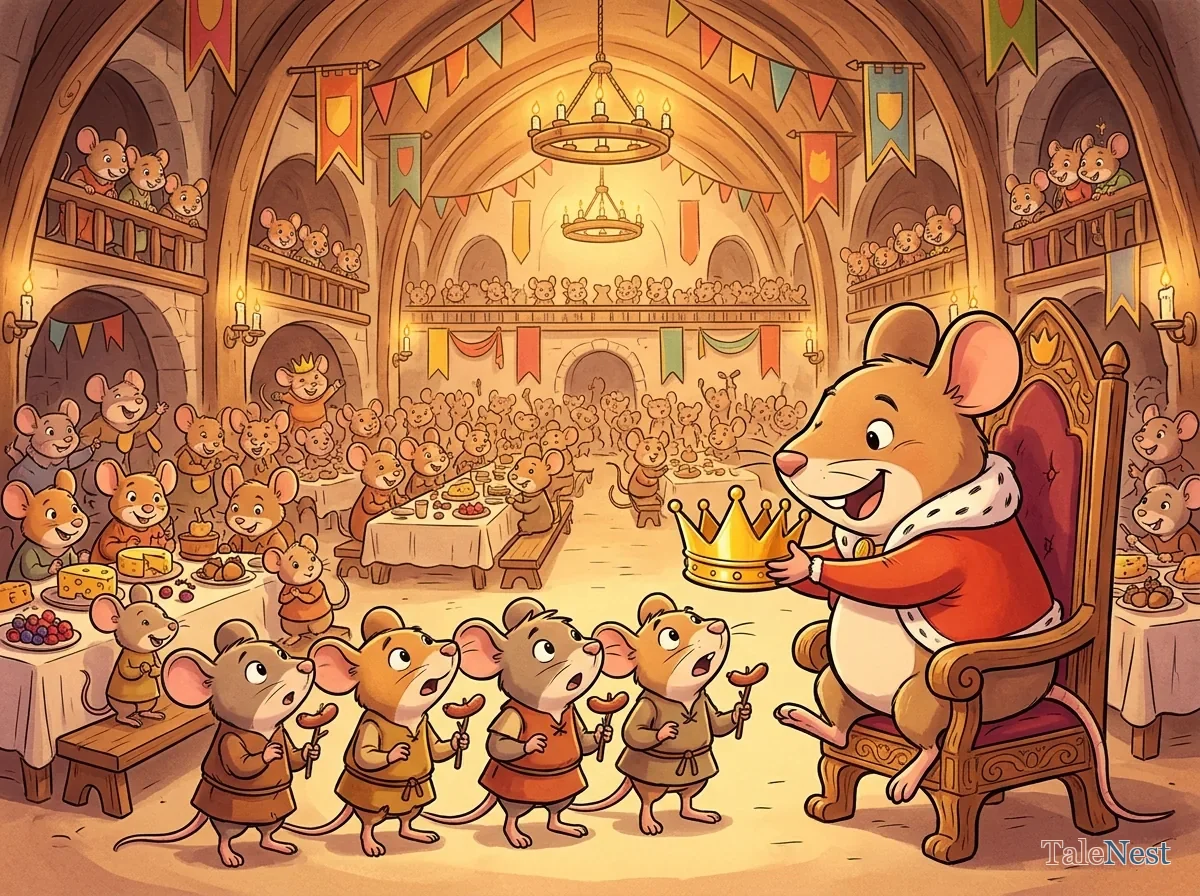
Long ago, in the kingdom of the mice, a great banquet was held. When the sweets were being handed round, the talk turned to a dish called sausage-stick soup. Many had heard of it, but not one of them had tasted it, and nobody knew how it was made. The curiosity it aroused was so great that the king offered his throne to whoever should learn the recipe. He had often wondered about it himself and had never found a mouse who could satisfy him.
The prize was splendid, yet only four humble little mice came forward to try for it. Each took a sausage-stick, and they agreed to meet again in the same place after a year, each with a recipe to show. They had no grand plans and no magic to offer, only a stubborn wish to learn.
A year passed, and all the mice assembled. The hall was crowded, and every eye turned to the three who had returned. Of the fourth no news had come, and many feared that something dreadful had happened to her. The king asked those present to begin.
The first mouse told what she had found. 'I travelled north,' she said. 'In the forest the elves were preparing for their May-tree feast. They drive a tall pole into the ground and dance around it, weaving bright ribbons to music. When they saw my sausage-stick they thought it just the thing, and I lent it to them. Next morning they returned it with magical powers.' The elves had thanked her with a dance, and she had watched the ribbons flashing in the moonlight. She tapped the kitchen table, and every pot and pan in the room went whirling round. 'But the sausage-stick soup?' asked the king. There was no answer.
“Plain common sense can solve what learning and fancy cannot, though critics are always cleverest once the feast is over.”The little lesson
The second mouse said: 'I decided to become a poet, for I once read that anyone who is a poet knows how to make sausage-stick soup. So I set out to gain knowledge, imagination and feeling. For knowledge I ate the queen of the ants, the wisest of them all. I plucked a feather from Fantasy, and I devoured three novels for the other two qualities. Now that I am a writer I can tell you of many things.' She spoke for a long while, and none of it had anything to do with soup. 'But the soup?' asked the king impatiently. Again there was no answer.
The third mouse began: 'Scarcely had I set out when I passed the prison, where the jailer was talking about a prisoner just arrived. The accusations against him rested on a rumour going about the town, and the rumour was false. I heard the jailer say: This is all sausage-stick soup, but a soup that may cost a man his life. I did not understand, so I asked an owl I met, and she told me the secret of the soup. The owl blinked wisely and said that human beings often use grand words to hide an empty pot. The truth is that it is not true. This is the truth, though it may sting: sausage-stick soup is simply what human beings say when they mean nothing at all.'
At that moment the fourth mouse arrived. 'Your truth is a lie!' she cried. 'I know the real recipe, and I shall make it now. I have not travelled to far places or spoken with strange creatures; I have only used my common sense. I need a cauldron of boiling water, and a sausage-stick dropped into it.'
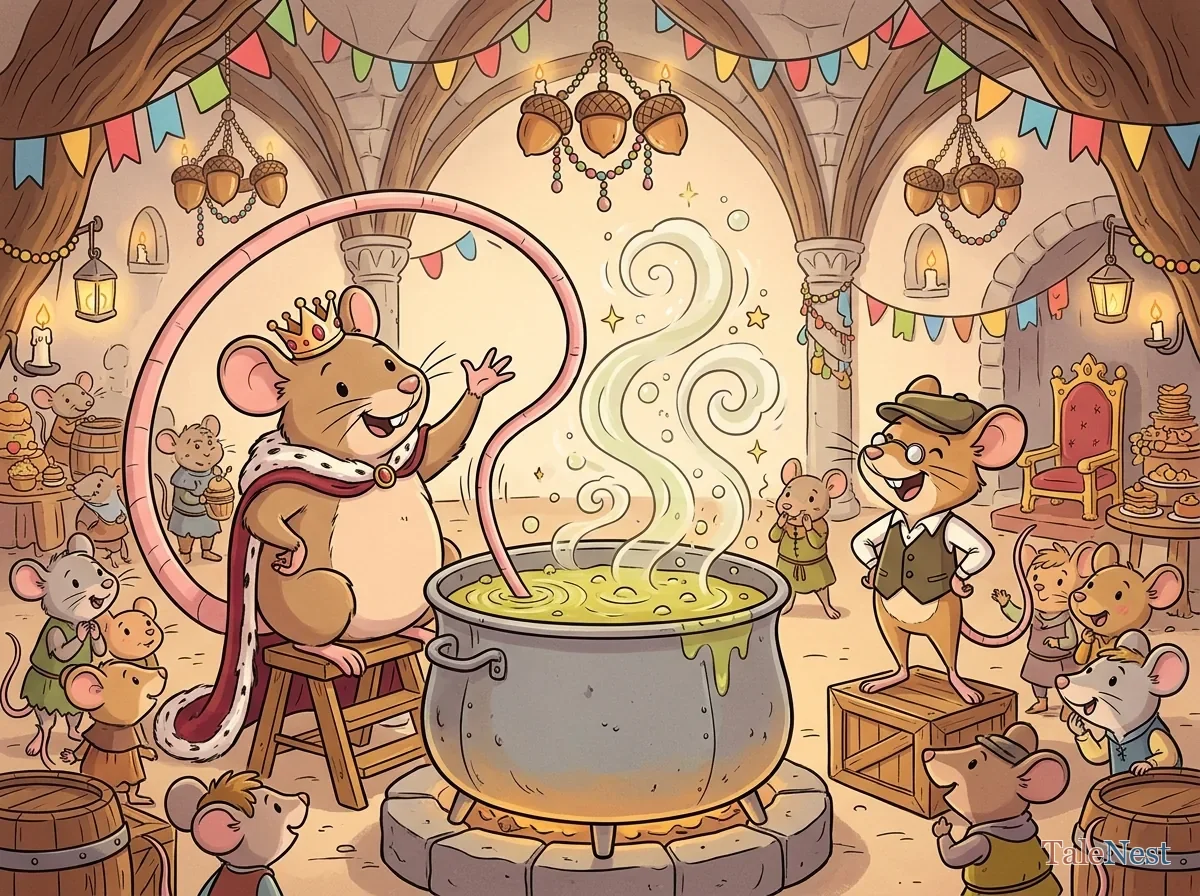
As the water came to a boil, she added: 'Now the king must stir the soup with the tip of his tail.' 'Could not another mouse stir it?' asked the king, who thought the notion rather risky. 'Impossible!' cried the mouse. 'That virtue belongs only to the tails of mouse-kings; and the longer his tail stirs, the finer the soup tastes.' He dipped the tip of his tail into the pot and stirred, and every mouse in the hall leaned closer. 'Good!' said the king. 'Then I am sure the mice will not object to tasting it on our golden wedding day, for you and no other shall be my queen.'
The wedding was celebrated. But as the mice went home, many of them said: 'It should not be called sausage-stick soup at all, but rat-tail soup.' In their opinion all that had been told was very well, but the whole thing left something to be desired. 'I, for one, would have explained it so and so...' It was criticism, always so clever, and always arriving after the feast was over. The king, settling happily into his kingdom, did not hear them.
Plain common sense can solve what learning and fancy cannot, though critics are always cleverest once the feast is over.


