Study Strategies That Really Help Children With Learning Difficulties
Bad grades aren't always laziness, they can hide a learning struggle. Try these practical ways to spot weak spots, organize study time, and read with real understanding.
This guide offers general information for parents and carers. It is not medical, psychological or developmental advice; ask a qualified professional about your own child.
Before you conclude that a child simply doesn't care about school, look closer. Aggressive outbursts, a 'why bother?' attitude, or the occasional skipped assignment are often symptoms of an underlying learning difficulty, not laziness or a bad attitude. The trouble is that these behaviors sit on the surface, while the real problem stays hidden. It's easy to see poor marks and think the child isn't trying, when the truth is that he's trying and hitting a wall he can't yet name.
This is where parents can make a genuine difference. The right support can help a child make real academic progress, and that progress does something else too: it rebuilds confidence that may have been worn down by repeated struggle. Before you dive in, have a conversation with your child's teacher. Teachers can point you toward the approaches that fit your child's specific needs and help you avoid spinning your wheels with methods that won't work. Then, try the strategies below.
Start by identifying the weak spots accurately. You can't solve a problem you haven't correctly named. Is the trouble with decoding words, with grasping math concepts, with writing, or simply with staying focused long enough to finish? Once you've pinpointed the areas that genuinely need work, you and your child can adapt the way he studies to target them instead of vaguely 'trying harder' at everything.
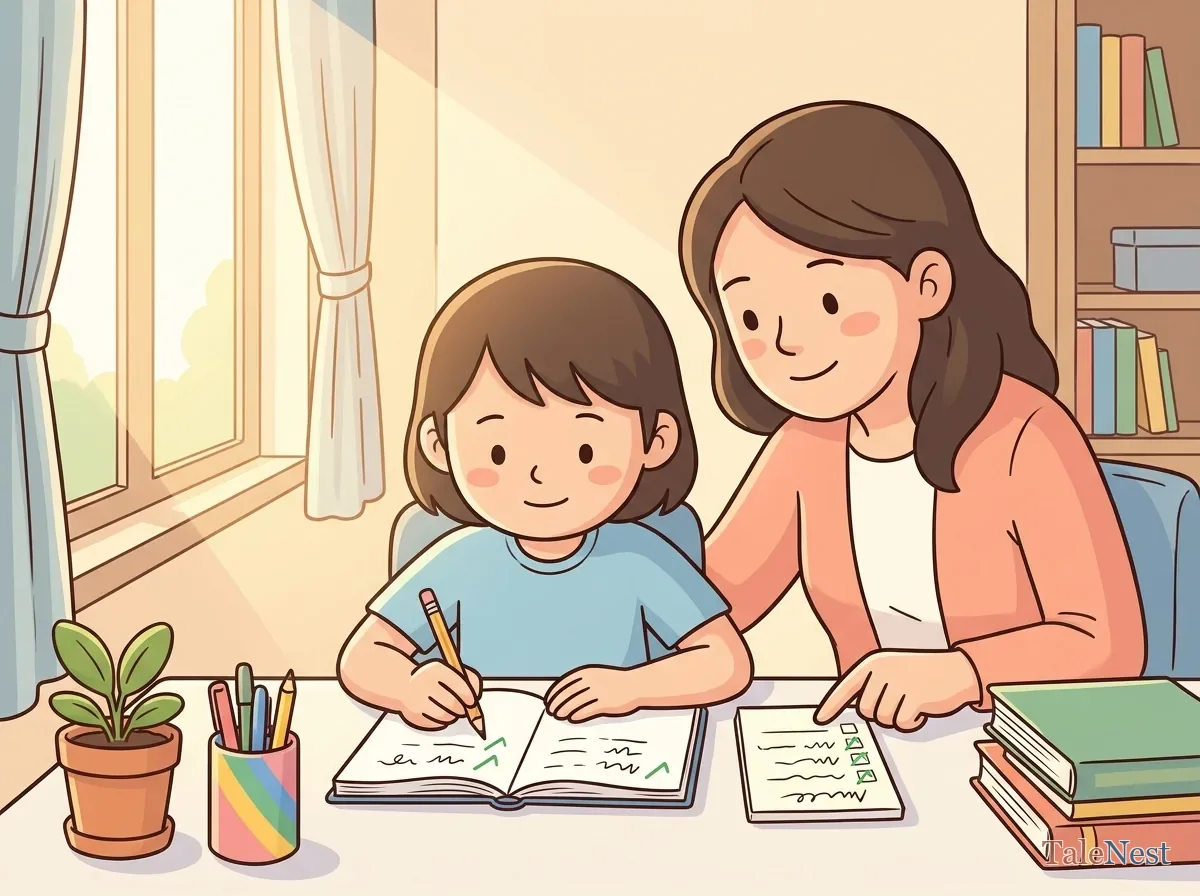
Next, bring some structure to study time. Many children have no real sense of how much work is actually in front of them, which makes the whole thing feel overwhelming. You can help by connecting new material to what he already knows, 'Remember when we learned this last month? This builds on it.', and by teaching him to pick out the information that matters most. Just as important is helping him plan his time and settle into predictable daily routines. A consistent when and where for homework removes the daily negotiation and frees up mental energy for the learning itself.
Reading comprehension deserves special attention, because a surprising number of academic struggles come down to reading that's inefficient or shallow. A child can move his eyes across a page and still absorb very little. Teaching him how to read actively, to engage with the text rather than just stare at it, can transform how well he learns across every subject.
Here are concrete active-reading habits to practice together. Before he dives in, have him read the specific learning objectives at the start of a chapter; they set up the main idea. Then skim the titles, subtitles, introduction, and summary to get the big picture before filling in details. If the text has no headings, teach him to hunt for other clues: what's new here, and what connects to the central point? Pay attention to bold or highlighted words, which usually signal key vocabulary. Study the images, charts, tables, and diagrams, and read their captions, they often carry information the prose doesn't. Don't skip sidebars, margin notes, or footnotes either; they can hold useful context. At the end of a chapter, work through the review questions or problems together, and check the answers rather than just guessing.
A particularly effective trick is to turn headings, subheadings, and important sentences into questions. For example, 'The causes of the revolution' becomes 'What caused the revolution?' Your child then reads to find the answer. Later, those same questions make excellent summary points for a study guide, because answering them forces a recall of the key facts, exactly what's needed when an exam rolls around. This works far better than rereading notes passively.
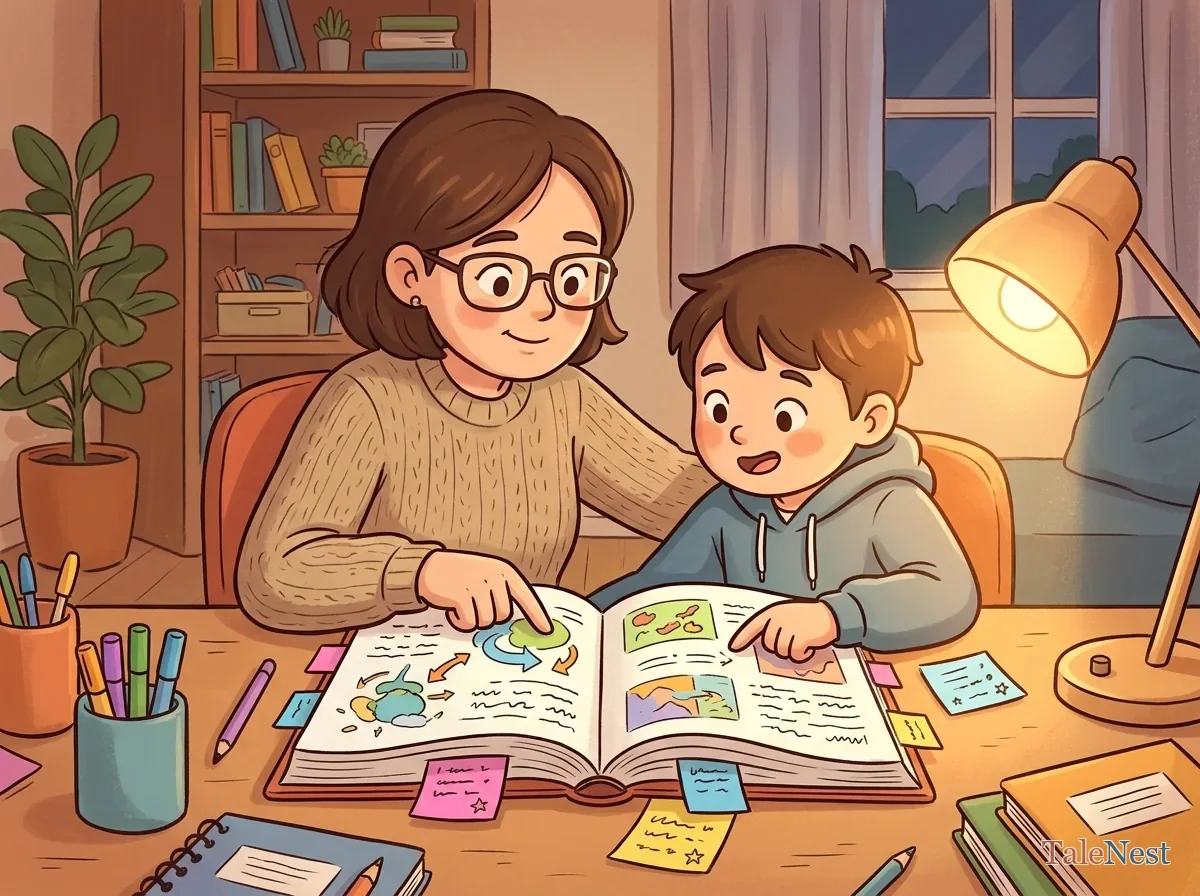
Finally, keep the confusion visible. Encourage your child to jot down any word or idea he doesn't fully understand as he goes, so he can look it up or ask about it afterward. Sticky notes are perfect for this: stick one on the page, write the puzzling term, and move on without losing your place. Set aside a few minutes at the end to revisit the notes together, and make a habit of asking the teacher about whatever's still unclear. Over time, this turns vague confusion into a short, answerable list, and a child who can say exactly what he doesn't understand is a child who's well on his way to understanding it.
When a child struggles academically, pinpoint the real weak spots, build steady routines, and teach active reading, and always loop in the teacher.